

Tuesday 08 April 2025
The quest for a deeper understanding of shape and form has long been a fundamental question in computer science and engineering. Recently, researchers have made significant progress in developing algorithms that can accurately represent and abstract complex shapes from point cloud data.
Point clouds are three-dimensional representations of objects or scenes captured through various sensors such as lidar, radar, or cameras. While they provide a rich source of information about the physical world, processing and analyzing them can be challenging due to their complexity and noise.
To address this challenge, scientists have developed various techniques for shape abstraction, which involves simplifying complex shapes into more manageable forms while preserving their essential features. One popular approach is to use superquadrics, geometric primitives that resemble ellipsoids or spheres with multiple axes of symmetry.
However, traditional methods for fitting superquadrics to point clouds often require manual intervention and may not capture the intricate details of the shape. In contrast, recent advances in deep learning have enabled the development of algorithms that can automatically learn to represent shapes from point cloud data.
One such algorithm is based on a technique called sparse representation, which involves modeling each point feature as a sparse convex combination of other point features. This approach allows the algorithm to identify and emphasize the most important features of the shape while ignoring noise and irrelevant information.
Another key innovation is the use of attention mechanisms, which enable the algorithm to focus on specific parts of the shape or scene when performing tasks such as segmentation or abstraction. Attention helps the algorithm to selectively weigh the importance of different features based on their relevance to the task at hand.
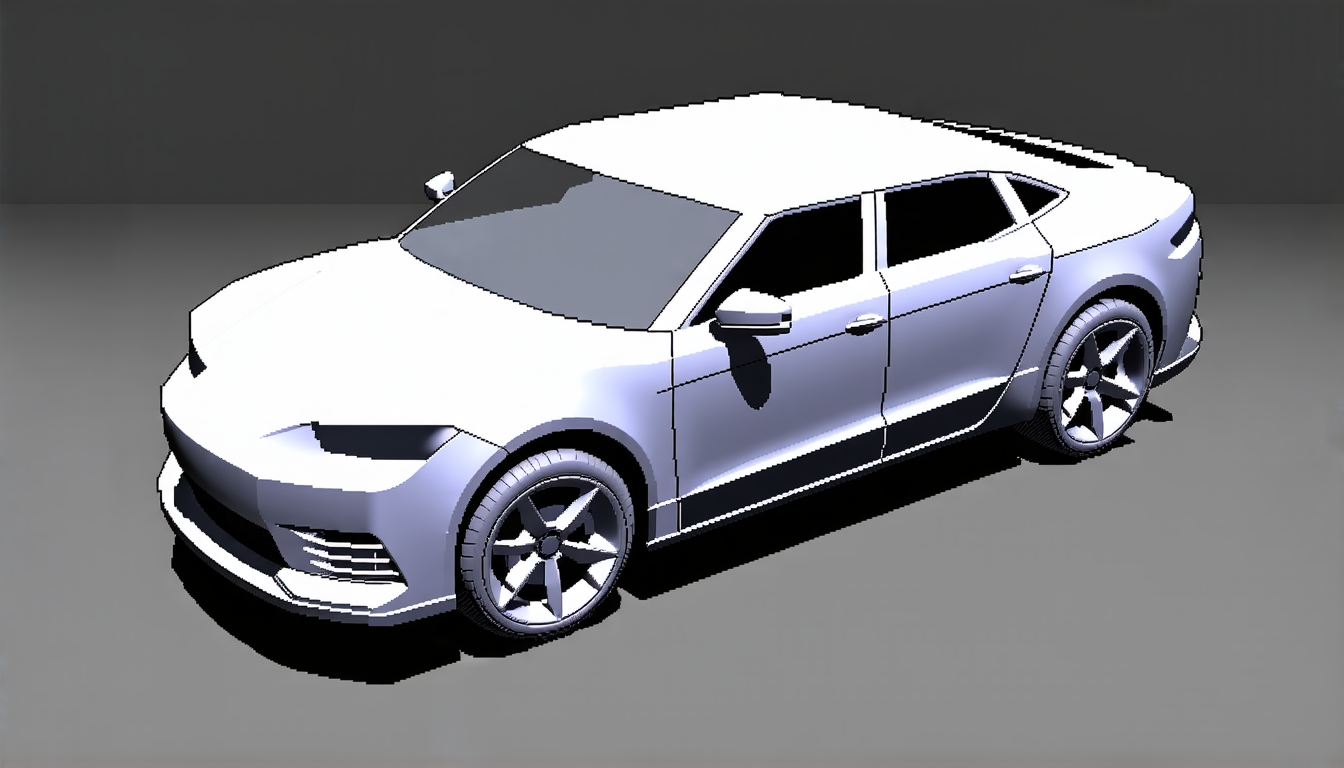
The combination of sparse representation and attention mechanisms has led to significant improvements in the accuracy and efficiency of shape abstraction algorithms. For example, experiments have shown that these algorithms can accurately segment complex shapes into meaningful parts, such as identifying individual components of a car or distinguishing between different types of buildings.
Moreover, these algorithms have been tested on a wide range of point cloud datasets, including those captured from various sensors and environments. The results demonstrate the versatility and robustness of the algorithms in handling diverse data sources and scenarios.
The implications of these advances are far-reaching, with potential applications in fields such as computer-aided design (CAD), robotics, autonomous vehicles, and virtual reality. By enabling more accurate and efficient shape abstraction from point cloud data, these algorithms can streamline many tasks that rely on 3D object recognition and manipulation.
In the future, researchers plan to further refine and extend these algorithms to tackle even more complex challenges in shape understanding and representation.
Cite this article: “Unsupervised Point Cloud Shape Abstraction with Repeatable Primitives”, The Science Archive, 2025.
Point Cloud Data, Shape Abstraction, Superquadrics, Deep Learning, Sparse Representation, Attention Mechanisms, 3D Object Recognition, Computer-Aided Design, Robotics, Autonomous Vehicles





