

Tuesday 08 April 2025
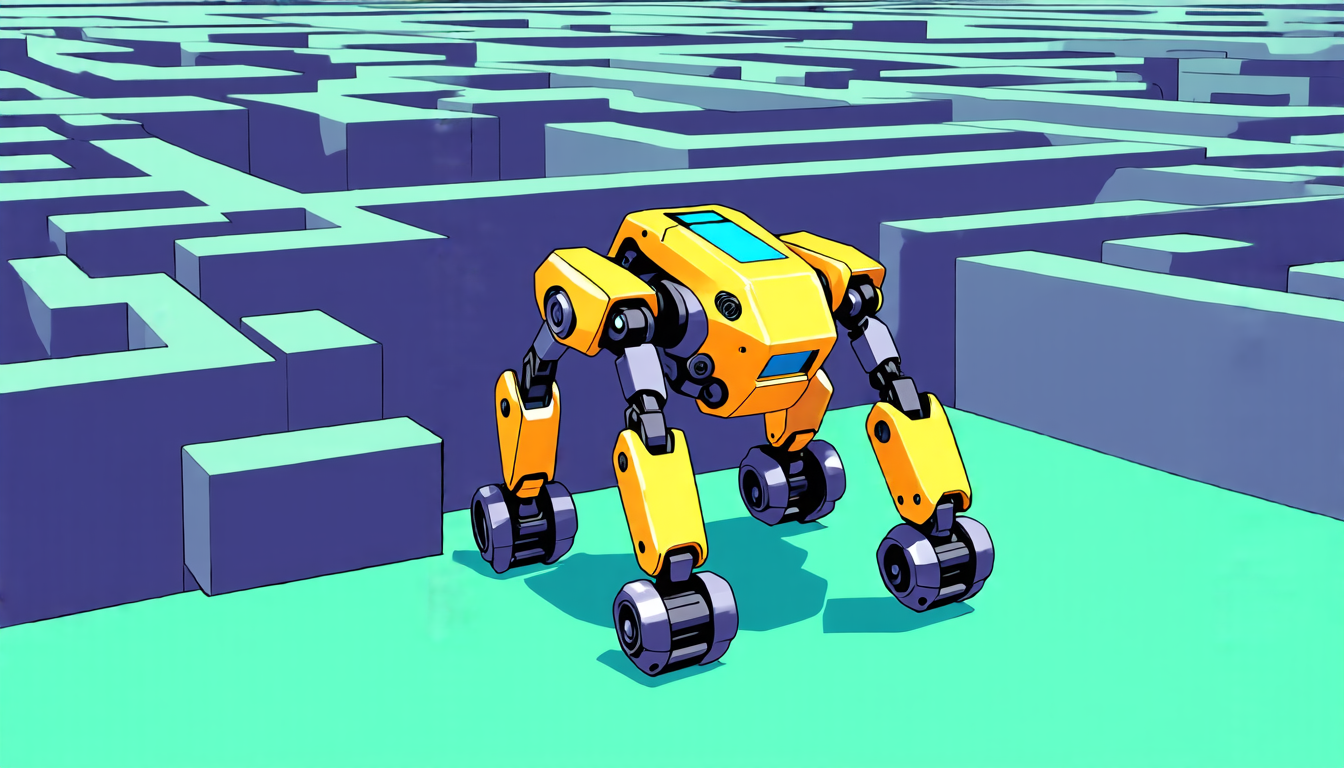
The robots are getting smarter, and now they’re learning how to adapt to unexpected situations on their own. Meet the quadruped robot, Kirin, which has been equipped with a new system that allows it to adjust its movements in real-time based on changing circumstances.
This may not seem like a revolutionary concept, but trust me, it’s a huge deal for robotics engineers. You see, traditional robots are programmed to follow strict instructions and can’t adapt to unexpected events without human intervention. But Kirin is different – thanks to its advanced artificial intelligence (AI) system, it can adjust its movements to respond to changes in its environment.
So how does it work? Well, the AI system uses a combination of sensors and machine learning algorithms to analyze the robot’s surroundings and make predictions about what might happen next. This information is then used to adjust the robot’s movement patterns, allowing it to adapt to changing situations on the fly.
But here’s the really cool part: Kirin’s AI system isn’t just limited to reacting to its immediate environment. It can also learn from its experiences and improve over time, making it an increasingly capable and autonomous robot.
One of the most impressive demonstrations of Kirin’s abilities was a test where the robot had to navigate through a series of obstacles while carrying a heavy payload. The AI system allowed the robot to adjust its movements in real-time, avoiding obstacles and ensuring that the payload remained stable throughout the entire process.
This technology has huge implications for robotics and could potentially be used in a wide range of applications, from search and rescue missions to industrial manufacturing. Imagine having robots that can adapt to changing situations without human intervention – it’s like having a team of super-smart, highly capable workers at your fingertips.
But Kirin is just the beginning. As AI technology continues to advance, we can expect to see even more sophisticated robots with abilities that were previously unimaginable. And who knows? Maybe one day we’ll have robots that are so advanced, they’ll be able to learn and adapt on their own without any human input at all.
For now, though, Kirin is a remarkable achievement in robotics engineering – proof that AI can be used to create truly intelligent machines that can adapt to changing situations.
Cite this article: “Physics-Informed Neural Networks Revolutionize Quadruped Locomotion Control”, The Science Archive, 2025.
Robots, Artificial Intelligence, Quadruped Robot, Kirin, Machine Learning Algorithms, Sensors, Autonomous Robot, Search And Rescue Missions, Industrial Manufacturing, Robotics Engineering





