

Tuesday 08 April 2025
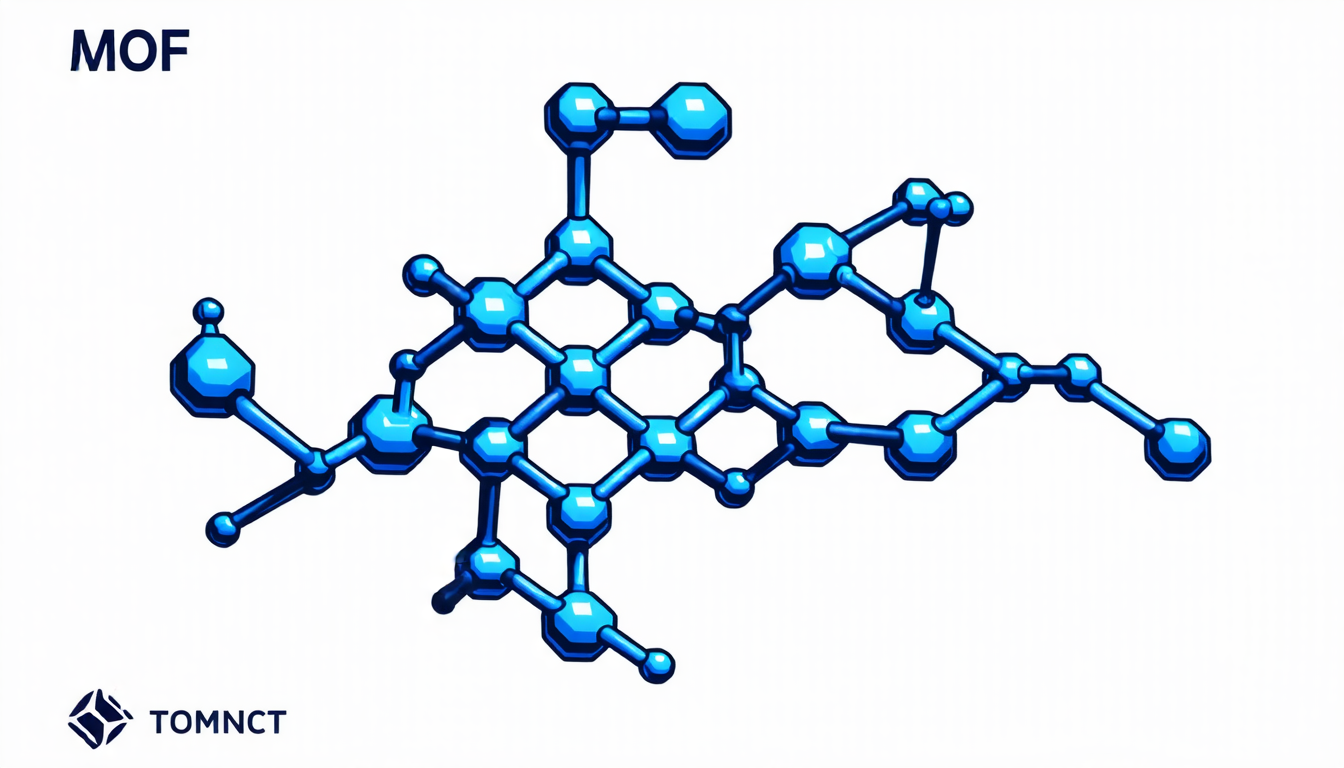
Metal-organic frameworks, or MOFs, are a type of material that has been gaining attention in recent years due to their unique properties and potential applications. These materials are composed of metal ions connected by organic molecules, creating a three-dimensional framework that can be tailored for specific purposes.
Researchers have been studying the properties of MOFs, including their electronic structure, thermal stability, and optical behavior. In this study, scientists used advanced computational methods to investigate the performance of different exchange-correlation functionals on the structural, electronic, and vibrational properties of MOF-5 and its derivatives.
MOF-5 is a particular type of MOF that has been found to be highly porous and stable, making it an attractive material for applications such as gas storage and separation. However, understanding the behavior of this material at the atomic level is crucial for optimizing its performance.
The researchers used density functional theory (DFT) to study the electronic structure of MOF-5 and its derivatives. DFT is a computational method that uses the principles of quantum mechanics to calculate the properties of materials. The team compared the results obtained using different exchange-correlation functionals, which are mathematical formulas that describe the interactions between electrons.
The study found that the meta-GGA functional r2SCAN performed best in describing the electronic structure and optical behavior of MOF-5 and its derivatives. This functional was able to accurately predict the bandgap energy, a measure of the material’s ability to absorb light, as well as its thermal stability.
The researchers also investigated the vibrational properties of MOF-5 using phonon calculations. Phonons are quantized sound waves that can be used to study the dynamics of materials at the atomic level. The team found that the r2SCAN functional was able to accurately predict the vibrational modes and frequencies of MOF-5, which is important for understanding its thermal conductivity and mechanical properties.
The results of this study demonstrate the importance of using accurate exchange-correlation functionals in DFT calculations to describe the behavior of MOFs. The findings also highlight the potential of MOF-5 and its derivatives for applications such as gas storage and separation.
In addition, the study shows that computational methods can be used to optimize the properties of MOFs by predicting their behavior at the atomic level. This approach has the potential to accelerate the development of new materials with tailored properties for specific applications.
Cite this article: “Cracking the Code: Unlocking Accurate Density Functional Calculations for Complex Materials”, The Science Archive, 2025.
Metal-Organic Frameworks, Mofs, Density Functional Theory, Dft, Exchange-Correlation Functionals, Electronic Structure, Thermal Stability, Optical Behavior, Phonon Calculations, Vibrational Properties, Gas Storage And Separation.





