

Tuesday 08 April 2025
Scientists have long been fascinated by the tiny machines that power our cells, known as molecular motors. These microscopic engines are responsible for moving cargo along microtubules, allowing our bodies to function properly. But despite their importance, understanding how these motors work has remained a challenge.
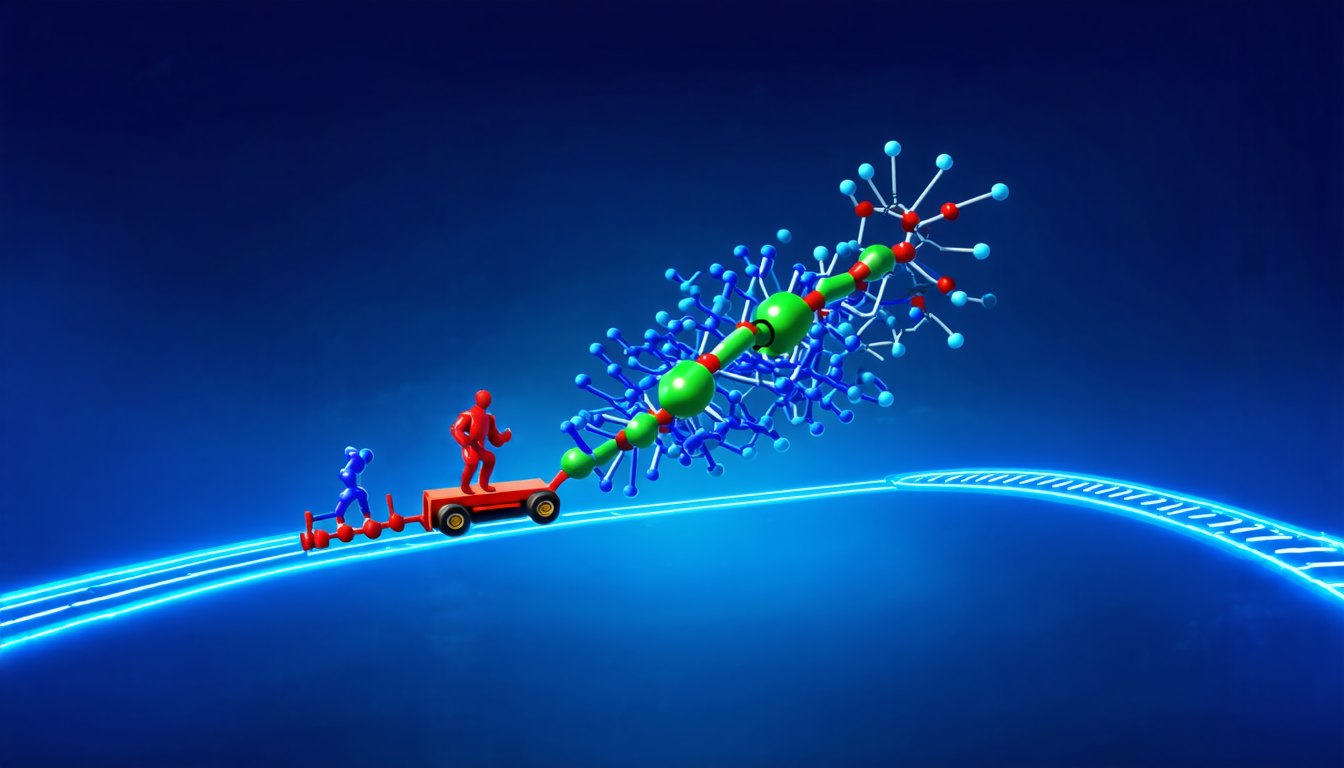
A recent study published in a scientific journal sheds new light on the inner workings of one type of molecular motor, called kinesin-1. This motor is particularly interesting because it’s capable of moving cargo along microtubules using a unique mechanism known as catch bonding.
Catch bonding is a process where the motor binds to the microtubule and then releases itself in a controlled manner, allowing it to move forward while maintaining its grip on the cargo. It’s like a tug-of-war between the motor and the microtubule, with the motor slowly pulling itself along as it releases and rebinds to the track.
The researchers used advanced computer simulations to study how kinesin-1 motors interact with their environment. They found that the motor’s ability to catch bond is crucial for its ability to generate force and move cargo. In fact, the study suggests that the motor’s catch bonding mechanism is what allows it to overcome the frictional forces that try to slow it down.
The researchers also discovered that the motor’s movement is not a simple linear motion, but rather a complex dance of binding and releasing along the microtubule track. This intricate process allows the motor to generate force and move cargo with remarkable precision.
One of the most impressive aspects of this study is its ability to accurately predict the behavior of individual kinesin-1 motors under different conditions. By simulating the motor’s movement in a virtual environment, the researchers were able to test various scenarios and gain insights into how the motor functions in real-world situations.
The implications of this research are far-reaching, with potential applications in fields such as medicine and biotechnology. For example, understanding how kinesin-1 motors work could lead to new treatments for diseases caused by defects in these motors, or even the development of new molecular machines that can be used to move cargo within cells.
Overall, this study provides a fascinating glimpse into the inner workings of one of the most important molecular motors in our bodies. By shedding light on its complex mechanisms, researchers are one step closer to unlocking the secrets of cellular biology and developing new technologies that could change our lives for the better.
Cite this article: “Microscopic Marvels: Harnessing Molecular Motors to Power Tiny Engines”, The Science Archive, 2025.
Molecular Motors, Kinesin-1, Microtubules, Catch Bonding, Molecular Machines, Cellular Biology, Biotechnology, Medicine, Frictional Forces, Computer Simulations





