

Tuesday 08 April 2025
As we increasingly rely on cloud computing and edge devices, a new kind of control system is emerging that’s designed to work seamlessly across different levels of processing power. This multi-tiered controller has the potential to revolutionize how we manage complex systems in industries like manufacturing, transportation, and healthcare.
The traditional approach to control systems involves a single device or server making decisions based on data from sensors and other sources. However, this can be limiting when dealing with large-scale systems that require real-time processing and decision-making. Enter the multi-tiered controller, which uses a combination of cloud computing, edge devices, and onboard processing to optimize system performance.
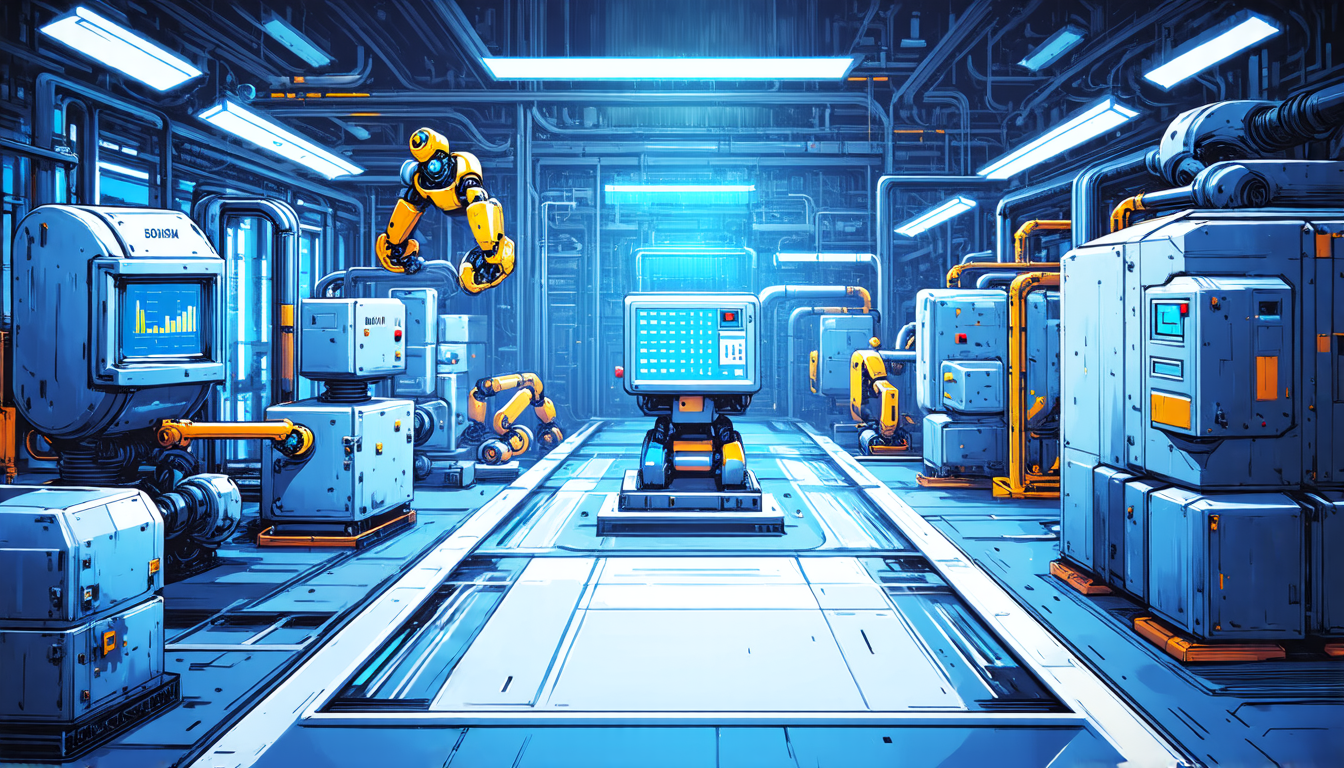
The key innovation is the ability to dynamically switch between different levels of processing power depending on the situation. For example, in a manufacturing plant, the controller might start by analyzing data from sensors using an onboard processor, then move to an edge device for more complex calculations, and finally send the results to the cloud for further analysis and optimization.
The benefits are numerous. The multi-tiered controller can handle large amounts of data and make decisions in real-time, even when connectivity is limited or unreliable. It’s also highly adaptable, allowing it to adjust to changing conditions and optimize system performance accordingly.
One potential application is in industrial automation, where the ability to quickly respond to changes in production lines could mean significant increases in efficiency and productivity. Another area is in transportation, where a multi-tiered controller could help self-driving cars make better decisions faster by analyzing data from multiple sources and processing it in real-time.
The concept is still in its early stages, but researchers are already exploring the potential of multi-tiered controllers in various industries. While there are challenges to overcome, such as ensuring seamless communication between different levels of processing power, the promise of this technology is clear: a more efficient, adaptable, and responsive control system that can help us build better products and services.
In recent tests, the multi-tiered controller has shown impressive results, with simulations demonstrating significant improvements in system performance and efficiency. As the technology continues to evolve, we can expect to see its adoption spread across industries, leading to breakthroughs in everything from manufacturing to healthcare.
Cite this article: “Seamless Control: Edge-Cloud Continuum Revolutionizes Industrial Automation”, The Science Archive, 2025.
Cloud Computing, Edge Devices, Control Systems, Multi-Tiered Controller, Processing Power, Real-Time, Manufacturing, Transportation, Healthcare, Automation





