

Tuesday 08 April 2025
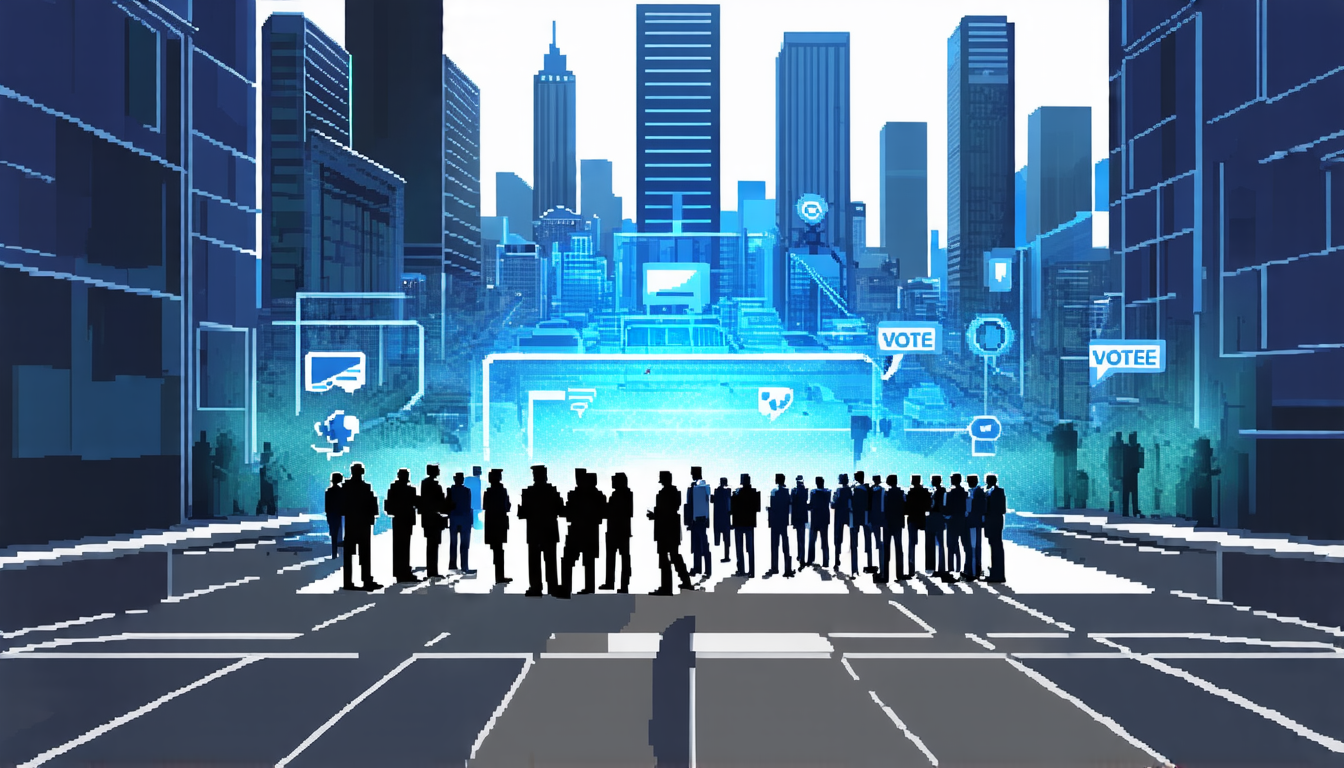
The quest for a more democratic future has long been a topic of debate among scholars and policymakers alike. One potential solution that’s gained traction in recent years is the concept of Artificial Utopia, which involves using computer simulations to test and refine novel political and economic systems before implementing them in the real world.
In a recent paper, researcher Yannick Oswald outlines his vision for Artificial Utopia, a framework that leverages advanced simulation techniques and artificial intelligence to create virtual societies that can be tailored to specific policy goals. The idea is to use these simulations to identify potential flaws or biases in proposed systems before they’re put into practice, thereby minimizing the risk of unintended consequences.
Oswald’s approach builds upon existing research in agent-based modeling, which involves creating digital replicas of real-world entities such as individuals, organizations, and institutions. By simulating how these agents interact with one another within a virtual environment, researchers can gain insights into complex systems and behaviors that might be difficult or impossible to replicate in the physical world.
In the context of Artificial Utopia, Oswald proposes using large language models (LLMs) to create digital citizens who can participate in simulated deliberations and decision-making processes. These LLMs would be designed to mimic human-like behavior, taking into account factors such as personality traits, values, and biases. By analyzing the outcomes of these simulations, researchers could identify patterns or trends that might not be immediately apparent through traditional methods.
One potential application of Artificial Utopia is in the realm of participatory budgeting, where citizens are given a say in how public funds are allocated. By using LLMs to simulate citizen assemblies and deliberations, policymakers could gain insights into which approaches are most likely to produce positive outcomes for society as a whole.
Another potential benefit of Artificial Utopia is its ability to help bridge the gap between theory and practice. In many cases, complex systems theories can be difficult to implement in the real world due to factors such as institutional constraints or conflicting interests. By testing these theories through simulation, researchers could identify potential pitfalls and develop more effective strategies for implementation.
Of course, there are also potential limitations and challenges associated with Artificial Utopia. For one thing, creating realistic digital citizens that can mimic human behavior is a complex task that requires significant advances in AI research. Additionally, there’s always the risk of bias or manipulation in the simulation process itself, which could skew the results and undermine the validity of the findings.
Cite this article: “Unlocking Utopia: How Artificial Intelligence Can Help Create a More Sustainable and Equitable Future”, The Science Archive, 2025.
Artificial Utopia, Simulation, Democracy, Artificial Intelligence, Politics, Economics, Policy-Making, Agent-Based Modeling, Large Language Models, Participatory Budgeting





