

Wednesday 09 April 2025
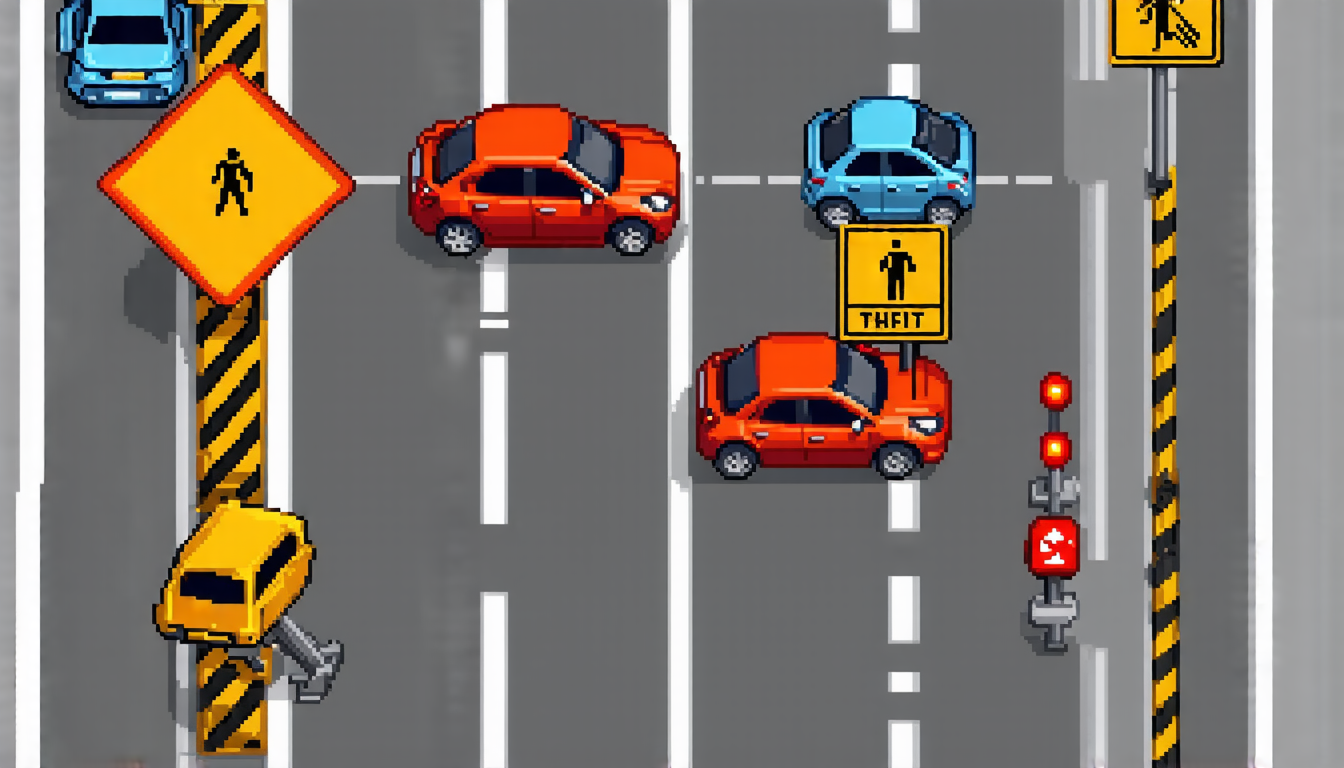
As we hurtle towards a future where autonomous vehicles share our roads, it’s essential to consider how they’ll interact with other drivers and road users in complex environments like work zones. A recent study published in a prestigious journal has shed light on the impact of Level 2 and 3 automated driving technology on road safety in these areas.
Work zones are notorious for their hazards, with construction, maintenance, and repair activities often creating unpredictable and challenging conditions for drivers. The introduction of autonomous vehicles to these environments raises concerns about how they’ll handle unexpected events and interact with human drivers who may be distracted or fatigued.
Researchers used a sophisticated traffic simulation model to investigate the effects of Level 2 and 3 automated driving on work zone safety. These levels of automation refer to systems that can take control of the vehicle in certain situations, such as stopping at red lights or merging onto highways, but still require human intervention for more complex tasks like navigating through construction zones.
The study found that the impact of automated driving technology on work zone safety is complex and depends on various factors. For instance, when autonomous vehicles are equipped with Level 2 automation, they’re more likely to disengage from automated mode in response to unexpected events, which can lead to new traffic conflicts. However, if takeover times are prolonged or inadequate, this can result in additional safety risks.
Interestingly, the researchers discovered that increasing the market penetration rate (MPR) of autonomous vehicles, which is the percentage of vehicles on the road that are equipped with automated driving technology, has a paradoxical effect on work zone safety. While MPR helps reduce single-vehicle conflicts, it also increases the likelihood of multi-vehicle conflicts.
The study’s findings have significant implications for traffic management and road safety strategies in work zones. For instance, implementing early warning systems to encourage drivers to take control of their vehicles and disengage from automated mode could help mitigate risks associated with autonomous vehicle disengagements. Additionally, optimizing takeover mechanisms within automated driving systems could reduce the likelihood of new traffic conflicts arising.
The authors’ results highlight the need for a more nuanced understanding of how automated driving technology interacts with human behavior in complex environments like work zones. As we continue to develop and deploy these systems, it’s essential that we prioritize safety and adapt our strategies accordingly.
By examining the intricate relationships between autonomous vehicles, human drivers, and road conditions in work zones, researchers can inform the development of safer and more effective traffic management systems.
Cite this article: “Automated Drivings Mixed Blessings: How Level 2 and 3 Technology Impacts Work Zone Safety”, The Science Archive, 2025.
Autonomous Vehicles, Road Safety, Work Zones, Level 2 Automation, Level 3 Automation, Takeover Mechanisms, Market Penetration Rate, Traffic Conflicts, Early Warning Systems, Human Behavior.





