

Wednesday 09 April 2025
Deep learning has revolutionized many areas of artificial intelligence, but it’s far from a perfect solution. One major limitation is its inability to effectively handle hierarchical data structures, where relationships between different levels of abstraction are crucial for understanding and decision-making. This is where Adaptive Resonance Theory (ART) comes in – an old-school neural network architecture that’s been revamped to tackle this very challenge.
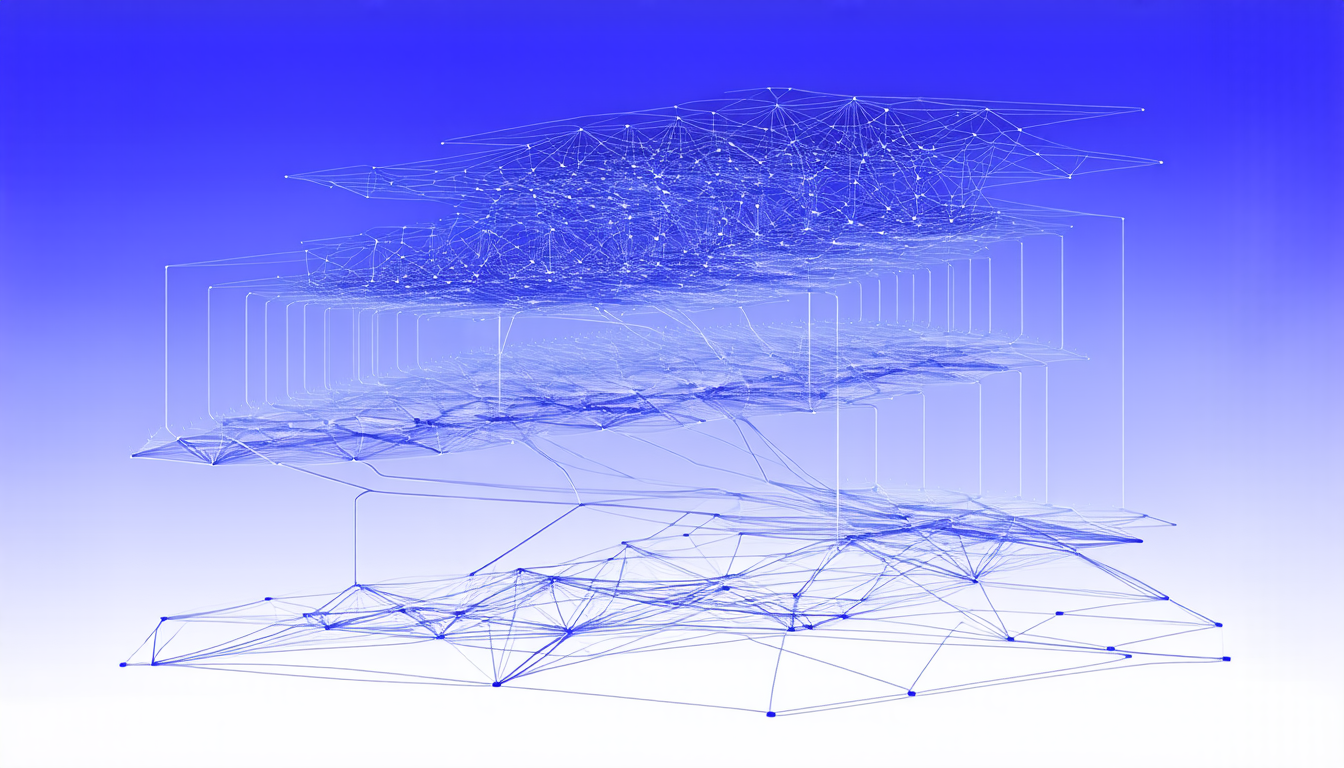
The new framework, dubbed Deep ARTMAP, takes the original ART concept and expands it into a hierarchical structure with multiple layers. Each layer applies a different transformation to the input data, allowing the network to learn increasingly complex patterns and relationships. This is particularly useful for tasks like image classification, where recognizing objects at various scales and resolutions is essential.
One of the key benefits of Deep ARTMAP is its ability to handle catastrophic forgetting – a common problem in deep learning models that occur when new information is introduced and older knowledge is lost. By incorporating an adaptive vigilance parameter, the network can dynamically adjust its sensitivity to changes in the input data, ensuring that previously learned patterns are preserved.
Another advantage of Deep ARTMAP is its ability to learn from both supervised and unsupervised data. In traditional deep learning models, the distinction between these two types of training data is stark – supervised learning involves labeled examples, while unsupervised learning relies on clustering or dimensionality reduction techniques. Deep ARTMAP blurs this line by allowing the network to learn from both types of data simultaneously.
The authors have implemented Deep ARTMAP in both Python and Julia, making it accessible to a wide range of developers and researchers. The framework has already shown promising results in various applications, including image classification and clustering.
While Deep ARTMAP is certainly an impressive achievement, there are still some limitations to be addressed. For one, the network’s performance can degrade when dealing with large amounts of data or complex transformations. Additionally, the adaptive vigilance parameter requires careful tuning to ensure optimal performance.
Despite these challenges, Deep ARTMAP represents a significant step forward in the development of hierarchical neural networks. By combining the strengths of traditional ART models with modern deep learning techniques, this framework offers a powerful tool for tackling some of AI’s most pressing challenges – from image recognition to natural language processing and beyond.
Cite this article: “Deep ARTMAP: A Novel Hierarchical Learning Framework for Multi-Modal Data Clustering and Classification”, The Science Archive, 2025.
Artificial Intelligence, Deep Learning, Neural Networks, Hierarchical Data Structures, Adaptive Resonance Theory, Artmap, Image Classification, Catastrophic Forgetting, Unsupervised Learning, Supervised Learning.





