

Wednesday 09 April 2025
Scientists have made a significant discovery that could potentially shed light on one of the most enduring mysteries in modern physics: dark matter. For decades, researchers have been searching for evidence of this mysterious substance, which is thought to make up roughly 27% of our universe but has yet to be directly observed.
The latest findings come from a team of scientists who used data collected by the Super-Kamiokande experiment, a particle detector located deep beneath the Japanese city of Kamioka. By analyzing the energies and directions of neutrinos – tiny particles that are produced when high-energy particles interact with matter – researchers were able to set new limits on the strength of dark matter’s interaction with ordinary matter.
Neutrinos are notoriously difficult to detect, as they rarely interact with other particles. However, in certain situations – such as when a high-energy particle collides with a nucleus – neutrinos can produce Cherenkov radiation, which is detectable by experiments like Super-Kamiokande. By analyzing the patterns of this radiation, scientists can infer the presence and properties of dark matter.
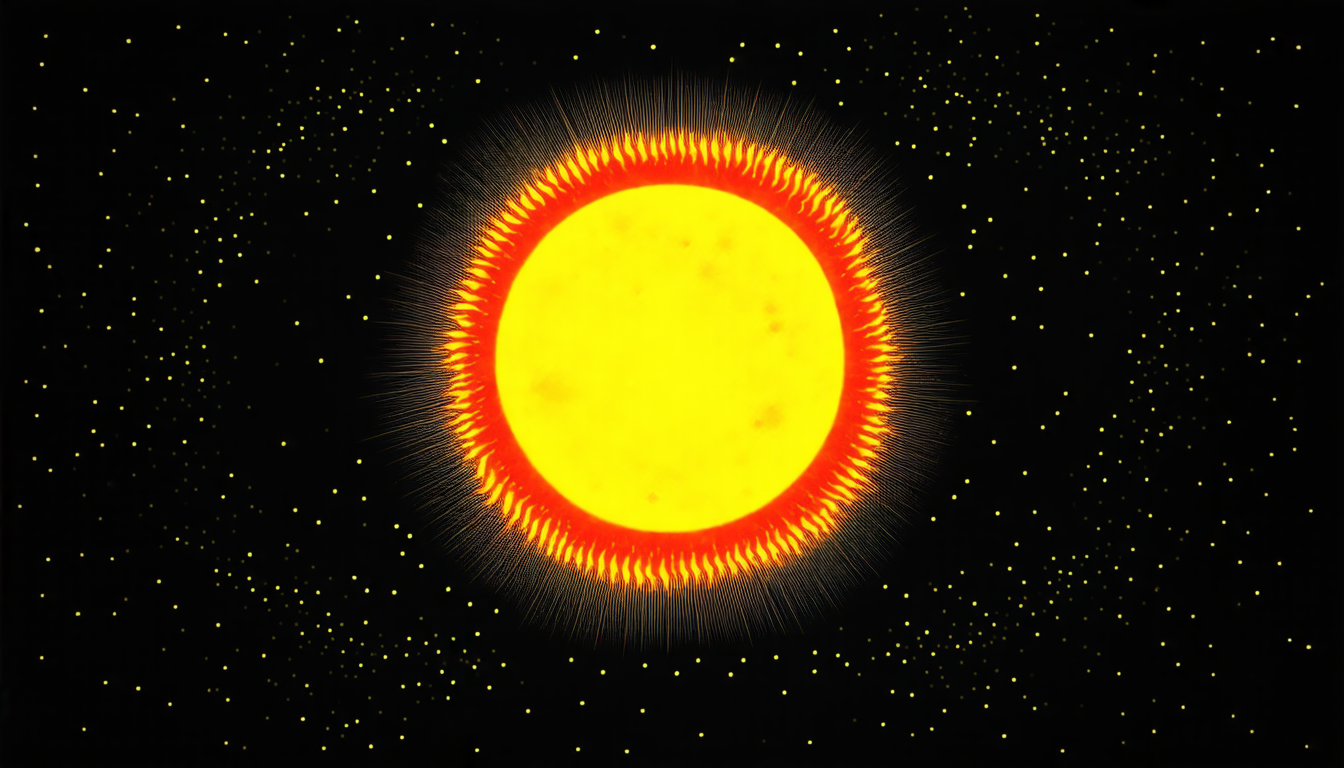
In their study, researchers focused on the capture of dark matter particles in the Sun. As these particles interact with the Sun’s core, they release energy in the form of neutrinos, which can then be detected by experiments like Super-Kamiokande. By studying the patterns of these neutrinos, scientists hope to gain insights into the properties and behavior of dark matter.
One of the key findings of this study is that the strength of dark matter’s interaction with ordinary matter is significantly weaker than previously thought. This has important implications for our understanding of dark matter and its role in the universe.
While the discovery is significant, it is not without limitations. The researchers acknowledge that their results are based on a simplified model of dark matter and that further studies are needed to confirm these findings.
Despite these limitations, this study represents an important step forward in our understanding of dark matter. By continuing to push the boundaries of what we know about this mysterious substance, scientists hope to eventually uncover its secrets and shed light on one of the greatest mysteries of modern physics.
Cite this article: “Unveiling the Secrets of Dark Matter: A Breakthrough in Detecting Sub-GeV WIMPs Using Super-Kamiokande”, The Science Archive, 2025.
Dark Matter, Neutrinos, Super-Kamiokande, Particle Detector, Japanese City, Kamioka, Cherenkov Radiation, Sun’S Core, Ordinary Matter, Simplified Model





