

Wednesday 09 April 2025
Recently, scientists have made a significant breakthrough in solving complex problems using artificial intelligence and quantum computing. Researchers from Beijing University of Petroleum, China University of Science and Technology, and Southwest University collaborated to develop a new algorithm that can efficiently solve graph isomorphism problems.
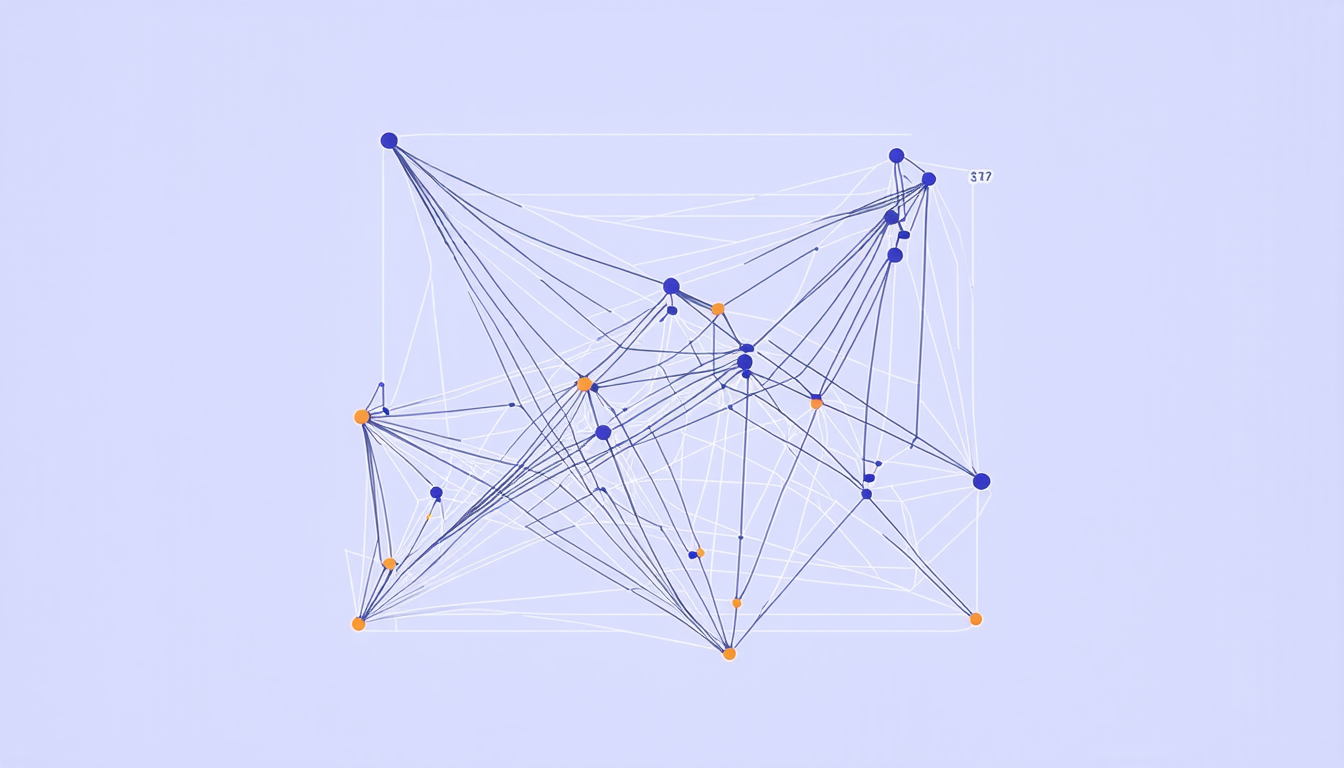
Graph isomorphism is a fundamental challenge in computer science, driving the search for efficient decision algorithms. The problem involves determining whether two given graphs can be transformed into each other by relabeling their nodes while preserving their structure. This concept has far-reaching applications across various domains, including data analysis, molecular crystal structures, and cryptographic protocols.
The research team employed a novel approach called Neural Quantum States (NQS) to tackle this complex problem. NQS is an emerging approximate quantum system model that uses neural networks to efficiently simulate quantum systems. In this study, the researchers encoded the graph isomorphism problem as a Quadratic Unconstrained Binary Optimization (QUBO) problem and mapped it to an Ising Hamiltonian.
The team then utilized a variational method based on NQS to solve the problem. This approach emphasized regions of the solution space that are most likely to contain the optimal solution, enhancing search accuracy. Artificial neural networks were used to parameterize the quantum many-body system, leveraging their capacity for efficient function approximation to perform accurate sampling in intricate energy landscapes.
The results showed that the NQS algorithm outperformed traditional simulated annealing-based algorithms in terms of both accuracy and efficiency. The algorithm’s sample estimation process captured a more comprehensive state of the overall system, allowing for more precise adjustments to the probability distribution of the solution space.
This breakthrough has significant implications for the field of graph theory and its applications. The NQS algorithm can efficiently solve complex problems involving large graphs, which is crucial for many real-world scenarios. Furthermore, this research highlights the potential of combining artificial intelligence and quantum computing to tackle challenging computational problems.
The study’s findings have also shed light on the power of neural networks in simulating quantum systems. By leveraging their ability to approximate complex functions, NQS can efficiently solve optimization problems that are difficult or impossible for traditional algorithms to handle.
As researchers continue to explore the intersection of artificial intelligence and quantum computing, this breakthrough serves as a promising example of the potential benefits of such collaborations. The development of new algorithms like NQS holds great promise for solving complex problems in various fields, from data analysis to cryptography.
Cite this article: “Quantum Leap Forward: Neural Networks Solve Graph Isomorphism Problem in Record Time”, The Science Archive, 2025.
Artificial Intelligence, Quantum Computing, Graph Isomorphism, Neural Networks, Nqs Algorithm, Simulated Annealing, Qubo Problem, Ising Hamiltonian, Optimization Problems, Machine Learning.





