
Wednesday 09 April 2025
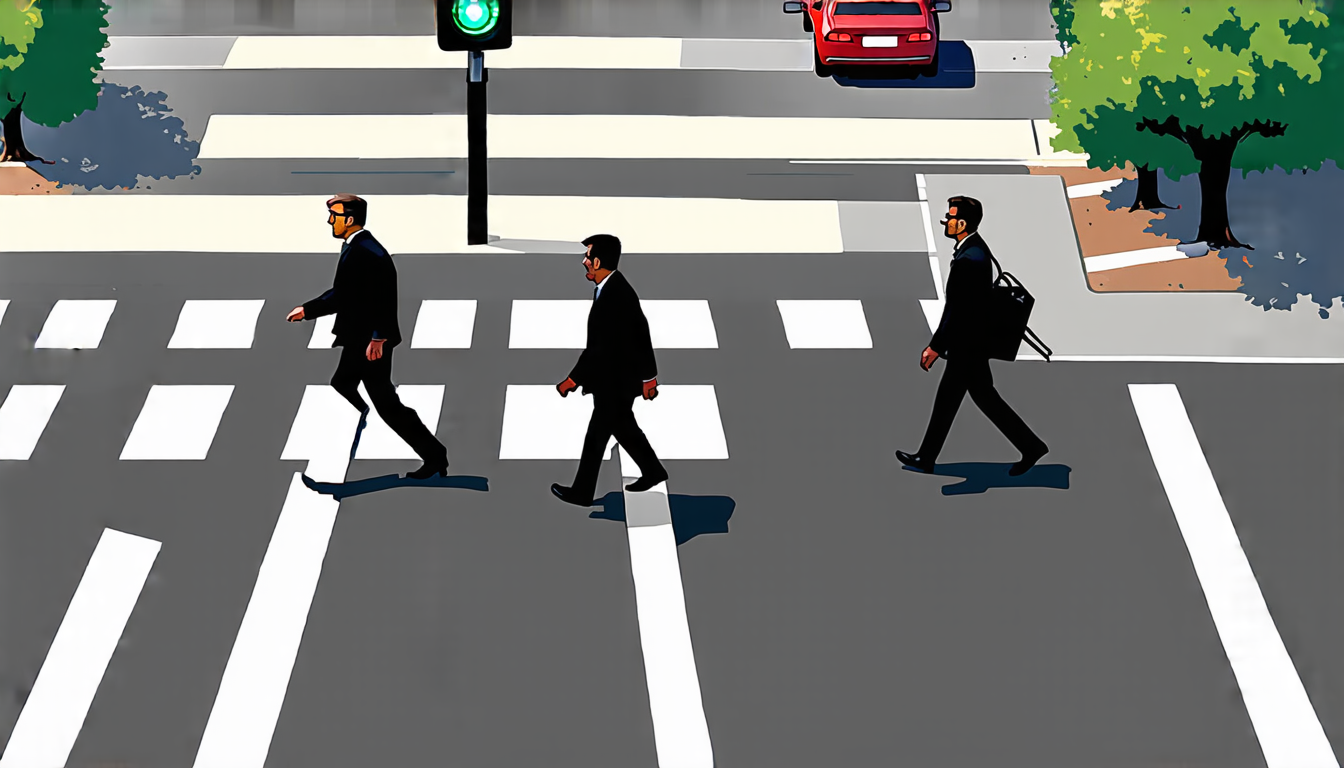
The world’s roads are a mess, and pedestrians often find themselves at the mercy of speeding cars and reckless drivers. But what if we could create a safer, more efficient way to manage intersections? A new study published in a recent paper offers a promising solution.
Researchers have developed a novel simulation framework that uses probabilistic models and Monte Carlo simulations to evaluate pedestrian safety at intersections. The approach takes into account the complex interactions between pedestrians, vehicles, and traffic lights, providing a more realistic picture of how these systems work together.
The study’s authors used a sophisticated model to simulate the behavior of both pedestrians and vehicles, incorporating factors like waiting times, vehicle distances, and traffic light states. They found that pedestrian decisions are heavily influenced by these variables, with longer waiting times often leading to safer crossings.
The researchers also discovered that yellow lights present a significant risk for pedestrians, as they tend to make more risky crossing decisions during this phase. This is likely due to the fact that drivers are still moving at high speeds during yellows, and pedestrians may feel pressure to cross quickly before the light turns red.
One of the most striking findings was the importance of vehicle proximity in shaping pedestrian behavior. The study showed that as vehicles approach closer, pedestrians become more cautious and less likely to cross. This makes sense – who wouldn’t want to avoid a collision?
The authors’ model also highlighted the benefits of adaptive traffic control measures, such as pedestrian-triggered signals and enhanced traffic light timing. By incorporating real-time data into these systems, cities could create safer and more efficient intersections.
So what does this mean for our roads? For one, it suggests that we need to rethink how we approach intersection design and management. By incorporating probabilistic models and real-time data, cities can create safer, more efficient spaces for pedestrians and drivers alike.
The study’s authors also emphasize the importance of further research into pedestrian behavior and traffic flow dynamics. By better understanding these complex systems, we can develop even more effective solutions to improve road safety.
For now, the paper offers a promising glimpse into the future of intersection management. As cities continue to grapple with the challenges of urban mobility, this study provides valuable insights that could help us build safer, smarter roads for everyone.
Cite this article: “Cracking the Code of Pedestrian Behavior: A Probabilistic Model for Safe Intersection Crossing”, The Science Archive, 2025.
Road Safety, Pedestrian Behavior, Traffic Flow Dynamics, Intersection Design, Probabilistic Models, Monte Carlo Simulations, Vehicle Proximity, Adaptive Traffic Control, Traffic Light Timing, Urban Mobility