

Wednesday 09 April 2025
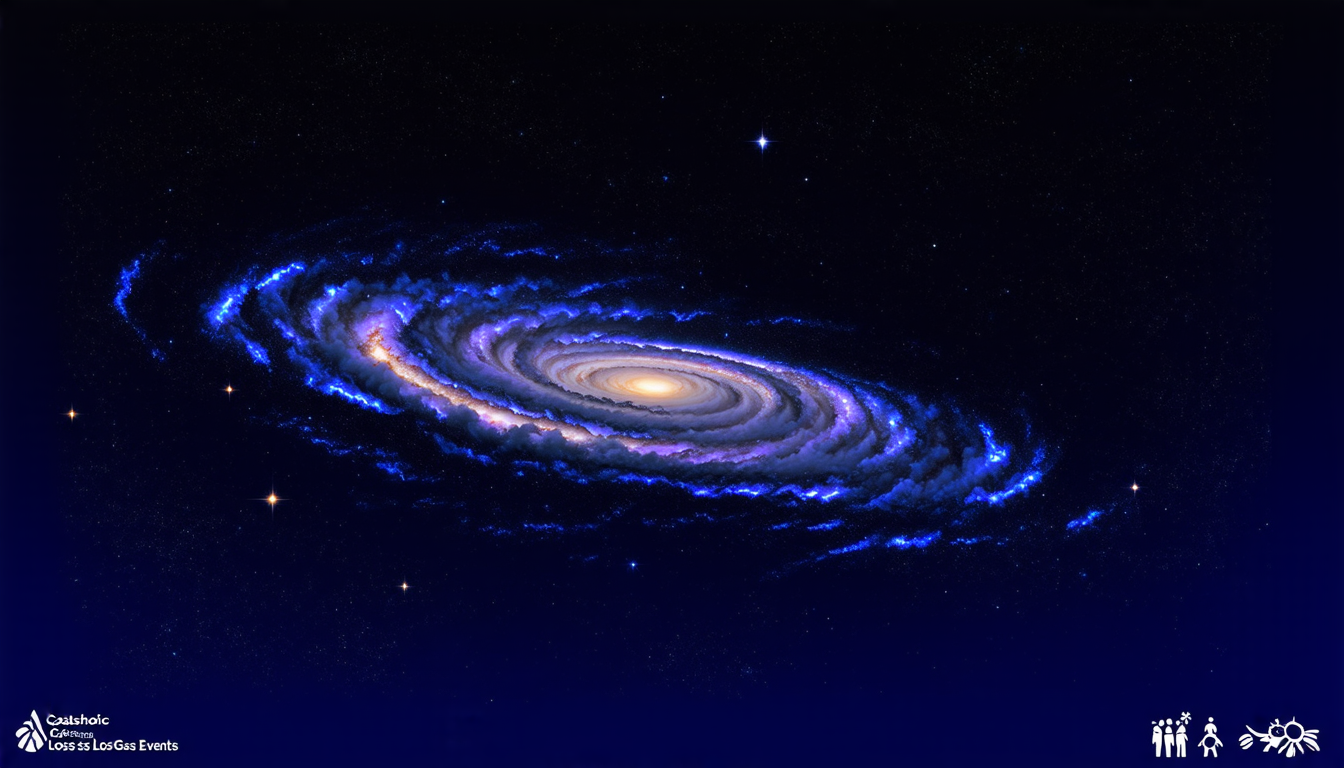
Scientists have long sought to understand how galaxies like our own Milky Way evolved over billions of years. A key piece of this puzzle is the process of galactic chemical evolution, where stars and other celestial bodies churn out heavy elements that eventually make their way into interstellar space.
Recently, a team of researchers has developed a new analytical model for understanding this process, one that takes into account not just the steady flow of gas in and out of galaxies but also more dramatic events like supernovae explosions and ram pressure stripping. The result is a more nuanced picture of how galaxies have evolved over time.
The new model builds upon existing work by incorporating two key features: gas inflow and catastrophic gas loss. Gas inflow refers to the steady stream of material that flows into a galaxy from its surroundings, fueling star formation and enriching the interstellar medium with heavy elements. Catastrophic gas loss, on the other hand, occurs when galaxies collide or are stripped of their gas by external forces, leading to a sudden depletion of this vital resource.
By combining these two processes, the researchers were able to create a more realistic simulation of galactic chemical evolution. They applied this model to six nearby dwarf galaxies, which are small and have relatively simple chemical compositions that make them ideal for studying this process.
The results showed that these galaxies underwent significant changes in their chemical composition over time, with some experiencing more dramatic fluctuations than others. The researchers found that the timing and intensity of these events played a crucial role in shaping the final chemical makeup of each galaxy.
One of the most intriguing findings was that even galaxies that experienced similar gas inflow rates had wildly different chemical compositions due to variations in catastrophic gas loss. This highlights the importance of considering not just the steady flow of gas but also more dramatic events in understanding galactic evolution.
The new model also provides a framework for studying the chemical evolution of larger, more complex galaxies like our own Milky Way. By incorporating additional features like star formation rates and supernova explosions, scientists can gain a deeper understanding of how these galaxies evolved over time and what this means for their current chemical composition.
In the end, the researchers’ work offers a fresh perspective on the long-standing problem of galactic chemical evolution. By combining steady gas flow with more dramatic events, they have created a more realistic simulation that sheds new light on the complex dance between gas, stars, and galaxies over billions of years.
Cite this article: “Unraveling the Mysteries of Dwarf Galaxy Evolution: A New Analytical Model Reveals Insights into Gas Inflow and Outflow”, The Science Archive, 2025.
Galaxies, Chemical Evolution, Star Formation, Supernovae, Gas Inflow, Catastrophic Gas Loss, Ram Pressure Stripping, Interstellar Space, Milky Way, Dwarf Galaxies





