

Wednesday 09 April 2025
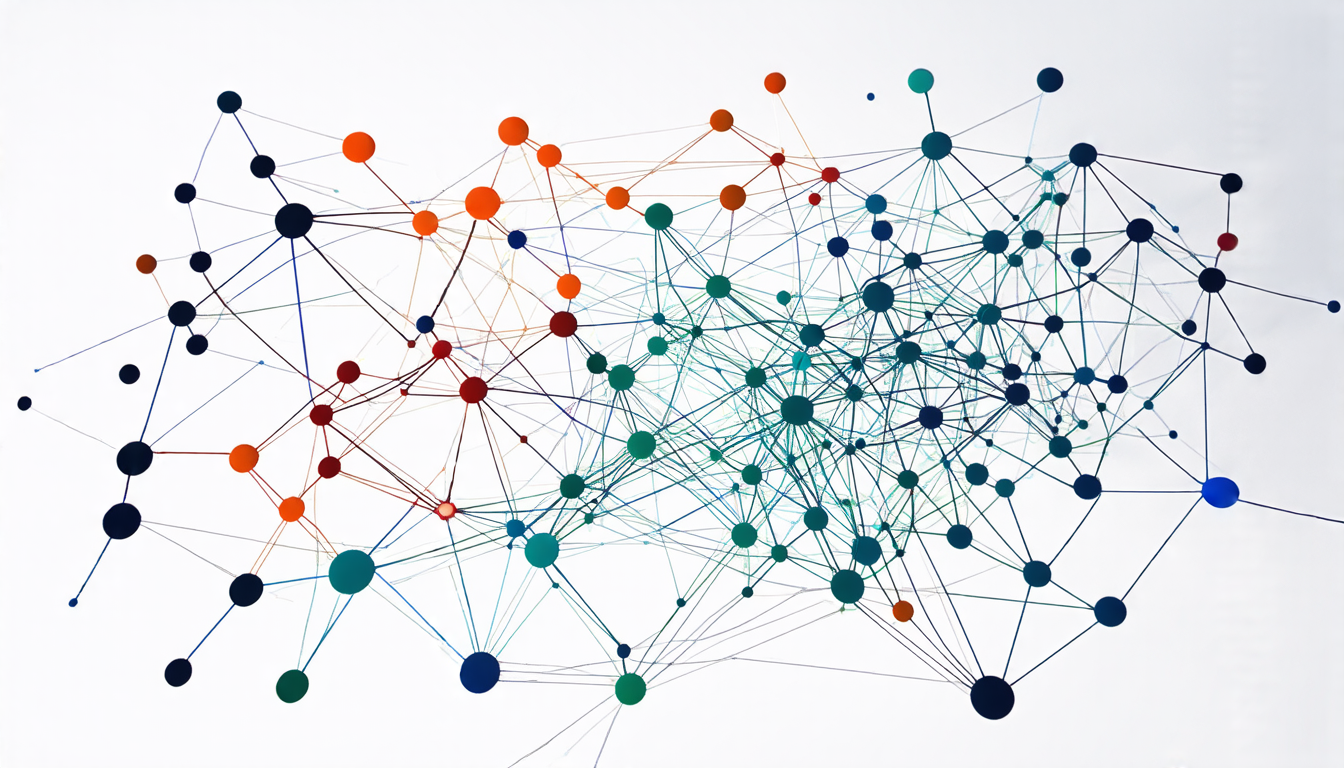
The latest advancements in machine learning have been a game-changer for many industries, but one area that’s seen significant progress is graph neural networks (GNNs). These artificial intelligence models are designed to learn patterns and relationships within complex data structures, like social networks or molecular interactions. Now, researchers have developed a new approach that could revolutionize the way we train GNNs.
The issue with traditional GNNs is that they often struggle to capture subtle connections between nodes in the graph. This can lead to poor performance when it comes to tasks like link prediction or node classification. The solution lies in exploiting conditional independence (CI) within the graph, which is a statistical concept that describes how certain variables are related.
The new approach, dubbed CIMAGE, uses a clever trick to incorporate CI into the training process. By masking parts of the graph and reconstructing the missing information, the model learns to identify the most important relationships between nodes. This not only improves performance but also reduces the need for large amounts of labeled data.
One of the key insights behind CIMAGE is that it can leverage the structural properties of the graph to guide the learning process. By analyzing the graph’s connectivity and node features, the model can identify patterns that are indicative of CI. This allows it to focus on the most critical relationships, rather than trying to learn everything at once.
The benefits of CIMAGE are far-reaching. For instance, it could be used in recommender systems to improve the accuracy of personalized recommendations. In biology, it could help researchers better understand complex networks like protein interactions or gene regulation. Even in social media, CIMAGE could be used to identify influential users or detect fake accounts.
But what really sets CIMAGE apart is its ability to scale up to large datasets. Traditional GNNs often struggle with computationally expensive tasks like link prediction or node classification when dealing with massive graphs. CIMAGE, on the other hand, can handle these tasks with ease, thanks to its efficient masking and reconstruction scheme.
The implications of this research are significant. As graph data becomes increasingly prevalent across industries, the need for powerful GNNs will only continue to grow. With CIMAGE, researchers and developers have a new tool in their arsenal that could help unlock the full potential of these complex datasets.
In the world of machine learning, it’s not often that we see a breakthrough that has such far-reaching implications.
Cite this article: “Unlocking Graph Autoencoders: A Conditional Independence Perspective”, The Science Archive, 2025.
Graph Neural Networks, Machine Learning, Artificial Intelligence, Complex Data Structures, Social Networks, Molecular Interactions, Conditional Independence, Link Prediction, Node Classification, Recommender Systems





