

Wednesday 09 April 2025
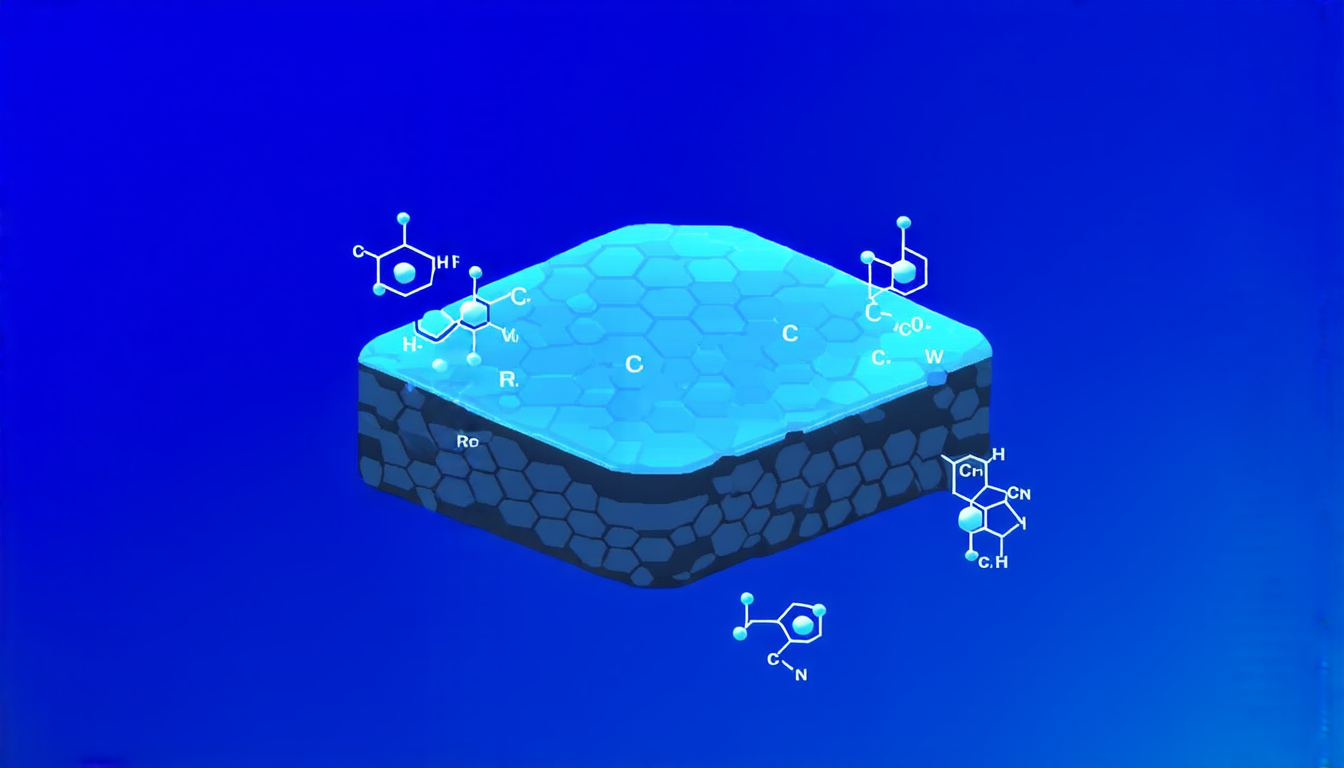
Researchers have made a significant breakthrough in understanding the behavior of titanium carbide (Ti3C2Tx) materials, commonly known as MXenes. These ultra-thin two-dimensional materials have been touted for their potential to revolutionize energy storage and electronics, but until now, scientists have struggled to fully grasp how they react with oxygen.
MXenes are formed by removing a single layer of atoms from titanium carbide, leaving behind a lattice structure that is incredibly strong and flexible. When exposed to air, MXenes naturally oxidize, which can lead to changes in their properties and behavior. However, the exact mechanisms behind this oxidation process have been shrouded in mystery.
Using advanced techniques such as X-ray photoelectron spectroscopy (XPS) and scanning electron microscopy (SEM), scientists have been able to study the oxidation of MXenes in unprecedented detail. They found that the reaction is not a simple one-step process, but rather a complex two-step mechanism involving both surface and bulk transformations.
The first step involves the diffusion of oxygen into the material’s surface, where it reacts with titanium atoms to form titanium dioxide (TiO2). This initial oxidation layer acts as a barrier, preventing further oxygen from penetrating deeper into the material. However, when this layer becomes too thick, the material undergoes a second phase transition, in which the TiO2 transforms into rutile (TiO2), a more stable crystal structure.
The researchers also discovered that the surface chemistry of the MXene plays a crucial role in determining its oxidation behavior. Materials with fluoride-rich surfaces tend to form anatase (TiO2) instead of rutile, while those with oxygen-rich surfaces favor the development of rutile. This means that by carefully controlling the surface composition and structure of MXenes, scientists may be able to engineer their properties to suit specific applications.
The findings have significant implications for the development of MXene-based devices, which could potentially revolutionize fields such as energy storage, electronics, and catalysis. By understanding how these materials react with oxygen, researchers can design more efficient and stable systems that take full advantage of their unique properties.
In addition, the study highlights the importance of multidisciplinary research approaches, combining expertise from materials science, chemistry, and physics to tackle complex problems. The results demonstrate the power of interdisciplinary collaboration in driving scientific breakthroughs and advancing our understanding of the world around us.
Cite this article: “Unlocking the Secrets of Titanium Carbides Oxidation: A Game-Changer for Energy Storage Applications?”, The Science Archive, 2025.
Ti3C2Tx, Mxenes, Oxidation, Titanium Carbide, X-Ray Photoelectron Spectroscopy, Scanning Electron Microscopy, Surface Chemistry, Rutile, Anatase, Energy Storage





