

Wednesday 09 April 2025
Artificially intelligent digital twins of complex objects have long been a holy grail for robotics and computer vision researchers. These virtual replicas would allow machines to learn about and interact with real-world objects in a more intuitive way, enabling them to perform tasks that are currently beyond their capabilities.
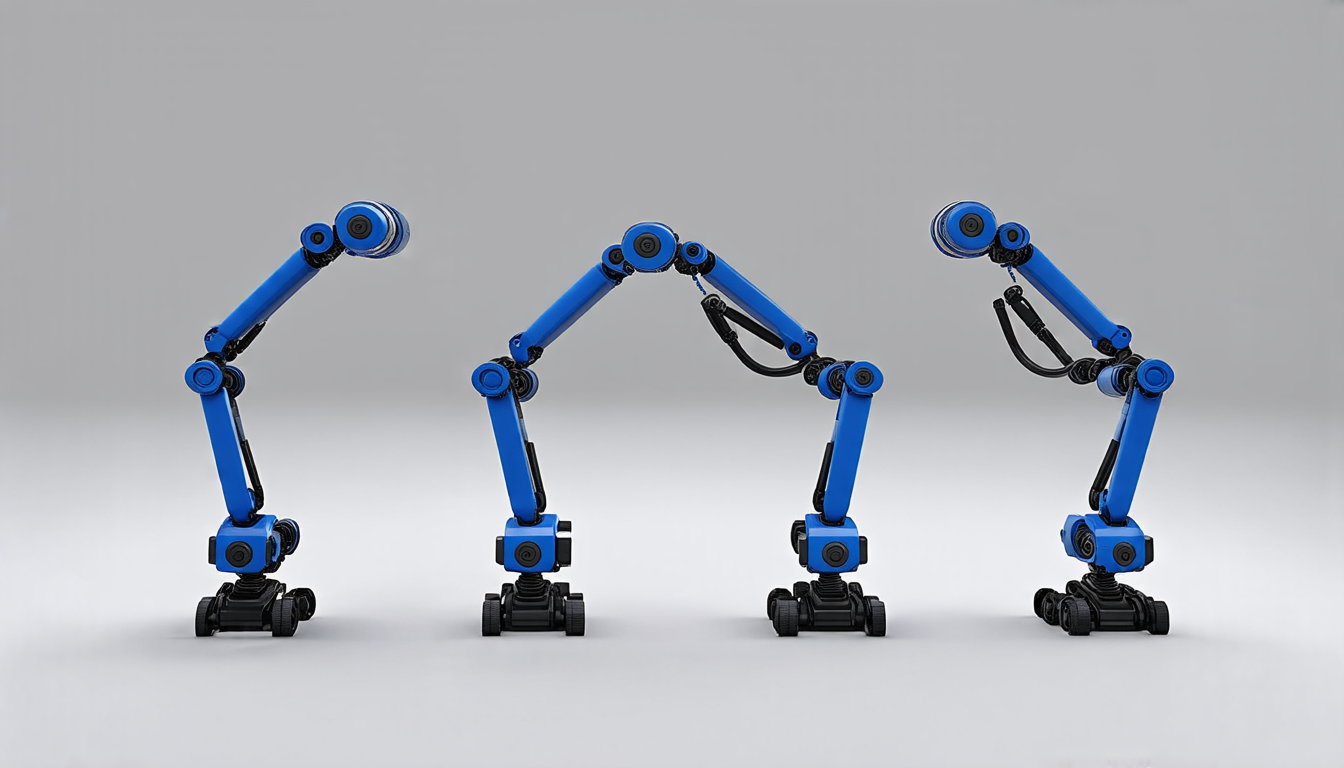
Recently, scientists have made significant progress towards achieving this goal by developing a self-supervised method for creating digital twins of articulated objects – those with moving parts that can change shape or position. The technique uses a combination of computer vision and machine learning algorithms to reconstruct the 3D geometry and appearance of an object in multiple states.
The approach starts by capturing images of the object from different angles and lighting conditions. These images are then fed into a neural network, which learns to recognize patterns and relationships between the object’s parts. The network is trained to predict how the object’s shape and color will change as it moves or transforms.
To achieve this, the researchers used a technique called 3D Gaussian Splatting, which allows them to model the object’s geometry and appearance in a more flexible way than traditional methods. This flexibility is crucial for accurately capturing the complex movements of articulated objects.
The digital twin is then used to generate novel views of the object from unseen angles or states. This could be useful in applications such as robotics, virtual reality, and computer-aided design. For example, a robot could use a digital twin to plan its motion and interact with an object in a more intelligent way.
One of the key advantages of this approach is that it requires no 3D models or manual annotations – just a set of images taken from different angles. This makes it potentially useful for a wide range of objects, from simple toys to complex machinery.
However, there are still some limitations to the technique. For example, it can struggle with objects that have very similar colors or textures, or those with small movable parts that are difficult to detect. Additionally, the method assumes that the object’s movements are relatively smooth and continuous – if the object is moving rapidly or in a complex way, the digital twin may not be able to accurately capture its shape and appearance.
Despite these limitations, this research represents an important step towards creating more realistic and flexible digital twins of articulated objects. With further development, it could have significant implications for fields such as robotics, computer vision, and virtual reality.
Cite this article: “Unlocking the Secrets of Articulated Objects: A Self-Supervised Approach to Digital Twin Modeling”, The Science Archive, 2025.
Artificial Intelligence, Digital Twins, Computer Vision, Machine Learning, Robotics, 3D Modeling, Neural Networks, Gaussian Splatting, Articulated Objects, Virtual Reality.





