

Wednesday 09 April 2025
The quest for efficient data storage and retrieval has been a longstanding challenge in computer science. Researchers have long sought to create data structures that can handle massive amounts of information while minimizing the time it takes to access specific pieces of data. A recent breakthrough in this area has led to the development of a new type of search tree that is capable of handling extremely large datasets with unprecedented efficiency.
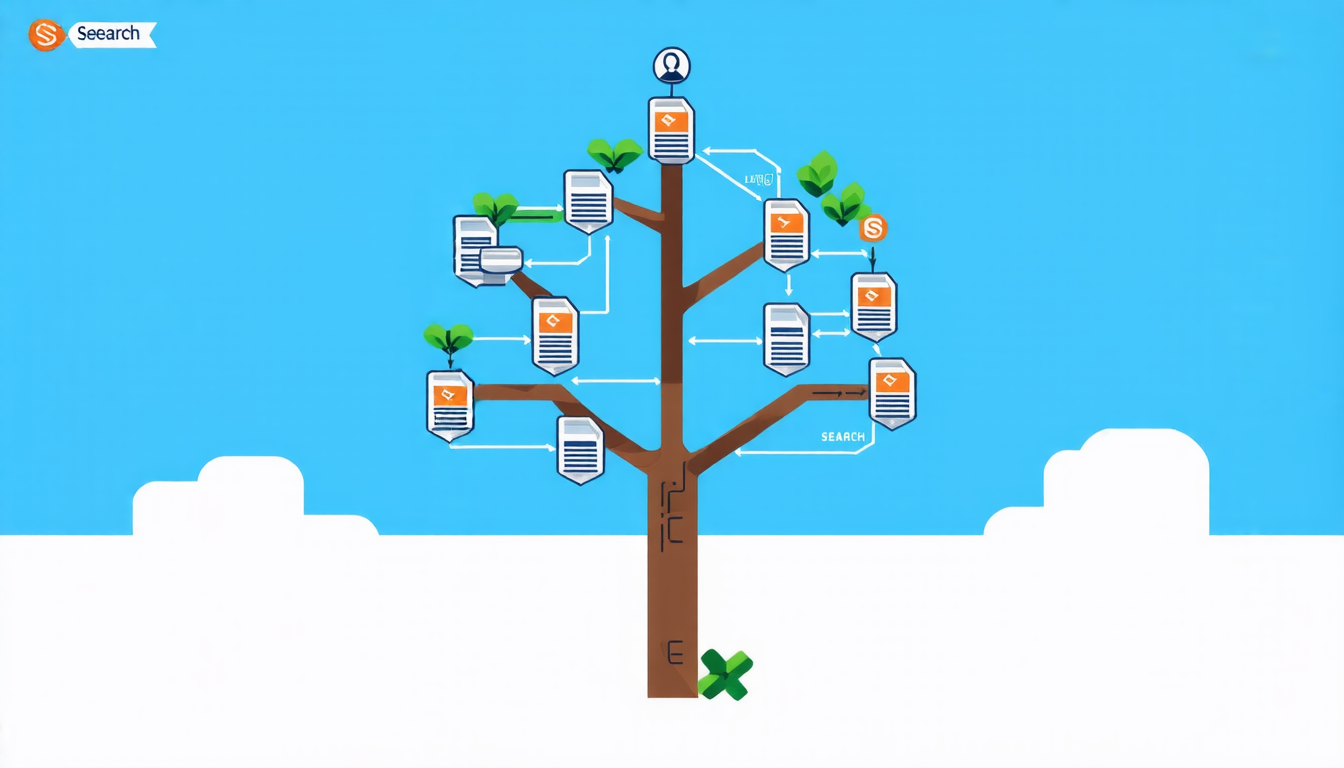
The key innovation behind this new search tree lies in its ability to store and retrieve data in a partially-persistent manner. This means that the data structure can be updated rapidly, while still allowing for fast querying and retrieval of specific pieces of information. The secret to this efficiency lies in the use of buffers to store updates, rather than rewriting the entire data structure every time new information is added.
The benefits of this approach are twofold. Firstly, it allows for much faster update times, as only the relevant changes need to be written to disk. Secondly, it enables faster query times, as the search tree can quickly identify which parts of the dataset have been updated and focus its search efforts there.
But how does this work in practice? To understand the inner workings of this new data structure, let’s take a step back and examine the traditional approach to building search trees. In the past, researchers have relied on techniques such as indexing and caching to speed up query times. However, these methods can become unwieldy when dealing with extremely large datasets.
The new partially-persistent search tree, on the other hand, uses a different approach. By storing updates in buffers rather than rewriting the entire data structure, it is able to handle massive amounts of information without sacrificing performance. This approach also allows for more efficient use of disk space, as only the changes need to be stored.
One of the key challenges facing researchers in this area has been finding ways to balance the needs of fast query times with the demands of efficient storage and retrieval. The new partially-persistent search tree is able to achieve this balance by using a combination of buffering and partial persistence.
The implications of this breakthrough are far-reaching, with potential applications in fields such as data science, machine learning, and artificial intelligence. By enabling faster and more efficient data retrieval, the new search tree has the potential to revolutionize the way we analyze and understand large datasets.
In addition to its practical applications, the development of this new search tree also highlights the importance of interdisciplinary collaboration between computer scientists and mathematicians.
Cite this article: “Unlocking Efficient External Memory Search Trees: A Game-Changing Approach”, The Science Archive, 2025.
Data Storage, Retrieval, Search Trees, Partially-Persistent Data Structure, Buffering, Disk Space Efficiency, Query Times, Update Times, Data Analysis, Machine Learning, Artificial Intelligence, Computer Science, Mathematics, Interdisciplinary Collaboration.





