

Wednesday 09 April 2025
The latest breakthrough in computer vision has left experts abuzz, as a team of researchers has developed a revolutionary new method for reconstructing 3D human models from a single image.
Traditionally, creating detailed 3D models of humans from photographs required a significant amount of data and computational power. However, the new approach, dubbed MVD- HuGaS (Multi-View Diffusion-Human Gaussian), can generate photorealistic 3D models with unprecedented accuracy using just a single image as input.
The key to MVD-HuGaS’s success lies in its ability to capture the intricate details of human anatomy and clothing from a single view. This is achieved through a novel combination of machine learning algorithms and geometric modeling techniques.
First, the system uses a deep neural network to generate a rough estimate of the 3D model based on the input image. This initial model is then refined using a technique called multi-view diffusion, which involves generating multiple views of the object from different angles and combining them to create a more accurate representation.
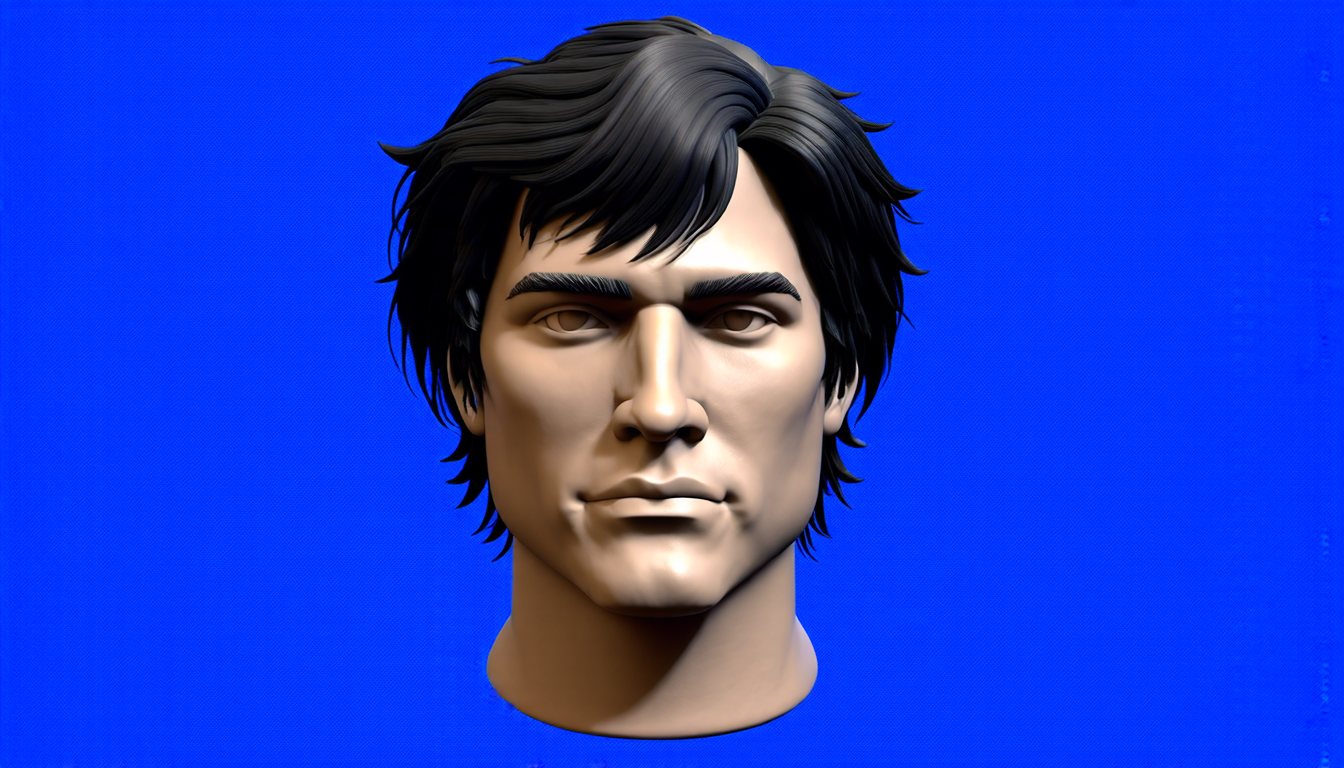
To further improve accuracy, MVD-HuGaS incorporates geometric modeling techniques, such as Gaussian splatting, to capture the subtle details of human anatomy and clothing. These techniques allow the system to generate detailed models of facial features, hair, and clothing textures that are remarkably lifelike.
The results are nothing short of astonishing. The researchers have demonstrated MVD-HuGaS’s capabilities using a range of test images, including portraits of people wearing different outfits and hairstyles. In each case, the system has generated 3D models that are so accurate they appear to be real people.
The implications of this technology are far-reaching. With MVD-HuGaS, it may soon become possible for computer vision systems to generate realistic 3D avatars for use in a wide range of applications, from virtual reality and video games to film and television production.
Moreover, the system’s ability to capture intricate details of human anatomy and clothing has significant potential for medical and forensic applications. For example, MVD-HuGaS could be used to generate detailed 3D models of victims’ faces or bodies in crime scenes, helping investigators to identify remains more accurately.
While there is still much work to be done before MVD-HuGaS can be widely deployed, the technology has already sparked a flurry of interest among researchers and developers.
Cite this article: “Breaking Barriers: A Novel Approach to Single-Image Human Reconstruction with Multi-View Diffusion Prior”, The Science Archive, 2025.
Computer Vision, 3D Modeling, Human Anatomy, Machine Learning, Neural Network, Geometric Modeling, Gaussian Splatting, Multi-View Diffusion, Photorealistic, Virtual Reality





