

Wednesday 09 April 2025
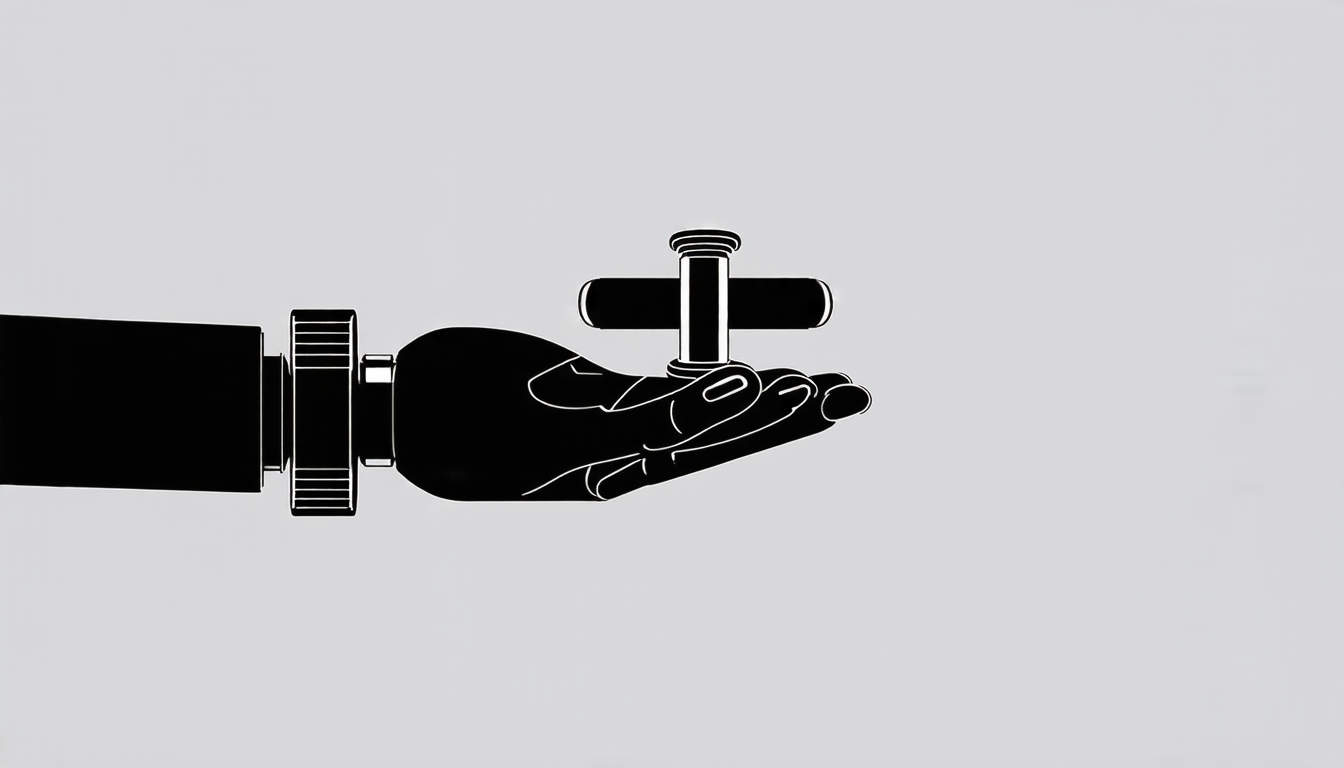
The robotic hand, once a staple of science fiction, is now a reality. But while we’ve made significant strides in designing and building dexterous hands for robots, there’s still much to be done when it comes to controlling them. A team of researchers has been working on developing a new framework for controlling robotic hands with tactile feedback, which could revolutionize the way we interact with machines.
The key challenge is that current control systems rely too heavily on visual and auditory cues, rather than the sense of touch. But human hands are able to manipulate objects with incredible precision thanks to their sensitive fingertips and palms. By incorporating tactile sensors into robotic hands, we can give them a similar level of dexterity and fine motor control.
The researchers have developed an optimization-based framework that uses nonlinear programming to plan finger movements while ensuring contact points along the geometry of the fingers. This allows for more precise manipulation of objects, as well as improved grasp stability. The system also incorporates a force controller to ensure that the applied force remains within a certain range, which is crucial for delicate tasks.
One of the most impressive aspects of this new framework is its ability to adapt to changing situations. For example, if an object shifts or changes shape during manipulation, the system can adjust the finger movements and forces in real-time to compensate. This level of flexibility is essential for many real-world applications, such as assembly lines or medical procedures.
The researchers have tested their system using a robotic hand with 17 magnetic tactile sensors (MTSs) that provide feedback on the force applied by each finger. The results are impressive: the system was able to successfully roll a small cylindrical object along the geometry of two fingers, despite the object’s tendency to slip or change shape.
This technology has far-reaching implications for many fields. For example, it could be used in medical robotics to perform delicate procedures such as surgery or tissue manipulation. It could also be applied in manufacturing and assembly lines to improve efficiency and reduce errors.
But what’s most exciting about this research is the potential for further innovation. By incorporating machine learning algorithms into the control system, we may be able to create robotic hands that can adapt to new situations and learn from experience. This could lead to a new generation of robots that are not only more dexterous but also more intelligent and autonomous.
As researchers continue to push the boundaries of what’s possible with robotic hands, it’s clear that we’re on the cusp of a revolution in machine-human interaction.
Cite this article: “Tactile Force Control for Dexterous Manipulation of Small Objects with Human-Like Robotic Hands”, The Science Archive, 2025.
Robotic Hands, Tactile Feedback, Control Systems, Nonlinear Programming, Optimization, Force Controller, Adaptive, Machine Learning, Medical Robotics, Assembly Lines





