
Wednesday 09 April 2025
The quest for faster, more accurate channel estimation in orthogonal time-frequency space (OTFS) modulation has led researchers to explore novel approaches, including a recently proposed deep learning-based algorithm that shows promising results.
For those unfamiliar, OTFS is a modulation technique designed to address the challenges of 5G and future wireless networks. By mapping data onto both time and frequency domains, OTFS aims to improve spectral efficiency, increase robustness against interference, and enhance overall system performance. However, this increased complexity comes at the cost of higher computational requirements, particularly when it comes to channel estimation – a critical component in ensuring reliable communication.
Traditionally, channel estimation in OTFS relies on model-based approaches that rely on complex mathematical formulations and iterative refinement procedures. While these methods have shown efficacy, they often come with significant computational overhead and may not be well-suited for real-time processing. In contrast, the deep learning-based algorithm proposed by researchers from the University of Pavia, Italy, and Chalmers University of Technology in Sweden offers a more streamlined solution.
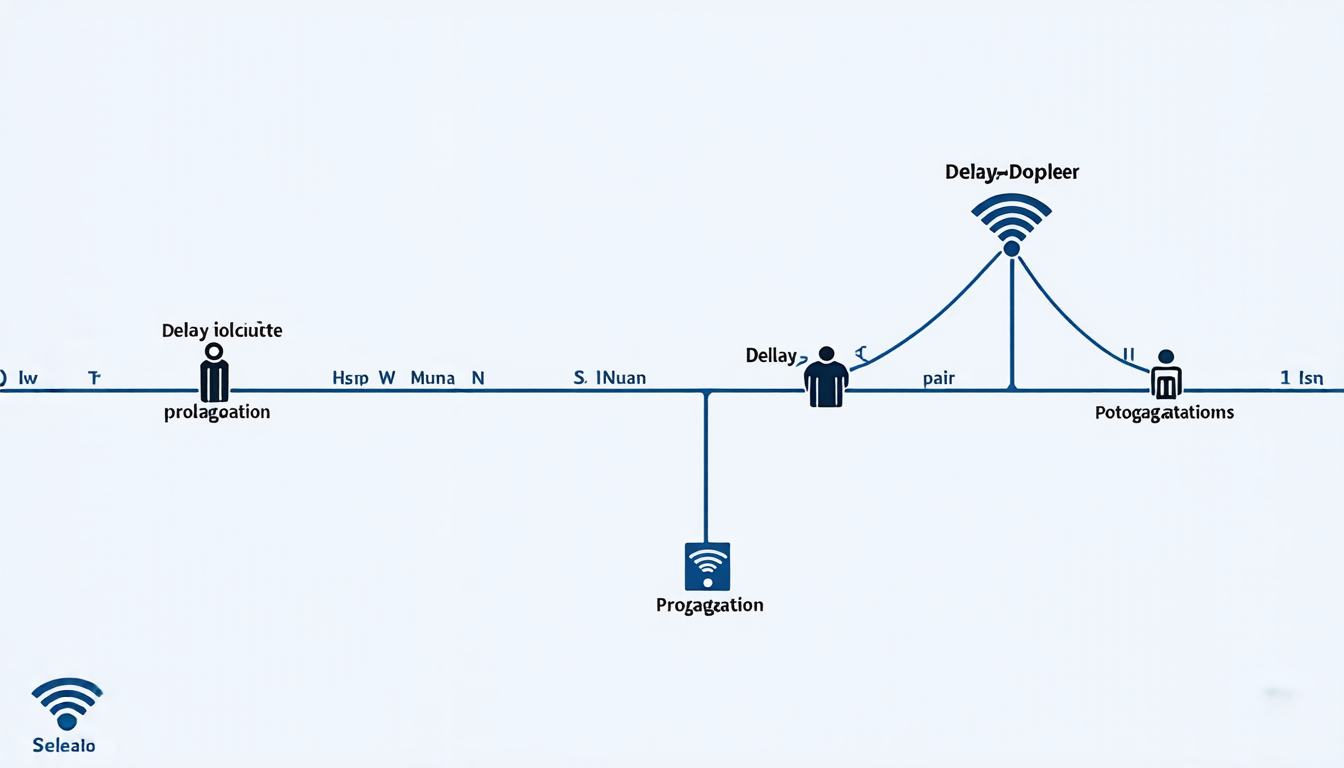
The core idea behind this approach is to leverage convolutional neural networks (CNNs) to learn the relationship between delay-Doppler pairs and corresponding columns of the channel domain parameter matrix. By training these networks on large datasets of simulated channels, the algorithm can predict the desired CDDPM column with reduced computational complexity – a significant advantage in real-world scenarios where processing speed is paramount.
Simulation results demonstrate that this approach achieves good estimation performance at drastically reduced latency for low to mid-pilot signal-to-noise ratios (PSNRs). While there may be some degradation in performance at higher PSNR values, the trade-off between accuracy and computational efficiency appears promising. Furthermore, the algorithm’s ability to detect a higher number of propagation paths compared to traditional methods suggests its potential for improved system robustness.
The implications of this research are far-reaching. As wireless networks continue to evolve, the need for efficient channel estimation algorithms will only grow more pressing. By harnessing the power of deep learning, researchers may be able to develop solutions that not only improve performance but also reduce the computational burden on devices and networks alike.
While there is still much work to be done in refining this approach, the potential benefits are clear: faster, more accurate channel estimation could unlock new possibilities for wireless communication, from enhanced mobile broadband services to mission-critical applications.
Cite this article: “Revolutionizing Channel Estimation: A Deep Learning-Based Approach for Fractional Delay-Doppler Channels in OTFS Modulation”, The Science Archive, 2025.
Otfs Modulation, Channel Estimation, Deep Learning, Convolutional Neural Networks, Wireless Communication, 5G, Spectral Efficiency, Interference Robustness, Computational Complexity, Pilot Signal-To-Noise Ratio.