

Wednesday 09 April 2025
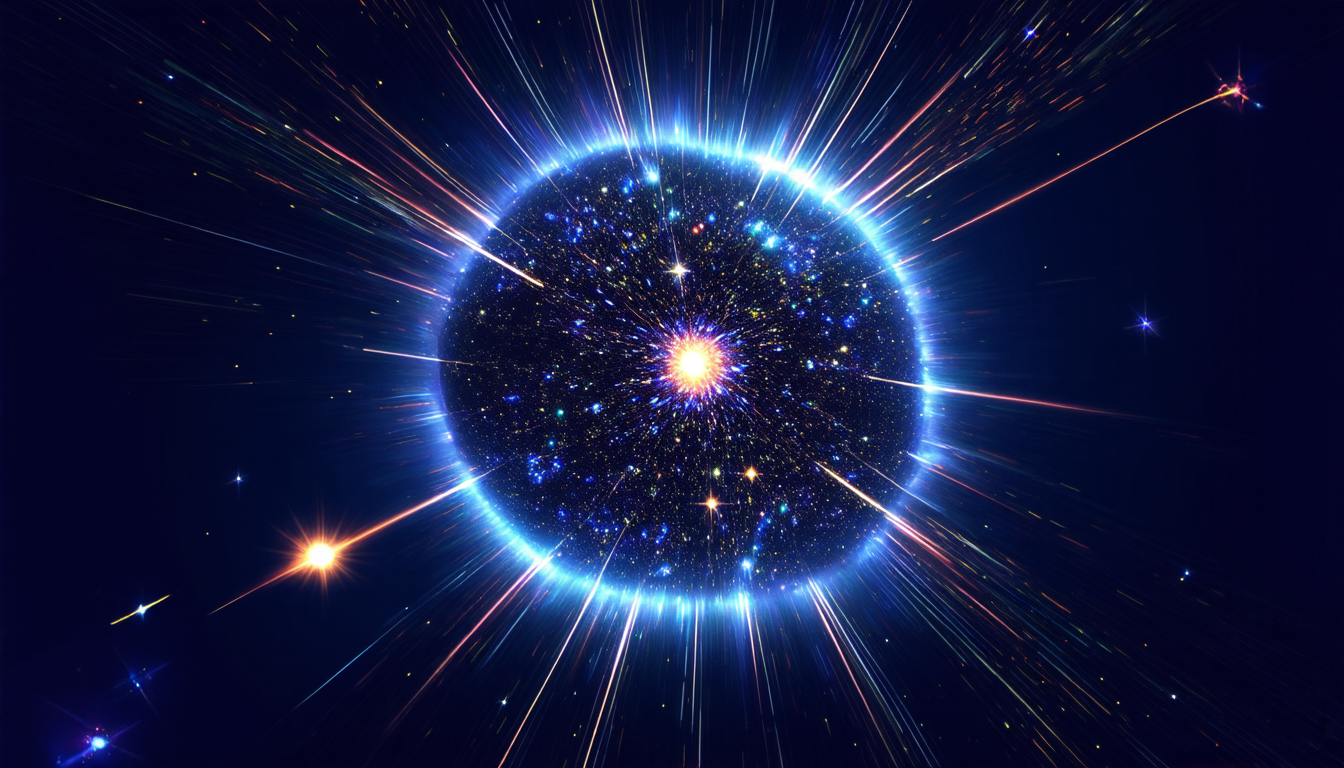
Scientists have long sought to unravel the mysteries of magnetism in globular clusters, ancient swarms of stars that dot our galaxy like cosmic jewels. These dense collections of celestial bodies are thought to harbor strong magnetic fields, which play a crucial role in shaping their evolution and behavior. A new study published today sheds light on these enigmatic fields, using cutting-edge radio telescopes to probe the polarized radiation emitted by pulsars within these clusters.
Globular clusters are among the oldest known structures in our galaxy, formed during a chaotic period of star formation some 10 billion years ago. Today, they are held together by gravity and their own internal dynamics, with stars packed so tightly that they are often in contact with one another. This close proximity leads to intense magnetic interactions between the stars, generating powerful fields that permeate the cluster.
Pulsars, rapidly rotating neutron stars, are ideal probes for studying these magnetic fields. As they spin, they emit beams of radiation that sweep across the sky like lighthouses, allowing scientists to detect their presence and monitor their behavior. By analyzing the polarization properties of this radiation, researchers can infer the strength and orientation of the surrounding magnetic field.
The study in question employed two state-of-the-art radio telescopes, MeerKAT and FAST, to observe pulsars within five globular clusters: 47 Tucanae, M13, M62, M28, and M22. These instruments are capable of detecting the faint signals emitted by pulsars with unprecedented precision, allowing scientists to probe the magnetic fields in exquisite detail.
The results paint a fascinating picture of these ancient clusters. The researchers found that the magnetic fields within each cluster vary significantly, with some displaying strong, coherent structures while others exhibit more disordered, turbulent patterns. This diversity is likely due to differences in the cluster’s internal dynamics and the history of star formation within it.
The study also reveals intriguing correlations between the strength of the magnetic field and the distance from the cluster center. In some cases, the fields are stronger near the core, while in others they weaken with increasing distance. These findings may be related to the complex interplay between gravity, magnetism, and turbulence within the clusters.
As scientists continue to explore these cosmic wonders, their discoveries have far-reaching implications for our understanding of galaxy evolution and the behavior of matter under extreme conditions.
Cite this article: “Unveiling the Magnetic Mysteries of Globular Clusters: A Deep Dive into Pulsar Polarization”, The Science Archive, 2025.
Globular Clusters, Magnetism, Pulsars, Radio Telescopes, Neutron Stars, Radiation, Polarization, Gravitational Dynamics, Star Formation, Galaxy Evolution





