

Wednesday 09 April 2025
For years, scientists have been working on developing autonomous aerial vehicles that can think for themselves, able to adapt to new situations and make decisions without human intervention. But despite advancements in artificial intelligence and machine learning, these systems still rely heavily on pre-programmed instructions and sensors.
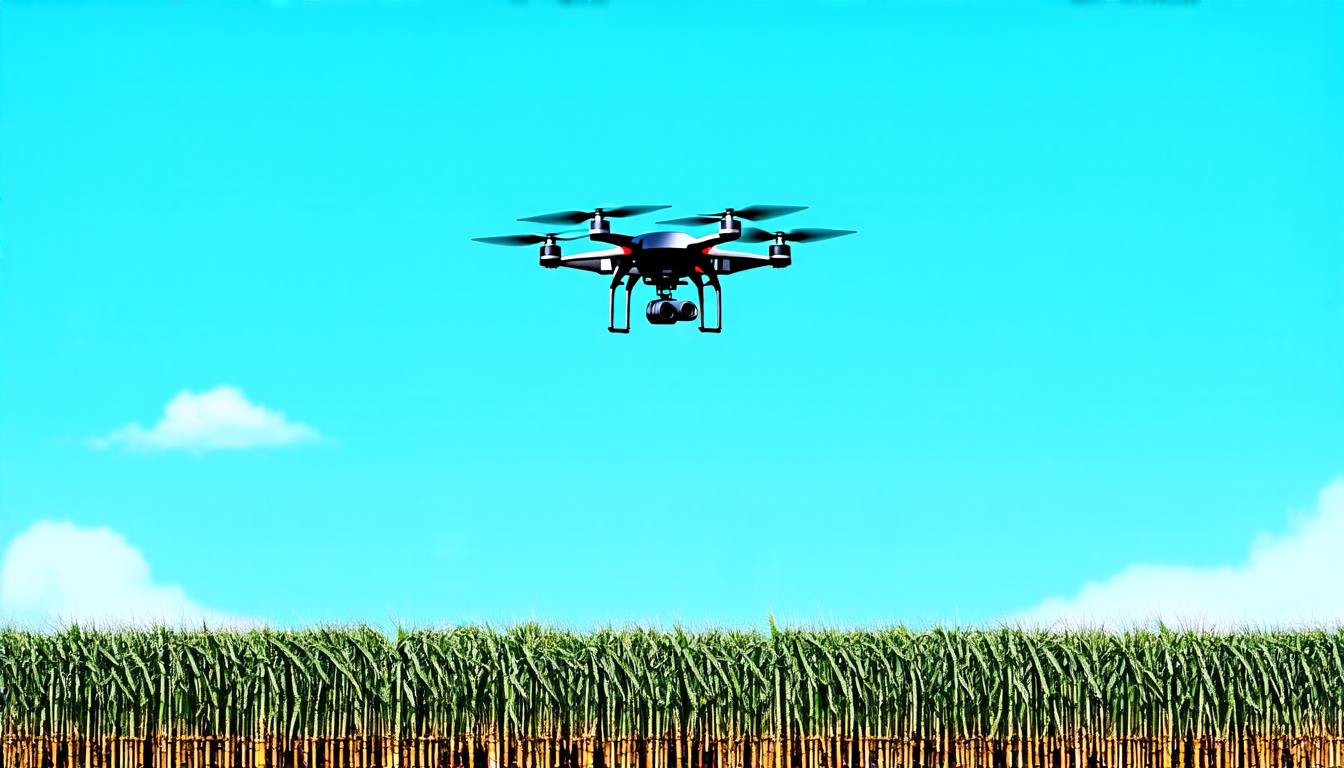
A team of researchers has now made a significant breakthrough in this area, demonstrating the ability to deploy large language models (LLMs) on an unmanned aerial vehicle (UAV), allowing it to learn and reason about its environment in real-time. This achievement opens up new possibilities for autonomous systems, enabling them to tackle complex tasks that previously required human intervention.
The key innovation lies in the integration of LLMs with UAV systems. Traditional AI approaches rely on pre-programmed rules or machine learning models trained on large datasets. In contrast, LLMs are designed to understand and generate natural language, allowing for more flexible and adaptable decision-making.
In this study, the researchers developed a two-stage prompt design framework that enables effective interaction between the LLM-guided task planning and low-level reaction abilities of the UAV. The system uses the LLM to generate plans for tasks such as sugarcane monitoring, power grid inspection, mine tunnel exploration, and biological observations.
The results are impressive: the UAV was able to successfully execute these complex tasks without human intervention, adapting to changing conditions and unexpected events. The system’s ability to learn from its environment and adjust its behavior in real-time demonstrates a level of autonomy that was previously unimaginable.
This achievement has significant implications for various industries, including agriculture, infrastructure inspection, environmental monitoring, and more. Autonomous systems like this could revolutionize the way we approach these tasks, reducing costs, improving efficiency, and enhancing safety.
The researchers’ solution is not without its challenges, however. The system requires a powerful computing platform that can handle the demands of running an LLM on board the UAV. Additionally, the team had to develop custom software and hardware to enable seamless communication between the LLM and the UAV’s sensors and actuators.
Despite these hurdles, this breakthrough has far-reaching potential. As AI and machine learning continue to advance, we can expect to see even more sophisticated autonomous systems emerge. The possibilities are endless, from search and rescue missions to environmental monitoring and beyond. With this achievement, we’re one step closer to a future where machines can think for themselves, making our lives easier and more efficient in the process.
Cite this article: “AI-Powered UAVs: Unlocking Autonomous Flight Capabilities with Large Language Models”, The Science Archive, 2025.
Artificial Intelligence, Machine Learning, Autonomous Aerial Vehicles, Unmanned Aerial Vehicle, Large Language Models, Natural Language Processing, Task Planning, Real-Time Decision Making, Environmental Monitoring, Automation





