

Wednesday 09 April 2025
Researchers have made a significant breakthrough in understanding the properties of topological insulators, a class of materials that are both conductors and insulators at the same time. By manipulating the conditions under which these materials are grown, scientists have been able to tune their electronic behavior, allowing them to switch between being metallic and insulating.
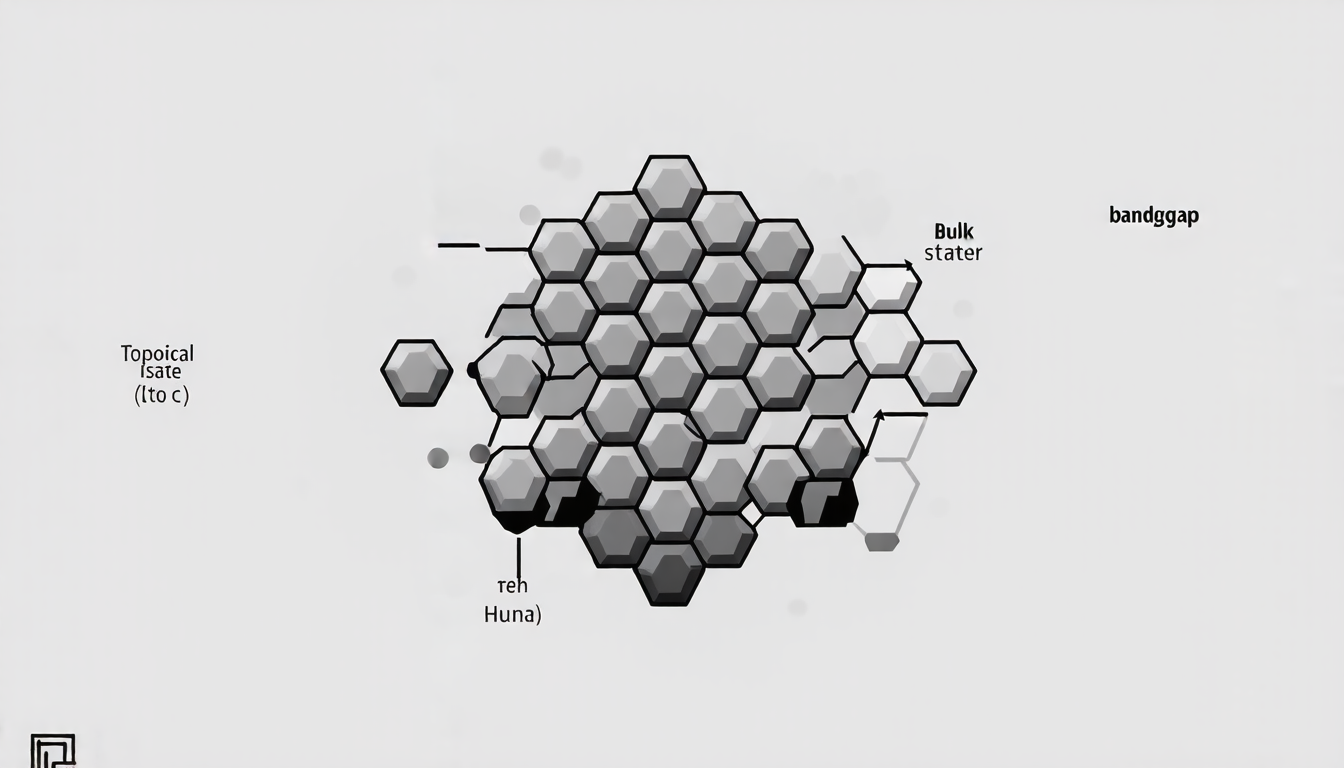
Topological insulators are unusual because they have a bulk bandgap – meaning they don’t conduct electricity in the middle of the material – but still have conducting surface states. This makes them useful for applications such as quantum computing and spintronics. However, understanding how to control their behavior has been a major challenge for researchers.
The team used a technique called pulsed laser deposition to grow thin films of a topological insulator called Bi1.95Sb0.05Se3. By varying the intensity of the laser pulse, they were able to change the composition of the film and alter its electronic properties.
The results show that as the laser fluence – or intensity – increases, the phase fraction of a non-topological, p-type material called Sb2Se3 in the film also increases. This phase is responsible for compensating the excess carriers in the bulk, making it insulating. At lower fluences, the sample is metallic due to the dominance of surface states.
The researchers used a range of techniques to study the properties of the films, including X-ray diffraction, Raman spectroscopy and magnetotransport measurements. They found that the power-law exponent and alpha value – which describe the behavior of the weak antilocalization phenomenon – are in line with those expected for a good topological insulator.
The results have important implications for the development of new materials and devices based on topological insulators. By being able to tune their electronic properties, scientists may be able to create materials that can switch between being metallic and insulating, which could be useful for applications such as quantum computing and spintronics.
One of the key challenges facing researchers is understanding how to control the phase separation in these materials. The results of this study suggest that by carefully controlling the conditions under which the material is grown, it may be possible to achieve precise control over its electronic properties.
The discovery has significant potential for advancing our understanding of topological insulators and their applications. As scientists continue to explore the properties of these unusual materials, we can expect to see new breakthroughs and innovations in the field of condensed matter physics.
Cite this article: “Unlocking the Secrets of Topological Insulators: A Study on Phase Segregation and Charge Compensation in Bi1.95Sb0.05Se3 Thin Films”, The Science Archive, 2025.
Topological Insulators, Pulsed Laser Deposition, Bi1.95Sb0.05Se3, Sb2Se3, X-Ray Diffraction, Raman Spectroscopy, Magnetotransport Measurements, Weak Antilocalization Phenomenon





