

Wednesday 09 April 2025
The quest for better object recognition in 3D space has led researchers to a new approach that’s as fascinating as it is innovative. By incorporating Gaussian coefficients into point cloud data, scientists have developed a system that can more accurately identify objects and their properties.
Point clouds are the digital representations of real-world objects, created by scanning or photographing them from multiple angles. While they’re incredibly useful for tasks like 3D modeling and computer vision, there’s a limitation to their accuracy – especially when it comes to recognizing objects with complex shapes or materials. Enter Gaussian splatting.
In this new approach, researchers have added Gaussian coefficients to point cloud data, effectively creating a more nuanced representation of an object’s shape and properties. These coefficients allow the system to better capture the intricacies of an object’s surface, such as the texture and reflectivity of its material.
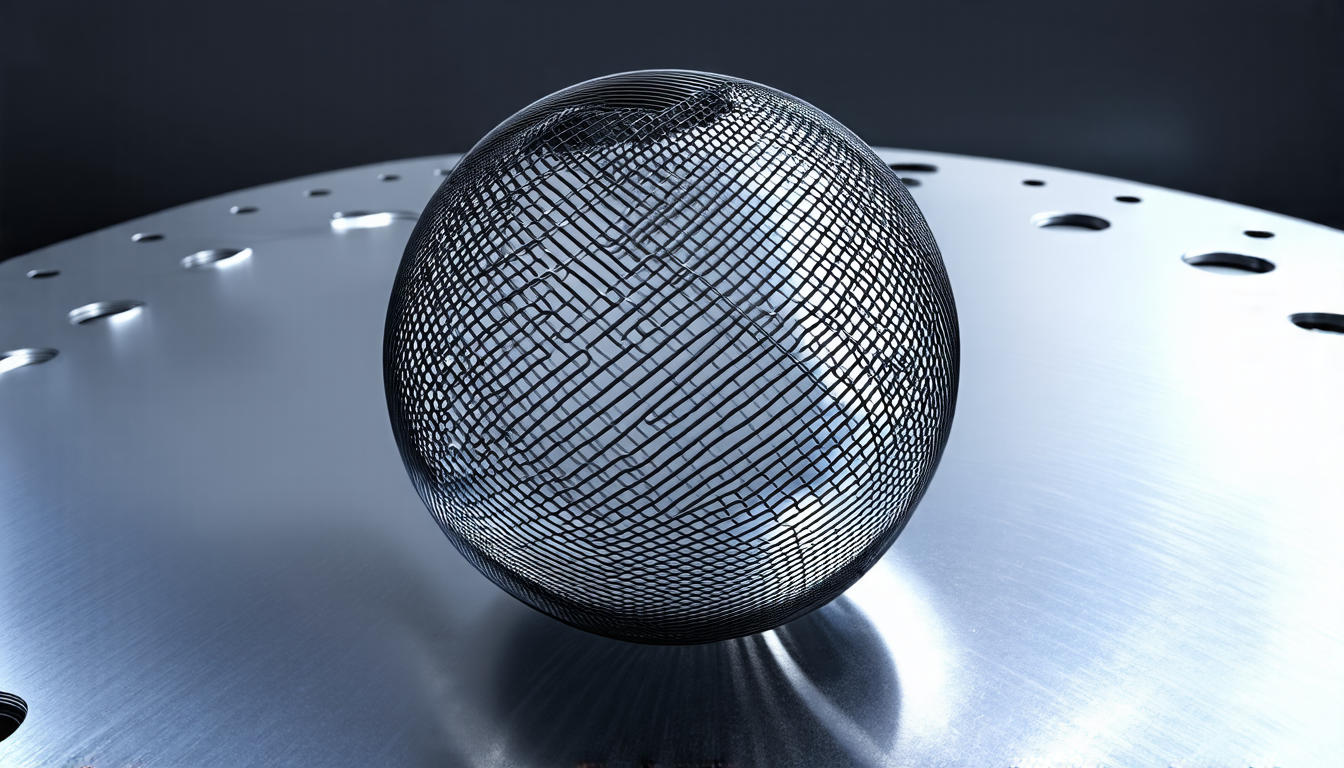
The benefits are numerous. For one, objects with complex shapes or materials can now be recognized with greater accuracy. Take, for example, a wire mesh sphere versus a flat metal plate – in the past, these objects might have been indistinguishable to computer algorithms, but with Gaussian splatting, they’re easily separable.
Another advantage is that this new approach allows for more efficient processing of point cloud data. With fewer errors and misclassifications, machines can quickly and accurately identify objects without bogging down from unnecessary computations.
But how does it work? Essentially, the system uses a combination of traditional computer vision techniques and machine learning algorithms to analyze the Gaussian coefficients in the point cloud data. This analysis allows the system to extract valuable information about an object’s shape, material, and properties – information that can be used for tasks like object recognition, tracking, and manipulation.
The implications are far-reaching, with potential applications in fields like robotics, gaming, and even autonomous vehicles. For instance, a self-driving car could use this technology to quickly identify objects on the road, such as pedestrians or other vehicles, without getting bogged down by complex computations.
While this new approach may not be perfect – there’s still room for improvement in terms of accuracy and efficiency – it represents a significant step forward in our ability to recognize and interact with 3D objects. As researchers continue to refine their techniques, we can expect even more exciting developments in the future.
Cite this article: “Mitigating Ambiguities in 3D Classification: Gaussian Splatting Point Clouds for Enhanced Object Recognition”, The Science Archive, 2025.
Object Recognition, 3D Space, Gaussian Coefficients, Point Cloud Data, Computer Vision, Machine Learning Algorithms, Object Tracking, Manipulation, Robotics, Autonomous Vehicles





