

Wednesday 09 April 2025
Scientists have made a significant breakthrough in developing a robotic system that can automatically scan and analyze tissue samples during surgery, potentially revolutionizing the way medical professionals diagnose and treat cancer.
The new system uses diffuse reflectance spectroscopy (DRS), a non-invasive technique that measures the way light interacts with biological tissues. By analyzing this interaction, doctors can determine the chemical makeup of the tissue, which is crucial for identifying cancerous cells.
Traditionally, DRS has been used in conjunction with manual scanning techniques, where a surgeon or medical professional uses a probe to scan the tissue sample. However, this process can be time-consuming and prone to human error.
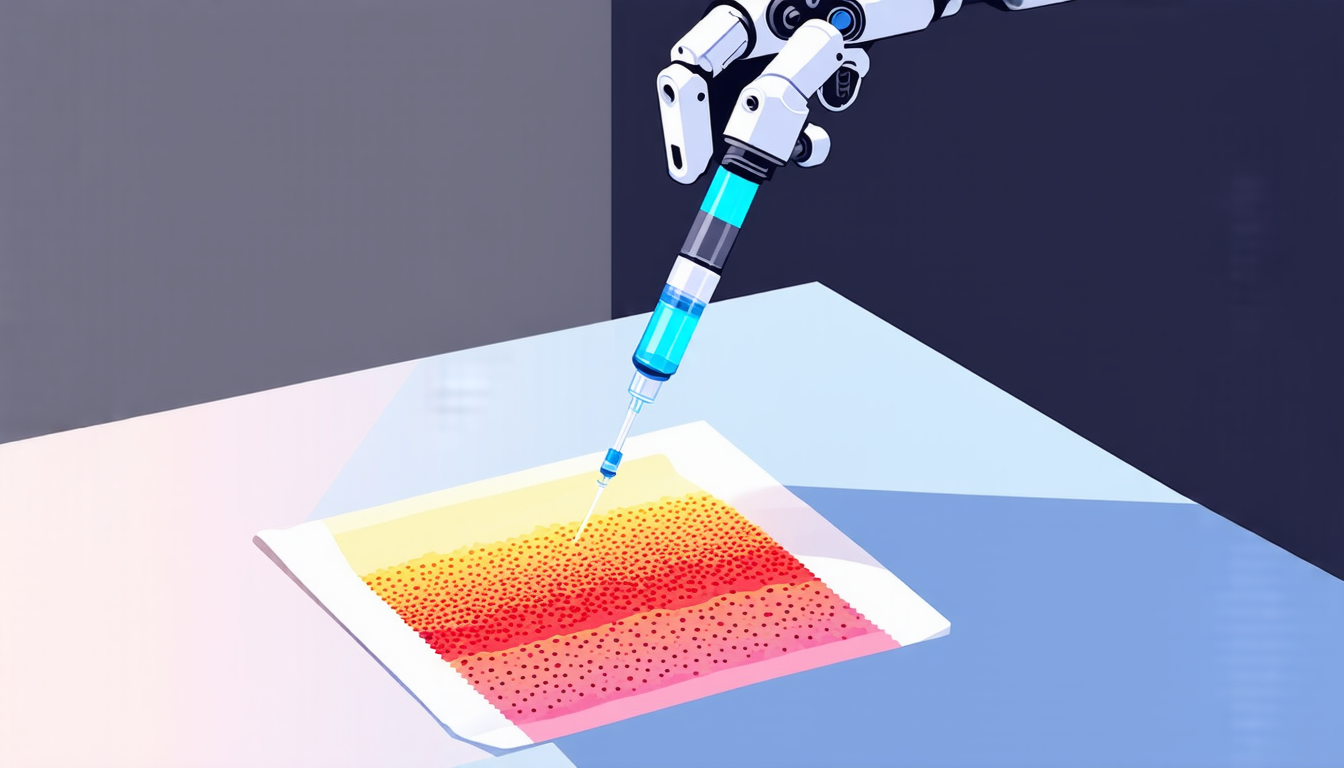
The new robotic system addresses these limitations by using visual servoing, a technique that allows the robot to track and follow a target on its own. In this case, the target is the tissue sample being scanned.
The system consists of a specially designed probe attached to a robotic arm, which moves in tandem with the target as it scans the tissue sample. The probe is equipped with a camera that captures images of the tissue sample, which are then analyzed using computer algorithms to determine the chemical makeup of the tissue.
One of the key advantages of this system is its ability to maintain consistent contact between the probe and the tissue sample, ensuring accurate readings even in areas with complex anatomy or difficult-to-reach locations.
The researchers tested their system on a variety of tissue samples, including those with different types of cancer. The results showed that the robotic system was able to accurately identify the chemical makeup of the tissue, matching the results obtained using traditional manual scanning techniques.
This technology has significant implications for the field of oncology, as it could enable doctors to quickly and accurately diagnose cancerous cells during surgery, allowing for more targeted and effective treatments. Additionally, the system’s ability to analyze tissue samples in real-time could potentially revolutionize the way medical professionals approach surgical procedures.
While there is still much work to be done before this technology can be widely adopted, the potential benefits are significant. With further development and refinement, this robotic system could become an essential tool for medical professionals, helping to improve patient outcomes and advance our understanding of cancer diagnosis and treatment.
Cite this article: “Automated In-Vivo Tissue Analysis Using Robotic-Assisted Diffuse Reflectance Spectroscopy: A Step towards Personalized Cancer Treatment”, The Science Archive, 2025.
Robotics, Tissue Analysis, Diffuse Reflectance Spectroscopy, Drs, Cancer Diagnosis, Surgery, Medical Technology, Robotic Arm, Computer Algorithms, Oncology





