

Wednesday 09 April 2025
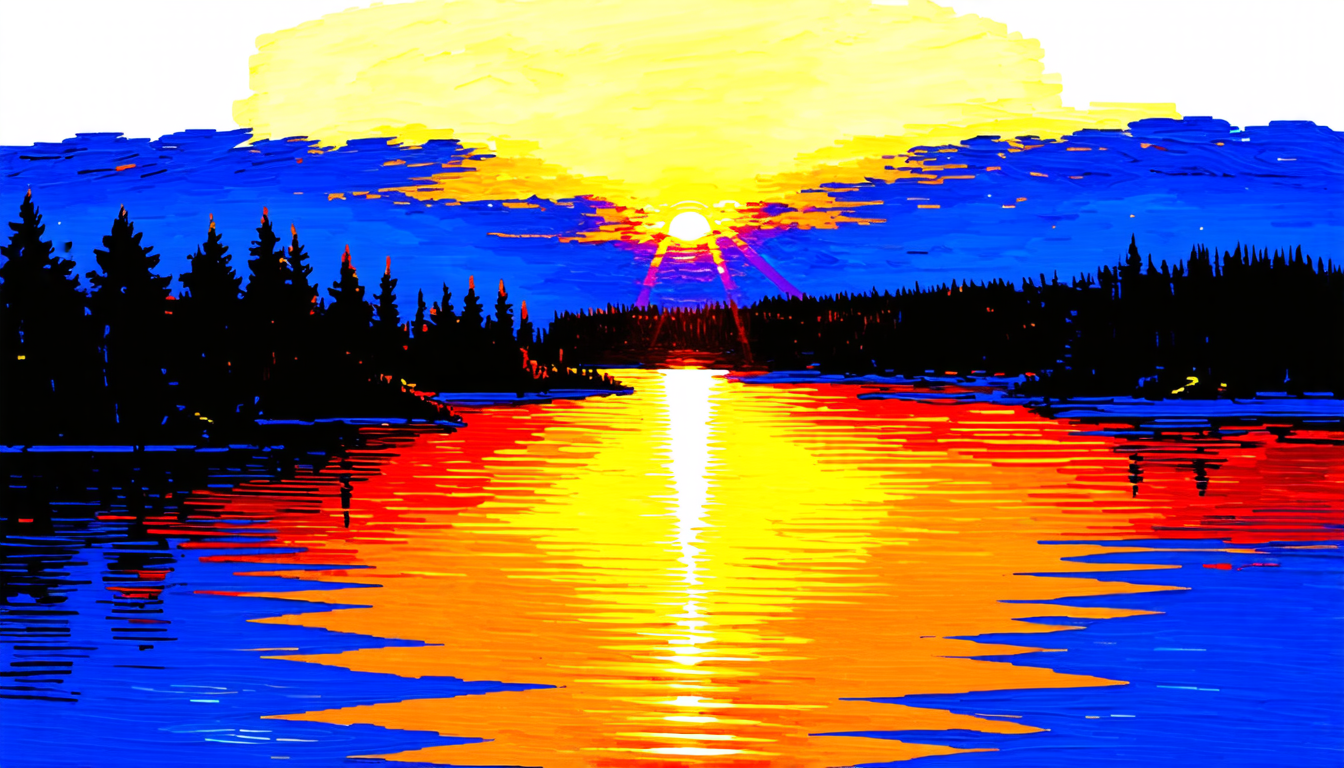
A team of researchers has made significant progress in developing a technology that can transform images and videos into artistic creations, using a technique called neural style transfer. This method allows for the fusion of two distinct visual styles, resulting in unique and captivating visual representations.
The process begins by training an artificial intelligence (AI) model on a vast dataset of images, which enables it to recognize patterns and relationships between different visual elements. The AI then uses this knowledge to generate new images that combine the style of one image with the content of another. This technique can be applied to various types of media, including photographs, paintings, and even videos.
One of the most impressive aspects of neural style transfer is its ability to adapt to different styles and themes. For instance, an AI model trained on a dataset of impressionist paintings can generate images that mimic the soft, dreamy quality of Monet’s water lilies. Similarly, a model trained on a dataset of anime characters can produce images with vibrant colors and dynamic poses.
The technology has numerous applications across various fields, including entertainment, education, and advertising. For instance, filmmakers could use neural style transfer to create visually striking movie trailers that blend different styles and genres. Educators could utilize the technology to develop interactive learning tools that engage students and make complex concepts more accessible. Advertisers could leverage neural style transfer to create captivating advertisements that grab attention and leave a lasting impression.
Despite its many potential applications, neural style transfer is not without its challenges. One of the main obstacles is ensuring that the AI model generates images that are both aesthetically pleasing and semantically accurate. For instance, an AI model trained on a dataset of landscapes might produce images that look realistic but lack the emotional depth and narrative context that makes a painting or photograph truly compelling.
To overcome this challenge, researchers are exploring new techniques to improve the accuracy and creativity of neural style transfer models. One approach involves using generative adversarial networks (GANs), which pit two AI models against each other in a game-like competition to generate images that are both realistic and stylistically coherent.
As research continues to evolve, it’s clear that neural style transfer has the potential to revolutionize the way we create and interact with visual content. Whether used for artistic expression, educational purposes, or commercial applications, this technology is poised to push the boundaries of what is possible in the world of images and videos.
Cite this article: “Revolutionizing Dynamic Scene Stylization with GAS-NeRF: A Novel Approach to Unleashing Artistic Creativity”, The Science Archive, 2025.
Artificial Intelligence, Neural Style Transfer, Image Processing, Video Editing, Deep Learning, Visual Art, Machine Learning, Ai-Generated Images, Generative Adversarial Networks, Computer Vision.





