

Wednesday 09 April 2025
Scientists have made a significant breakthrough in developing lead-free ceramics that can store electrical energy more efficiently than their traditional counterparts. The new materials, known as relaxor ferroelectrics, could revolutionize the way we store power for our devices and homes.
Lead-based ceramics have long been the go-to choice for storing electrical energy, but they pose a significant environmental threat due to the toxic nature of lead. In recent years, researchers have been working to develop alternative materials that can match or even surpass the performance of traditional lead-based ceramics.
The new relaxor ferroelectrics, developed by scientists at IMED-Lab and other institutions, are made from a combination of barium, titanium, and other elements. When an electric current is applied to these materials, they generate an electrical charge that can be stored for later use.
One of the key advantages of these new ceramics is their ability to store energy efficiently over a wide range of temperatures. This means that they could be used in applications where traditional lead-based ceramics are not suitable, such as in electric vehicles or renewable energy systems.
The researchers achieved this by carefully controlling the composition and structure of the materials. They found that by adding small amounts of certain elements, such as lanthanum and strontium, they could enhance the relaxor properties of the ceramics, allowing them to store more energy with less loss.
To test their new materials, the scientists built a range of devices, including capacitors and batteries. These devices were then subjected to a series of tests to measure their energy storage capacity and efficiency.
The results were impressive, with some devices showing energy storage densities that were significantly higher than those achieved by traditional lead-based ceramics. The researchers also found that the new materials were more stable over time, meaning they could be used in applications where reliability is critical.
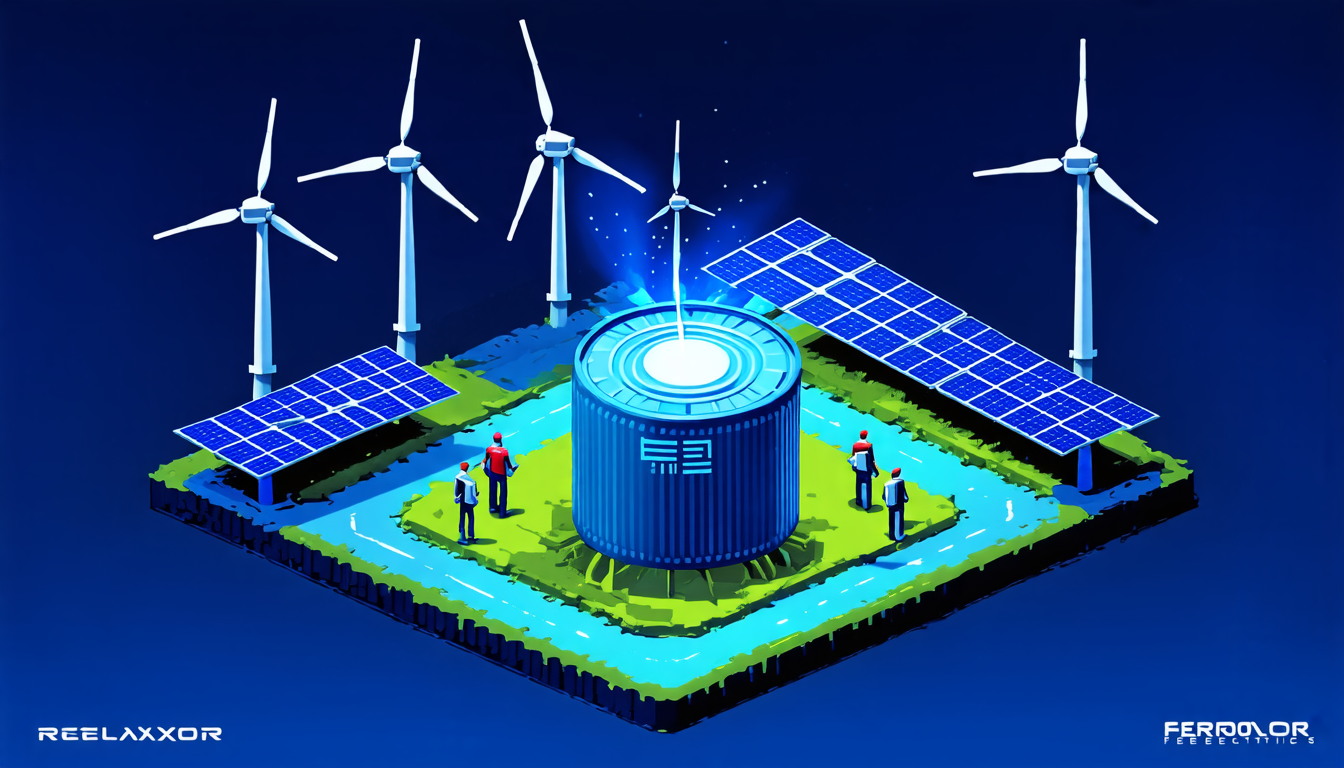
The development of these new relaxor ferroelectrics has significant implications for a range of industries, from consumer electronics to renewable energy. By providing a safer and more efficient way to store electrical energy, these materials could help reduce our reliance on traditional lead-based ceramics and mitigate the environmental risks associated with their use.
As the demand for sustainable and environmentally-friendly technologies continues to grow, the development of new materials like these relaxor ferroelectrics is crucial. With their ability to efficiently store energy over a wide range of temperatures, they have the potential to play a key role in shaping the future of energy storage.
Cite this article: “Unlocking High-Energy Storage in Lead-Free Relaxor Ferroelectrics: A Review of Recent Advances”, The Science Archive, 2025.
Lead-Free Ceramics, Relaxor Ferroelectrics, Electrical Energy Storage, Environmental Threat, Toxic Nature, Barium Titanium, Electric Vehicles, Renewable Energy Systems, Capacitors, Batteries





