

Wednesday 09 April 2025
Robots are getting smarter, and it’s all thanks to a new way of teaching them how to manipulate objects using their senses. A recent study has shown that by combining visual and language-based learning with tactile feedback, robots can learn complex tasks more efficiently than ever before.
The researchers behind this breakthrough have developed a system called Tactile-Language-Action (TLA), which allows robots to learn through a combination of visual images, spoken language, and physical touch. This is achieved by using a special sensor that captures the subtle vibrations and textures of an object as it’s being manipulated, providing the robot with a more nuanced understanding of how to interact with it.
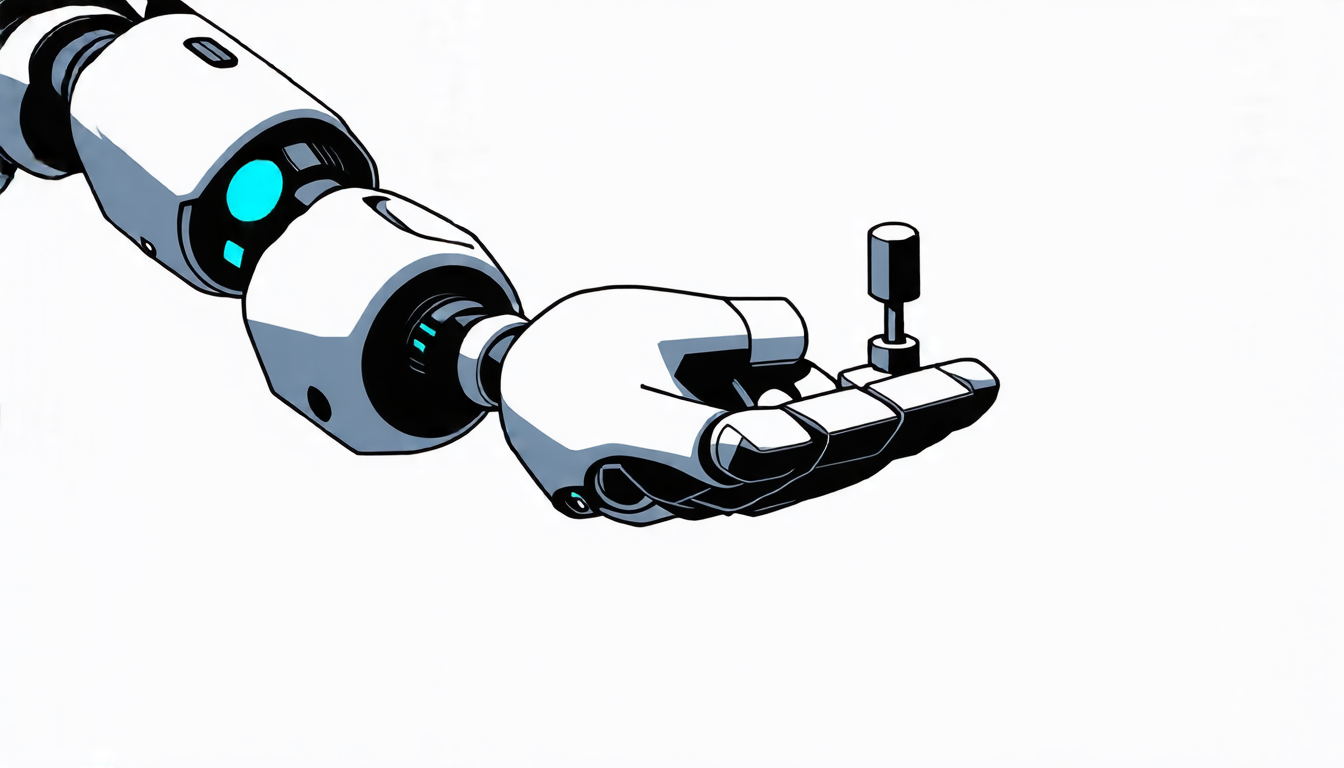
The study demonstrated the effectiveness of TLA by training a robot to perform a complex task – inserting a peg into a hole – using only visual and language-based cues. The results showed that the robot was able to successfully complete the task 94% of the time, far surpassing traditional methods that rely solely on visual or tactile feedback.
But what’s most impressive about TLA is its ability to generalize to new situations. In other words, once a robot has learned how to perform a task using TLA, it can apply that knowledge to similar tasks without needing additional training. This means that robots could potentially learn complex skills in a matter of hours or even minutes, rather than the days or weeks it would take with traditional methods.
The implications of this technology are vast and exciting. For example, robots could be used to assist people with disabilities by performing daily tasks such as cooking or cleaning. They could also be used in industries where precision and dexterity are crucial, such as surgery or manufacturing.
One of the biggest advantages of TLA is its potential to improve the safety and efficiency of robotic systems. By allowing robots to learn through tactile feedback, they can develop a more intuitive understanding of their surroundings and avoid accidents caused by misaligned movements.
The study’s findings have also sparked interest in exploring new applications for TLA beyond robotics. For instance, the technology could be used to create more advanced prosthetic limbs or even assistive devices for people with limited mobility.
As researchers continue to refine and develop TLA, it’s clear that we’re on the cusp of a major breakthrough in artificial intelligence. With its potential to revolutionize the way robots interact with their environment, TLA has the power to transform industries and improve lives in ways we can only begin to imagine.
Cite this article: “Revolutionizing Robot Manipulation: Tactile-Language-Action Models Achieve Unprecedented Success in Contact-Rich Tasks”, The Science Archive, 2025.
Robots, Artificial Intelligence, Tactile Feedback, Language-Based Learning, Visual Learning, Object Manipulation, Robotic Systems, Prosthetic Limbs, Assistive Devices, Precision Dexterity





