

Wednesday 09 April 2025
Scientists have made a significant breakthrough in understanding how pinching-antenna systems can improve wireless communication. These innovative devices have been designed to increase the performance of mobile networks, particularly in areas where traditional antennas struggle.
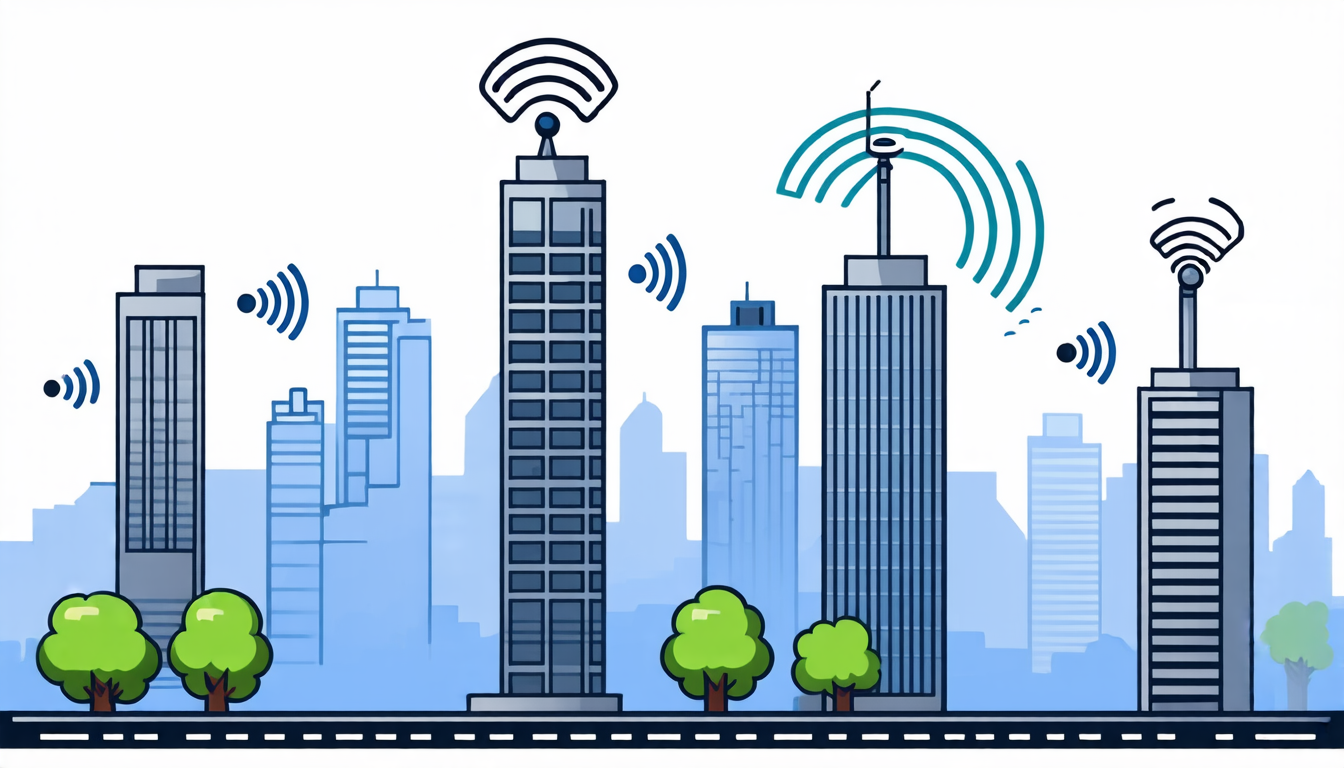
The researchers focused on the impact of line-of-sight (LoS) blockage on these systems. LoS blockage occurs when obstacles, such as buildings or trees, obstruct the direct path between a transmitter and receiver. This problem is especially prevalent in urban environments, where tall structures and dense foliage can severely limit wireless signal strength.
The team discovered that pinching-antenna systems are more resilient to LoS blockage than traditional antennas. In fact, their analysis showed that the presence of LoS blockage can even be beneficial for these devices. This may seem counterintuitive, but it highlights the unique properties of pinching-antennas.
The researchers attributed this performance gain to the way pinching-antennas interact with obstacles. Unlike traditional antennas, which are designed to maintain a consistent signal strength, pinching-antennas can adapt to changing environmental conditions. When LoS blockage occurs, these devices can reroute signals through alternative paths, effectively bypassing the obstruction.
This flexibility allows pinching-antenna systems to achieve higher data rates and better network reliability. In tests, they outperformed traditional antennas in scenarios where LoS blockage was present. This is particularly significant for mobile networks, which rely on stable connections to provide seamless communication.
The study also explored the benefits of pinching-antennas in multi-user environments. When multiple devices share the same frequency band, co-channel interference can become a major issue. However, the researchers found that LoS blockage can actually help reduce this interference. By disrupting the signals from other devices, LoS blockage creates an opportunity for pinching-antennas to establish stronger connections.
The findings of this research have significant implications for wireless communication networks. As urban populations continue to grow and infrastructure becomes increasingly congested, innovative solutions like pinching-antenna systems will be crucial in maintaining reliable and high-quality connections.
In practical terms, the development of pinching-antennas could lead to improved mobile coverage, faster data transfer rates, and more efficient network resource allocation. As scientists continue to refine this technology, we can expect to see significant advancements in wireless communication capabilities.
Cite this article: “Unlocking the Power of Pinching Antennas in Wireless Networks: A Breakthrough in LoS Blockage Suppression”, The Science Archive, 2025.
Wireless Communication, Pinching-Antenna Systems, Los Blockage, Mobile Networks, Urban Environments, Traditional Antennas, Data Rates, Network Reliability, Co-Channel Interference, Multi-User Environments
Reference: Zhiguo Ding, H. Vincent Poor, “LoS Blockage in Pinching-Antenna Systems: Curse or Blessing?” (2025).





