

Wednesday 09 April 2025
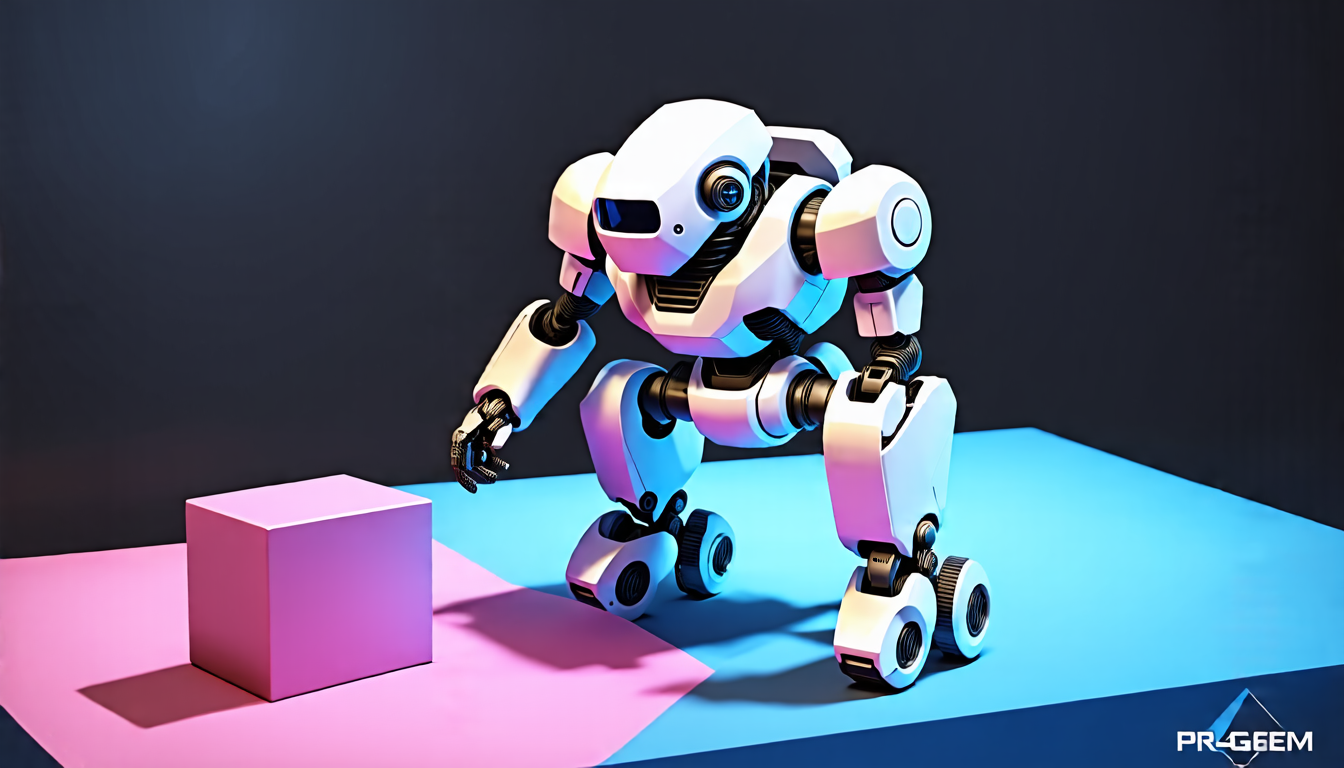
Scientists have made a significant breakthrough in the field of artificial intelligence and robotics, enabling robots to learn complex tasks by observing and imitating humans. Researchers at Google DeepMind have developed a system called Proc4Gem, which allows robots to master physical skills, such as pushing objects, through procedural generation.
Proc4Gem uses large language models to generate simulations of everyday scenarios, allowing robots to learn from virtual experiences. This innovative approach enables robots to develop the ability to perform complex tasks, such as navigating obstacle courses and manipulating objects, without requiring extensive programming or human intervention.
The system works by creating a virtual environment that mimics real-world scenarios, complete with realistic textures, lighting, and physics. The robot is then placed in this environment and tasked with completing a specific goal, such as pushing an object to a target location. Through trial and error, the robot learns to adapt its movements and actions to achieve the desired outcome.
One of the key benefits of Proc4Gem is its ability to simulate complex scenarios that are difficult or impossible to replicate in real life. For example, the system can generate simulations of different environments, such as indoor or outdoor spaces, with varying levels of complexity and obstacles. This allows robots to learn how to adapt to new situations and make decisions based on context.
The researchers have tested Proc4Gem on a range of robotic platforms, including a quadrupedal robot designed to navigate complex terrain. The results are impressive, with the robot able to successfully complete tasks that would be challenging or impossible for humans to accomplish.
Proc4Gem has significant implications for robotics and artificial intelligence research. It opens up new possibilities for robots to learn complex skills and adapt to changing environments, making them more useful and versatile in a wide range of applications. The system also has the potential to improve human-robot collaboration, allowing humans to work alongside robots that can learn and adapt to new situations.
While Proc4Gem is still in its early stages, it represents an exciting step forward in the development of artificial intelligence and robotics. As the technology continues to evolve, we can expect to see more advanced and sophisticated applications of Proc4Gem in a wide range of fields, from manufacturing and healthcare to search and rescue operations.
Cite this article: “Unlocking Human-Level Robotic Capabilities through Procedural Generation and Large Language Models”, The Science Archive, 2025.
Artificial Intelligence, Robotics, Machine Learning, Procedural Generation, Language Models, Simulations, Virtual Environments, Robot Learning, Human-Robot Collaboration, Autonomous Systems.





