

Wednesday 09 April 2025
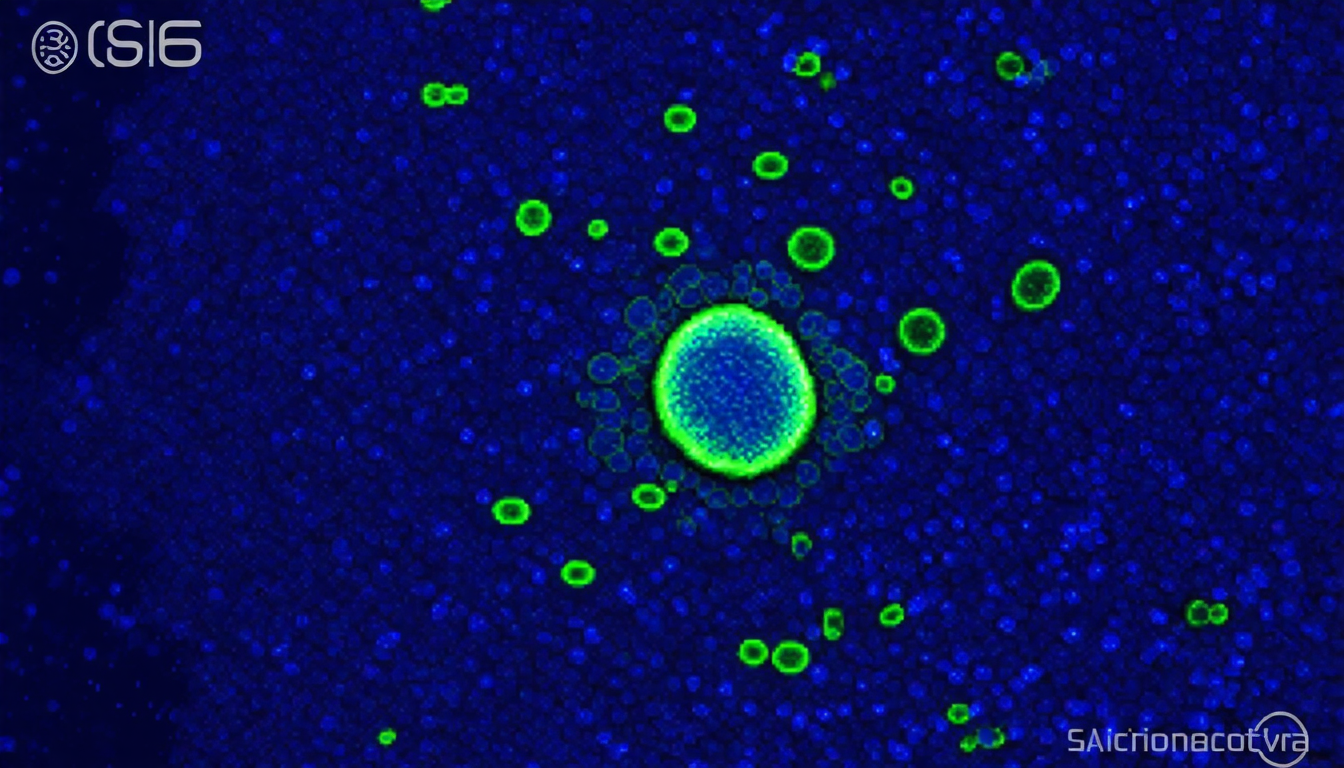
Researchers have made significant strides in improving the accuracy of cell segmentation, a crucial task in biomedical imaging. Cell segmentation involves identifying and isolating individual cells within images captured using various microscopy techniques. While this process has long been a challenge for scientists, recent advancements in machine learning and computational methods have shown promise in enhancing the accuracy of these segmentations.
One major obstacle to accurate cell segmentation is the lack of annotated data, which is essential for training machine learning models. This scarcity of labeled data can lead to poor performance when applied to new, unseen datasets. To address this issue, scientists have turned to style transfer techniques, which allow them to transform existing labeled images into those that mimic the characteristics of target datasets.
This approach, dubbed CellStyle, has demonstrated impressive results in improving zero-shot cell segmentation performance. Zero-shot refers to the ability of a model to generalize well to new datasets without requiring additional labels or training data. By applying style transfer to a labeled source dataset, researchers can generate synthetic images that match the visual characteristics of an unlabeled target dataset.
These styled images, combined with the original annotations from the source dataset, enable the fine-tuning of segmentation models on the target dataset without the need for human labeling. In other words, CellStyle allows scientists to adapt a generalist model trained on one dataset to perform well on another, even if it has never seen that data before.
The researchers tested CellStyle on six diverse microscopy datasets, achieving significant improvements in cell segmentation accuracy compared to baseline methods and alternative generative models. The approach also outperformed other style transfer techniques when applied to the same task.
The implications of this work are far-reaching. Accurate cell segmentation is essential for various biomedical applications, including cancer research, where identifying specific cell types can inform treatment strategies. With CellStyle, researchers may be able to generate high-quality synthetic images that mimic real-world data, allowing them to train models more effectively and make predictions with greater confidence.
In addition, the ability to adapt a model trained on one dataset to perform well on another without requiring additional labels or training data has significant potential for accelerating progress in biomedical imaging. As scientists continue to develop new microscopy techniques and datasets, CellStyle offers a powerful tool for leveraging existing knowledge and expertise to improve cell segmentation accuracy.
By leveraging style transfer techniques and adapting generalist models to new datasets, researchers can overcome the limitations of scarce annotated data and make more accurate predictions about cellular behavior.
Cite this article: “Revolutionizing Cell Segmentation: A New Approach Using Style Transfer and Denoising Diffusion Probabilistic Models”, The Science Archive, 2025.
Cell Segmentation, Machine Learning, Biomedical Imaging, Microscopy, Style Transfer, Annotated Data, Zero-Shot Learning, Synthetic Images, Generative Models, Cancer Research





