

Wednesday 09 April 2025
For decades, scientists have been trying to crack the code of how our brains process complex information. Now, a team of researchers has made a major breakthrough in understanding how our minds work.
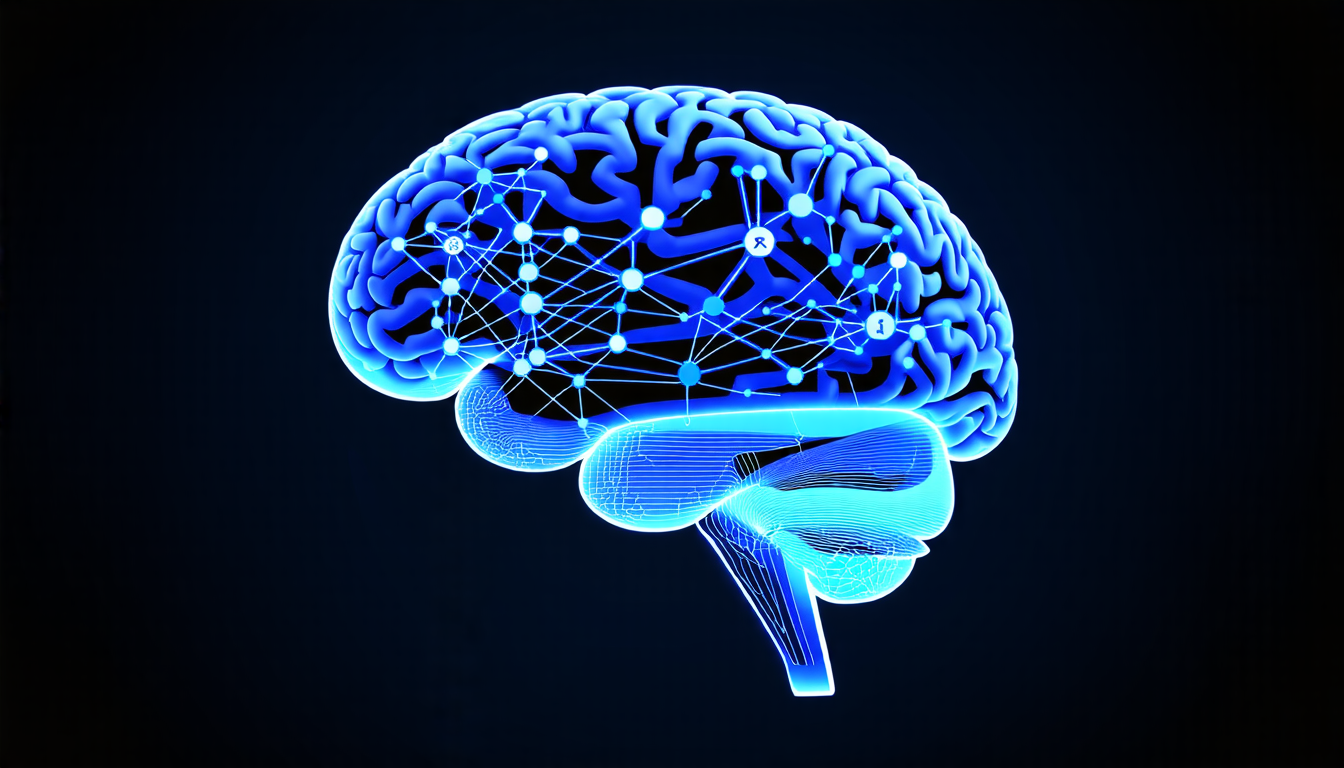
The key discovery lies in the way our brain’s neural networks operate. Essentially, our brain is like a supercomputer that processes massive amounts of data every second. But unlike computers, our brain doesn’t have a fixed architecture – it can reorganize and adapt its connections as we learn new information.
The researchers used advanced mathematical techniques to analyze the behavior of these neural networks. They found that the brain’s ability to adapt is not just limited to learning new skills or memories, but also plays a crucial role in how we perceive the world around us.
One of the most fascinating aspects of this discovery is its implications for artificial intelligence. For years, AI researchers have been trying to create machines that can learn and adapt like humans. But until now, they haven’t fully understood how our brains achieve this incredible feat.
The breakthrough could potentially lead to more advanced AI systems that can learn from their mistakes and improve over time. This has huge implications for fields such as healthcare, finance, and transportation, where AI is being used to make decisions that affect people’s lives.
Another significant aspect of the research is its potential to help treat neurological disorders. By better understanding how our brains adapt and reorganize, scientists may be able to develop new therapies for conditions like Alzheimer’s disease or Parkinson’s disease.
The study also sheds light on the role of the brain in our perception of reality. Our brain doesn’t just process sensory information – it actively filters out unnecessary data and creates a cohesive picture of the world around us. This has major implications for fields such as psychology, philosophy, and even art.
The researchers used advanced mathematical techniques to analyze the behavior of these neural networks. They found that the brain’s ability to adapt is not just limited to learning new skills or memories, but also plays a crucial role in how we perceive the world around us.
This research has opened up a whole new area of study and could have far-reaching implications for our understanding of the human brain.
Cite this article: “Deep Learning of Operator Equations: A Novel Framework for Solving Inverse Problems”, The Science Archive, 2025.
Brain, Neural Networks, Artificial Intelligence, Learning, Adaptation, Perception, Reality, Psychology, Philosophy, Neuroscience





