

Wednesday 09 April 2025
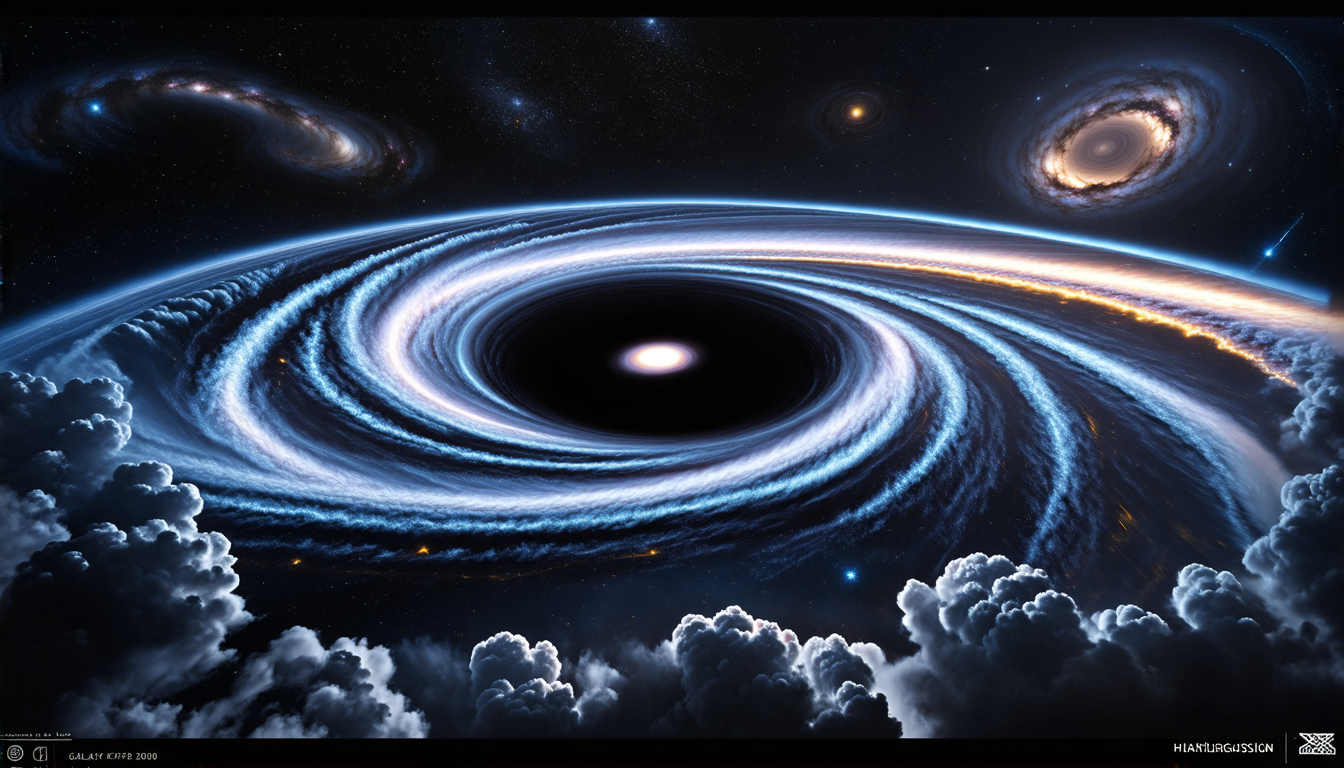
The first observations by NASA’s James Webb Space Telescope (JWST) have revealed a new understanding of tidal disruption events, or TDEs, which occur when a star passes too close to a supermassive black hole at the centre of a galaxy.
TDEs are thought to be a key way for scientists to study these elusive objects, as they provide a unique window into the physics of accretion and the environment around the black hole. But until now, researchers have been limited by the quality of data available from previous observations.
The JWST’s Mid-Infrared Instrument (MIRI) has changed all that, capturing high-resolution spectra of four TDEs in unprecedented detail. The new data reveals a wealth of information about these events, including the composition and structure of the dust and gas surrounding the black hole.
One of the most striking findings is the presence of silicate emission features, which are thought to be produced by optically thin dust along an isodelay surface. This suggests that the dust is not being destroyed by its own radiation, as had been previously assumed.
The MIRI spectra also reveal a range of molecular hydrogen (H2) lines, which are likely produced by the interaction between the accreting gas and the surrounding environment. The strength of these lines varies significantly from one TDE to another, suggesting that the physical conditions in each event may be different.
In addition to these new insights into the physics of TDEs, the JWST observations have also provided a unique opportunity to test theoretical models of these events. By comparing the data with predictions from simulations, researchers can gain a better understanding of how TDEs occur and what we might expect to see in future observations.
The implications of this research are far-reaching, providing new insights into the formation and evolution of galaxies and the role of supermassive black holes within them. The JWST has already opened up a new era of discovery in this field, and it will continue to play a crucial role in our understanding of these enigmatic events.
The new data also highlights the importance of continued investment in space-based astronomy, which is uniquely positioned to study TDEs and other celestial phenomena that are difficult or impossible to observe from Earth. The JWST’s observations are just the beginning, and we can expect many more exciting discoveries as this technology continues to evolve.
Cite this article: “Unveiling the Secrets of Tidal Disruption Events with NASAs James Webb Space Telescope”, The Science Archive, 2025.
James Webb Space Telescope, Tidal Disruption Events, Supermassive Black Holes, Galaxy Centers, Mid-Infrared Instrument, Silicate Emission Features, Molecular Hydrogen Lines, Accretion Physics, Galactic Evolution, Space-Based Astronomy





