

Wednesday 09 April 2025
Thermodynamics, the study of heat and energy, has long been a cornerstone of physics. But researchers have recently discovered that this fundamental concept is hiding a secret: it’s connected to geometry.
For decades, scientists have known that thermodynamic systems can be described using geometric methods. However, recent advances in information theory and differential geometry have revealed a deeper connection between the two fields. This new understanding has far-reaching implications for our understanding of the universe and its behavior.
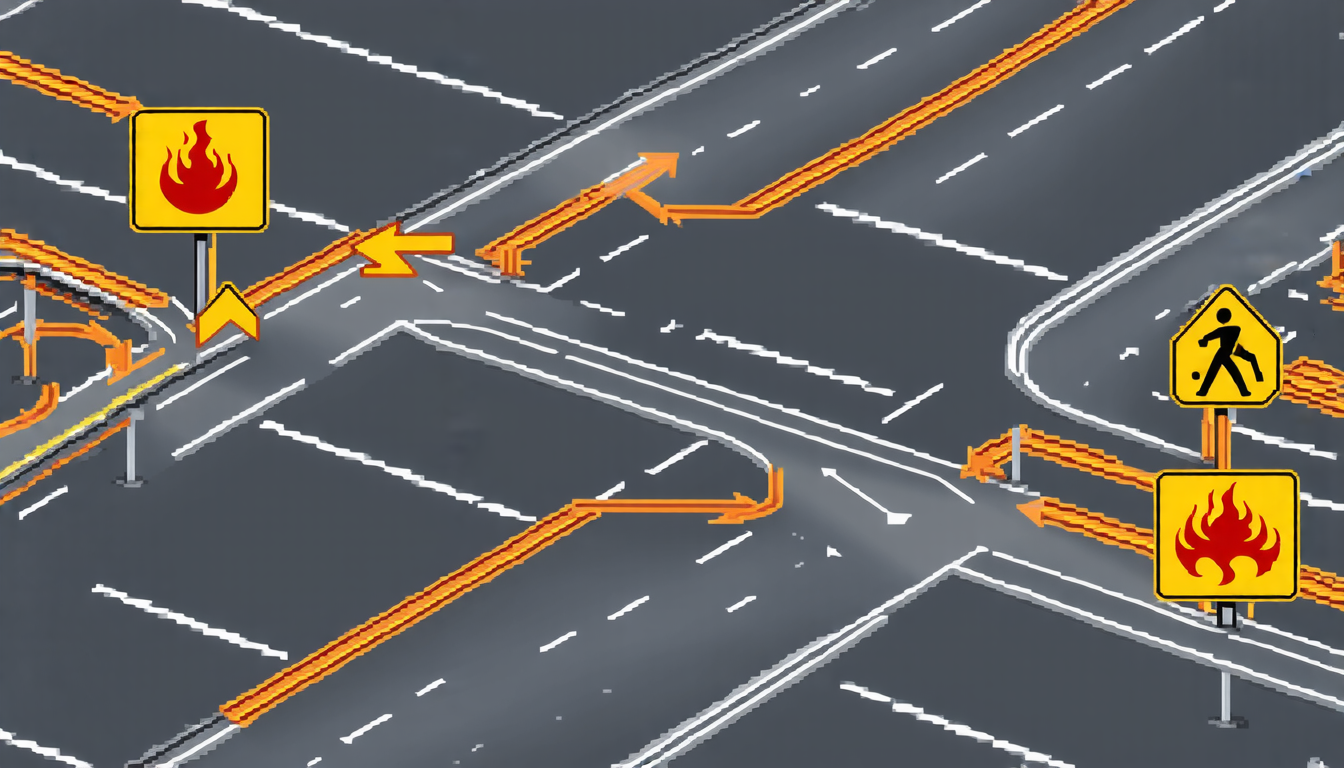
At the heart of this connection is the concept of dual connections, which are pairs of mathematical structures that describe how energy flows through a system. Think of it like a highway system: just as roads connect cities and allow goods to flow between them, these dual connections link thermodynamic variables and enable energy to move from one state to another.
The key insight is that these dual connections can be described using geometric methods, specifically in the language of Hessian manifolds. These mathematical structures are defined by a single convex potential function, which encodes all the information about the system’s behavior. This potential function gives rise to two sets of coordinates: primal and dual.
The primal coordinates describe the system’s internal energy, while the dual coordinates represent its entropy – a measure of disorder or randomness. By mapping these coordinates onto each other, scientists can uncover hidden patterns and relationships within the system.
This geometric approach has significant implications for our understanding of thermodynamic processes. For example, it reveals that certain transformations, such as those between different types of energy, are not unique to a particular system but rather arise from the underlying geometry. This insight could revolutionize the way we design and optimize energy systems, from power plants to engines.
The connection between thermodynamics and geometry also sheds light on the behavior of black holes, those mysterious regions of spacetime where gravity is so strong that nothing, not even light, can escape. By applying the geometric methods developed in this research, scientists may be able to better understand the intricate dance of energy and entropy at play near these cosmic monsters.
In the future, this new understanding could lead to breakthroughs in fields as diverse as materials science, biology, and cosmology. It may even inspire new approaches to solving some of humanity’s most pressing challenges, from climate change to sustainable energy production.
For now, researchers are excited by the prospect of exploring these uncharted territories. By combining thermodynamics with geometry, they’re uncovering secrets about the fundamental nature of the universe that were previously hidden in plain sight.
Cite this article: “Unlocking the Secrets of Black Hole Thermodynamics: A Geometric Perspective”, The Science Archive, 2025.
Thermodynamics, Geometry, Energy, Entropy, Information Theory, Differential Geometry, Hessian Manifolds, Black Holes, Materials Science, Cosmology





