

Wednesday 09 April 2025
Scientists have made a significant breakthrough in understanding how to learn the structure of complex networks, such as social media or transportation systems. By analyzing data generated by these networks, researchers can uncover patterns and relationships that reveal their underlying architecture.
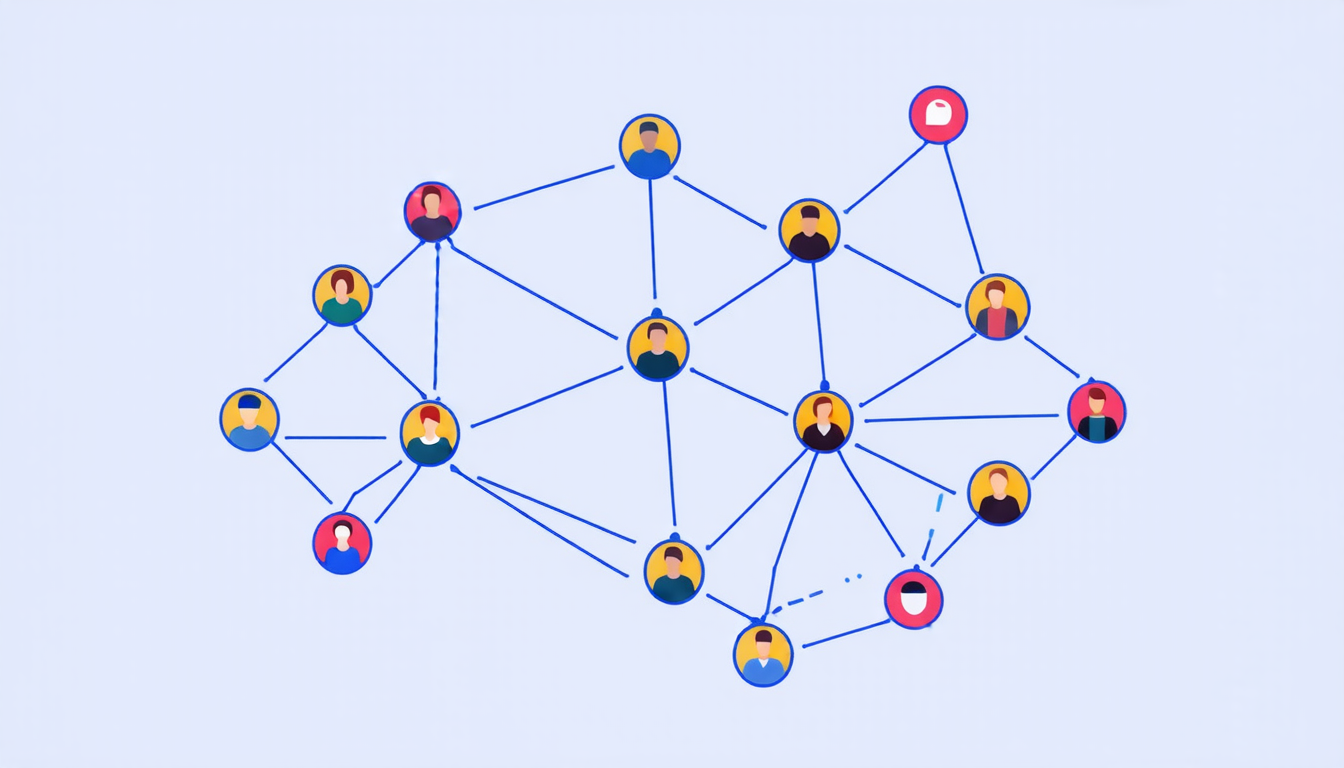
The key to this discovery is a new approach called Heterogeneous Graph Structure Learning (HGSL). This method uses machine learning algorithms to identify the connections between nodes in a network, taking into account not only the relationships between individual nodes but also the different types of relationships they have with each other.
Traditionally, researchers have relied on simplifying assumptions about networks, assuming that all edges are equivalent and ignoring the nuances of real-world data. But HGSL recognizes that these assumptions are often flawed, leading to inaccurate models and limited understanding of network behavior.
The new approach uses a statistical model called Hidden Markov Networks for Heterogeneous Graphs (H2MN) to capture the intricate relationships between nodes. By analyzing the patterns of node labels and edge types, H2MN can identify the most informative dimensions that reveal the underlying structure of the network.
One of the main challenges in understanding complex networks is dealing with noisy or incomplete data. HGSL addresses this issue by incorporating a robust optimization method that iteratively refines the model to ensure convergence and accuracy.
The results are impressive: HGSL has been tested on synthetic datasets and real-world examples, including movie-actor relationships and academic citations. In each case, the algorithm outperformed traditional methods in identifying network structure and predicting node connections.
The implications of this research are significant. By developing a more accurate understanding of complex networks, scientists can better model and analyze real-world systems, such as social media platforms or transportation infrastructure. This knowledge can inform strategies for improving network resilience, optimizing performance, and mitigating the spread of misinformation.
Furthermore, HGSL has potential applications in fields beyond network science, such as bioinformatics and computer vision. By recognizing patterns and relationships in complex datasets, researchers can uncover new insights and develop more effective algorithms for data analysis.
In summary, the development of Heterogeneous Graph Structure Learning represents a major advance in understanding complex networks. By acknowledging the nuances of real-world data and incorporating robust optimization methods, scientists can gain a deeper understanding of network behavior and develop more accurate models for predicting node connections. As research continues to evolve, the potential applications of HGSL will only continue to grow.
Cite this article: “Unveiling Heterogeneous Graph Structure through Data-Generating Processes”, The Science Archive, 2025.
Machine Learning, Network Science, Complex Networks, Heterogeneous Graph Structure Learning, Hgsl, Hidden Markov Networks, Data Analysis, Optimization Methods, Node Connections, Graph Theory.





