

Wednesday 09 April 2025
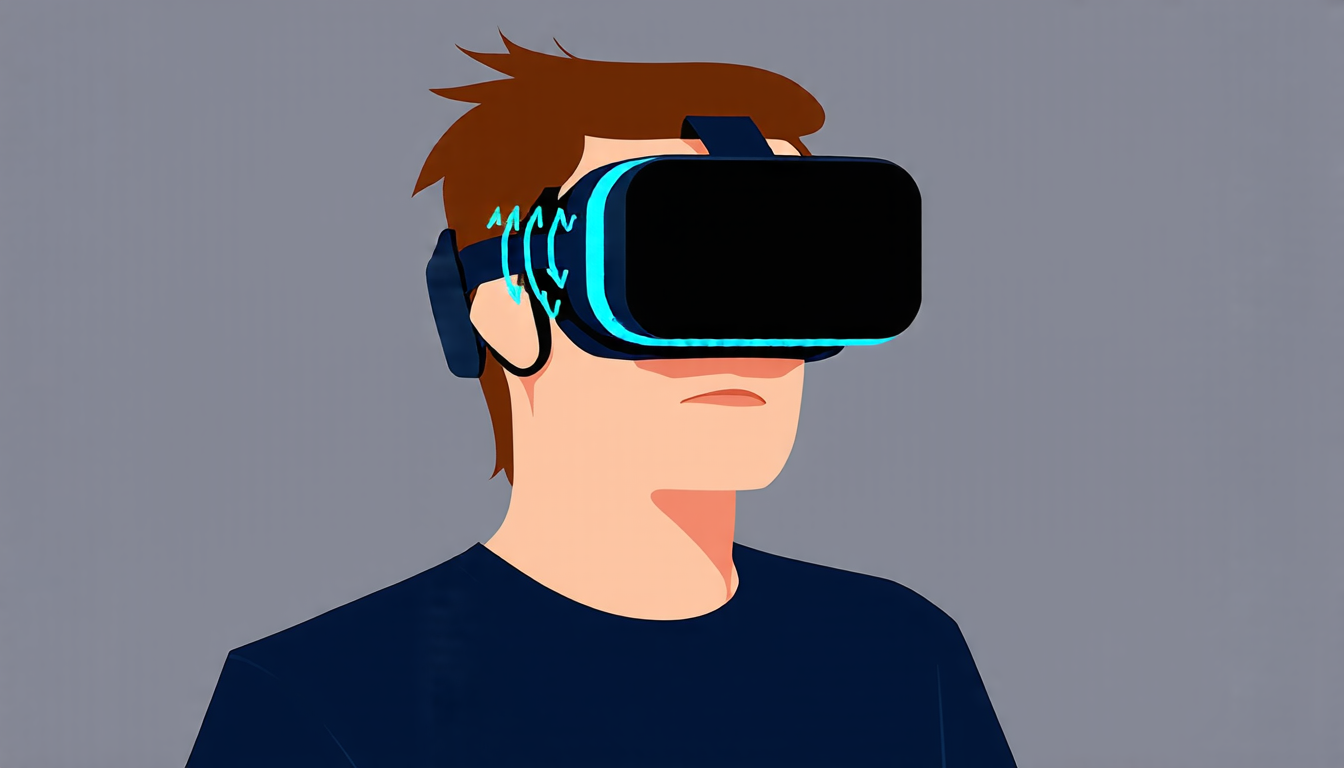
Researchers have made significant progress in developing a novel method for detecting saccadic eye movements using commercial virtual reality headsets. Saccades are rapid, involuntary eye movements that occur when we shift our gaze between different points of interest. They play a crucial role in visual perception and cognitive processes.
To detect these movements, scientists typically rely on specialized equipment, such as eye trackers or high-speed cameras. However, these devices can be expensive and impractical for widespread use. The new approach uses virtual reality headsets, which are becoming increasingly accessible to the general public.
The researchers employed a custom-built Unity application that utilizes the Tobii Ocumen software development kit (SDK) to capture eye tracking data from the headset. This data was then analyzed using machine learning algorithms and principal component analysis (PCA) to identify patterns in saccadic movements.
One of the key findings is that the commercial VR headsets can accurately detect saccades with 93% accuracy, as measured by a support vector machine (SVM) classifier. The study also explored differences in saccadic eye movements between participants with and without visual impairments, such as amblyopia.
The results suggest that these headsets could potentially be used to diagnose and monitor neurological disorders, including amblyopia. This is because the devices can track subtle changes in eye movement patterns that may not be apparent through traditional methods.
Moreover, the study highlights the potential of virtual reality technology to revolutionize the field of neuroscience. By leveraging commercial VR headsets, researchers can collect large amounts of data on human visual perception and cognitive processes without the need for expensive equipment.
The implications of this research are far-reaching, with potential applications in various fields, including psychology, education, and healthcare. For instance, virtual reality-based eye movement analysis could be used to assess cognitive abilities in individuals with neurological disorders or track the effectiveness of rehabilitation therapies.
Furthermore, the study demonstrates the importance of formalizing data recording processes to ensure consistency and reliability in research findings. The researchers’ approach provides a framework for future studies that can help overcome the challenges associated with inconsistent datasets.
Overall, this research has significant implications for our understanding of human visual perception and cognitive processes. By harnessing the power of commercial VR headsets, scientists can collect valuable data on eye movements and explore new avenues for diagnosing and treating neurological disorders.
Cite this article: “Unlocking the Secrets of Eye Movement: A Novel Approach to Detecting Saccades with Commercial VR Headsets”, The Science Archive, 2025.
Saccadic Eye Movement, Virtual Reality Headsets, Eye Tracking Data, Machine Learning Algorithms, Principal Component Analysis, Support Vector Machine, Amblyopia, Neurological Disorders, Cognitive Processes, Neuroscience.





