

Thursday 10 April 2025
Power outages are a frustrating and sometimes costly experience for many of us. A sudden loss of electricity can leave homes in darkness, disrupt work and daily routines, and even pose health risks to vulnerable individuals. But what if we could predict when and where these outages might occur? A new study has made significant progress towards achieving this goal by developing a sophisticated model that takes into account the complex interplay between weather conditions, vegetation density, and power line infrastructure.
The researchers used a dataset of over 10 years’ worth of outage records from a major utility company to build their model. They analyzed factors such as wind speed, temperature, precipitation, and snow type, as well as vegetation metrics like density and height, to identify patterns that might contribute to outages. The team also incorporated information about the power line infrastructure itself, including the location and condition of overhead lines.
The resulting model is able to predict outage rates with remarkable accuracy, even in areas where the data is imbalanced – meaning that there are more instances of no-outage events than outage events. This is particularly impressive given the complexity of the relationships between these various factors, which can interact in subtle but significant ways.
For example, the study found that high winds and dense vegetation can combine to create a perfect storm of outage risk. When strong gusts blow through an area with thick foliage, branches and trees are more likely to come into contact with power lines, causing outages. But the model also revealed that in areas with less dense vegetation, wind speed becomes a more dominant factor in predicting outages.
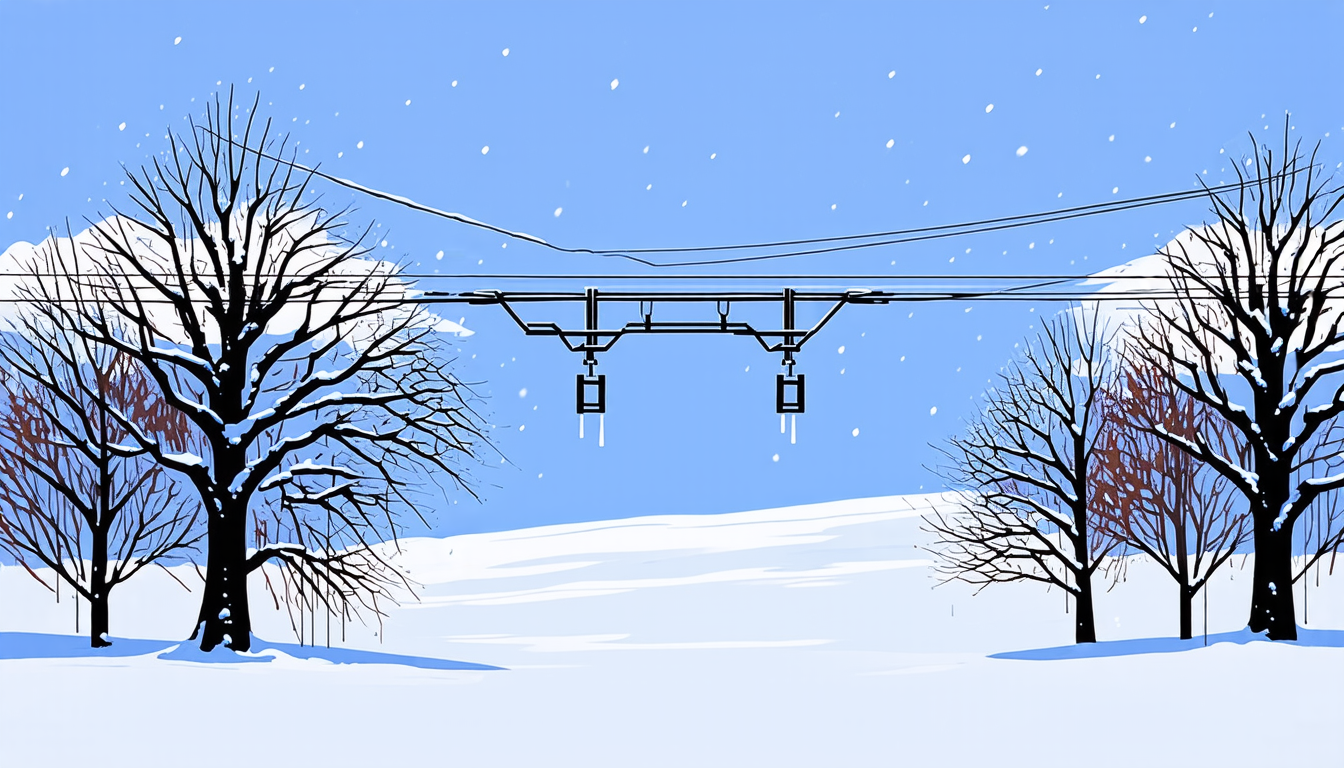
The researchers also identified snow as a significant contributor to outage risk, particularly wet snow. This type of snow is heavier and more prone to accumulating on power lines, which can cause them to sag or even break under the weight. The study found that areas with high levels of wet snow are more likely to experience outages during winter storms.
The implications of this research are significant for utilities and regulators trying to mitigate the impact of outages. By using this model to predict where and when outages are most likely to occur, they can deploy maintenance crews and resources more effectively, reducing the time it takes to restore power and minimizing the disruption to customers.
Moreover, the study’s findings could inform vegetation management strategies, which are critical for maintaining power line infrastructure. Utilities can use this information to prioritize trimming and removal of trees and branches in areas most prone to outages, helping to reduce the risk of damage and loss.
Cite this article: “Power Grid Resilience: Unlocking Insights from Unbalanced Data”, The Science Archive, 2025.
Power Outages, Weather Conditions, Vegetation Density, Power Line Infrastructure, Outage Prediction, Utility Companies, Snow, Wind Speed, Tree Trimming, Maintenance Crews





