

Thursday 10 April 2025
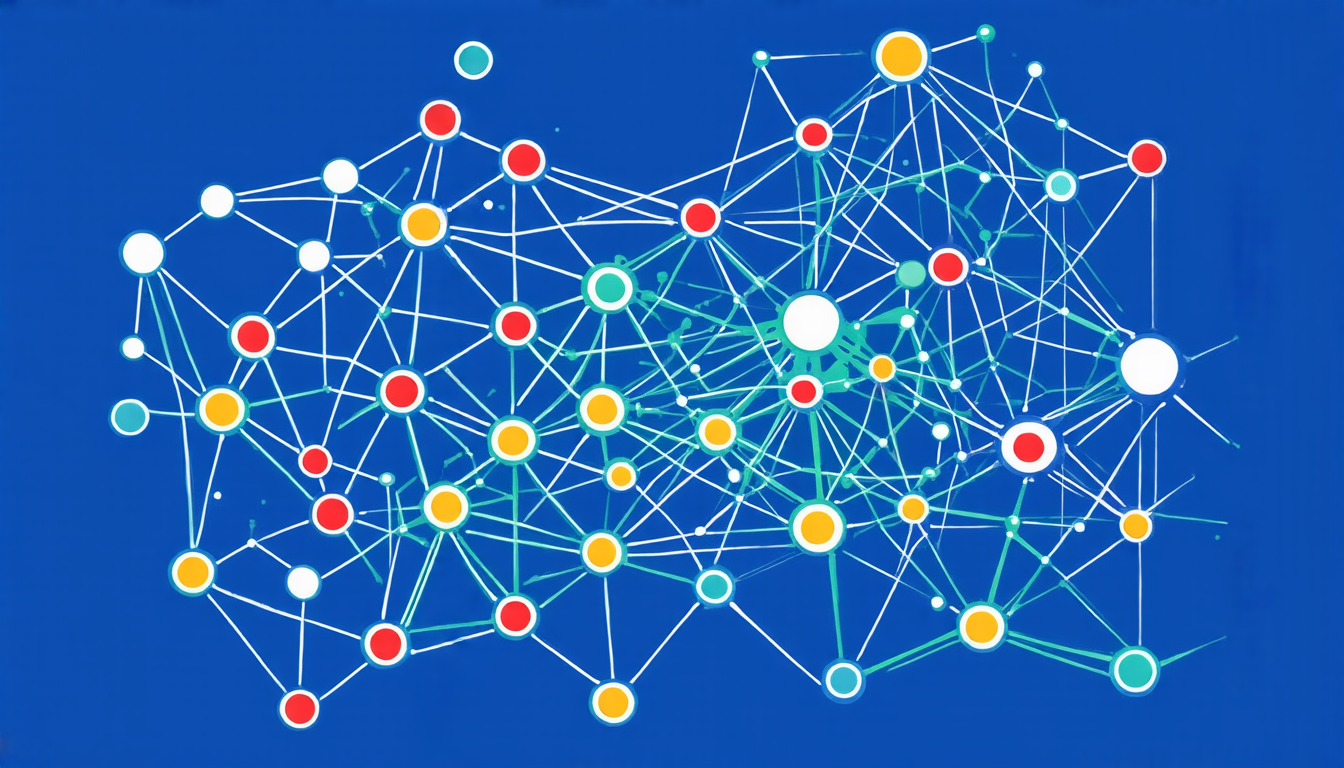
Networks are all around us – social networks, transportation networks, even networks of neurons in our brains. Understanding these complex systems is crucial for making informed decisions and predicting their behavior. A new paper has shed light on a powerful tool for analyzing networks: graphons.
A graphon is essentially a mathematical function that describes the structure of a network. By studying how this function behaves, researchers can gain insights into the properties and behaviors of the network itself. In other words, graphons are like a blueprint for understanding complex systems.
The paper’s authors have developed a new way to estimate graphons from data collected about a network. This is important because it allows researchers to study networks that are too large or too complex to analyze directly. By estimating the graphon, they can make predictions about how the network will behave under different conditions.
One of the key challenges in analyzing networks is dealing with noise and uncertainty. Graphons can help mitigate this by providing a way to model and predict the behavior of the network even when there’s a lot of variability in the data.
The authors have also developed new methods for using graphons to make predictions about complex systems. For example, they’ve shown how to use graphons to optimize the performance of networks under different conditions – like finding the best way to route traffic through a city or identifying the most efficient ways to connect nodes in a social network.
Another important application of graphons is in understanding and predicting the behavior of large-scale systems. By estimating the graphon, researchers can make predictions about how these systems will behave over time, which is crucial for making informed decisions.
The authors’ methods are not limited to just networks – they can be applied to any complex system where there’s a lot of uncertainty or variability in the data. This means that graphons have the potential to revolutionize our understanding and analysis of many different fields, from biology to economics to climate science.
Overall, this paper represents an important step forward in our ability to understand and analyze complex systems. By providing new tools for estimating and using graphons, researchers can gain deeper insights into the behavior of these systems and make more informed decisions about how to manage them.
Cite this article: “Unlocking the Secrets of Network Dynamics: A New Framework for Estimating Graphon Games”, The Science Archive, 2025.
Networks, Graphons, Complex Systems, Uncertainty, Prediction, Optimization, Data Analysis, Machine Learning, Mathematics, Science





