

Thursday 10 April 2025
Physicists have long been fascinated by the Unruh effect, a phenomenon in which an accelerating observer experiences thermal radiation where none exists for a stationary observer. This seemingly paradoxical result has puzzled researchers and sparked debate about the nature of space and time. Recently, a new study has shed light on this enigma, proposing a local photon approach that reconciles relativity with quantum electrodynamics.
In the Unruh effect, an accelerating observer detects photons in a thermal state, while a stationary observer sees none. This disparity arises from the way each observer experiences time and space. For the accelerating observer, time appears to pass slower near the event horizon of their own personal black hole, causing them to perceive the radiation as thermal.
The local photon approach takes a different tack, focusing on the creation of photons in the reference frame of an accelerating observer. By analyzing the worldlines of light-like trajectories, the researchers demonstrate that the quantized electromagnetic field can be modeled without violating general relativity. The key insight is that the zero-point energy density changes depending on the observer’s frame of reference.
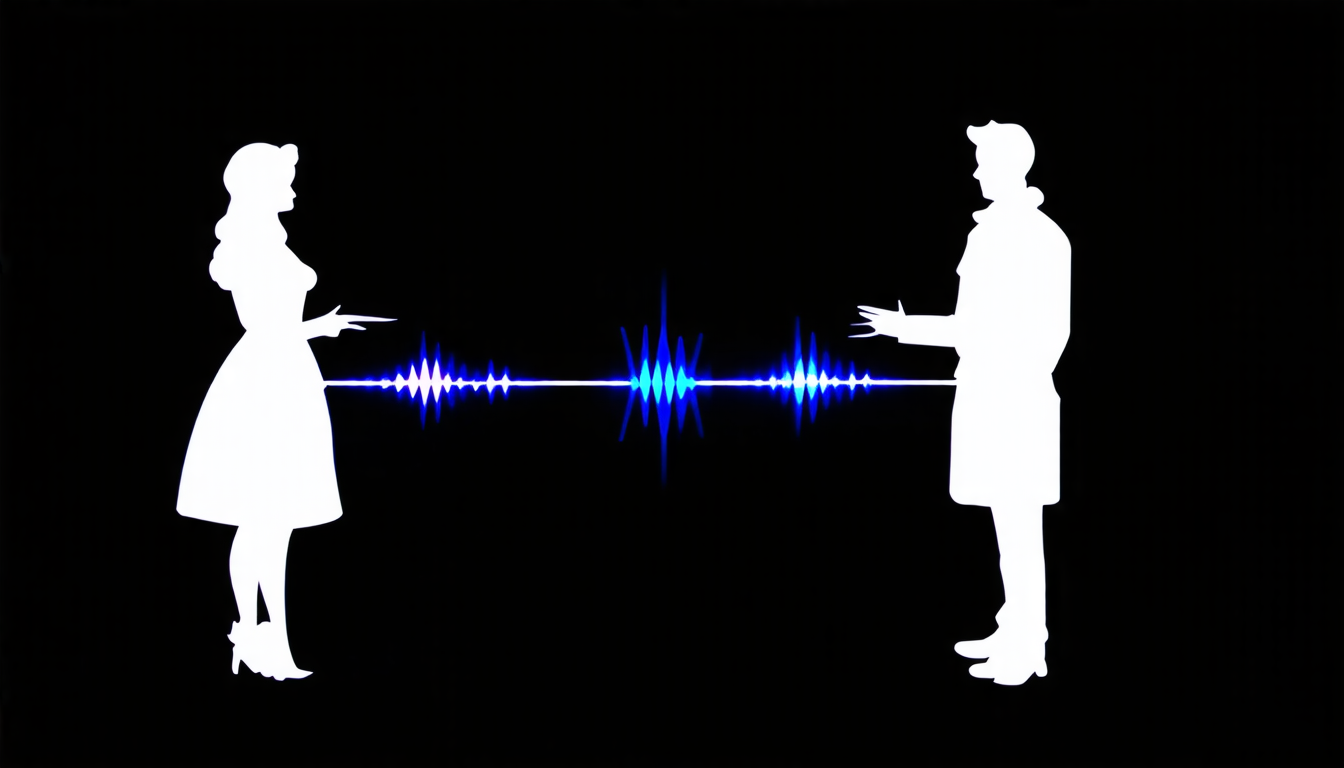
To understand this concept, consider a simple thought experiment. Imagine two observers, Alice and Bob, who meet at the origin of their respective coordinate systems. Alice remains stationary, while Bob accelerates away from her. As they part ways, Alice sends short light pulses to Bob at regular time intervals. From Bob’s perspective, these pulses arrive at different positions and times due to his accelerating motion.
The researchers use this scenario to derive a relationship between the natural coordinates of Alice and Bob’s reference frames. By discretizing Bob’s trajectory into short periods of constant motion, they show that the transformation between their coordinate systems can be established without invoking the flat spacetime approximation typically used in derivations of the Unruh effect.
This approach has significant implications for our understanding of quantum electrodynamics in non-inertial reference frames. It suggests that the Unruh effect may not be a fundamental aspect of space and time, but rather an artifact of our limited understanding of these phenomena. By localizing photons and analyzing their worldlines, researchers can gain new insights into the nature of accelerated motion and its effects on the behavior of light.
The study’s findings also have potential applications in fields such as analog gravity experiments and quantum information processing. For example, the creation of localized photon states could be used to develop new methods for quantum computing or communication.
Cite this article: “Unveiling the Secrets of Quantum Reality: New Insights into the Unruh Effect and the Nature of Light”, The Science Archive, 2025.
Unruh Effect, Relativity, Quantum Electrodynamics, Local Photon Approach, Accelerating Observer, Thermal Radiation, Space Time, Event Horizon, Worldlines, Photons
Reference: Sara Kanzi, Daniel Hodgson, Almut Beige, “Acceleration without photon pair creation” (2025).





