

Thursday 10 April 2025
Scientists have long struggled to make sense of the vast and complex landscape of scientific research. With millions of papers published every year, it’s easy to get lost in a sea of abstracts and methodologies. But what if there was a way to distill the essence of scientific discovery down to its most fundamental building blocks? A new study published this week presents a bold solution: using large language models to map the connections between research topics.
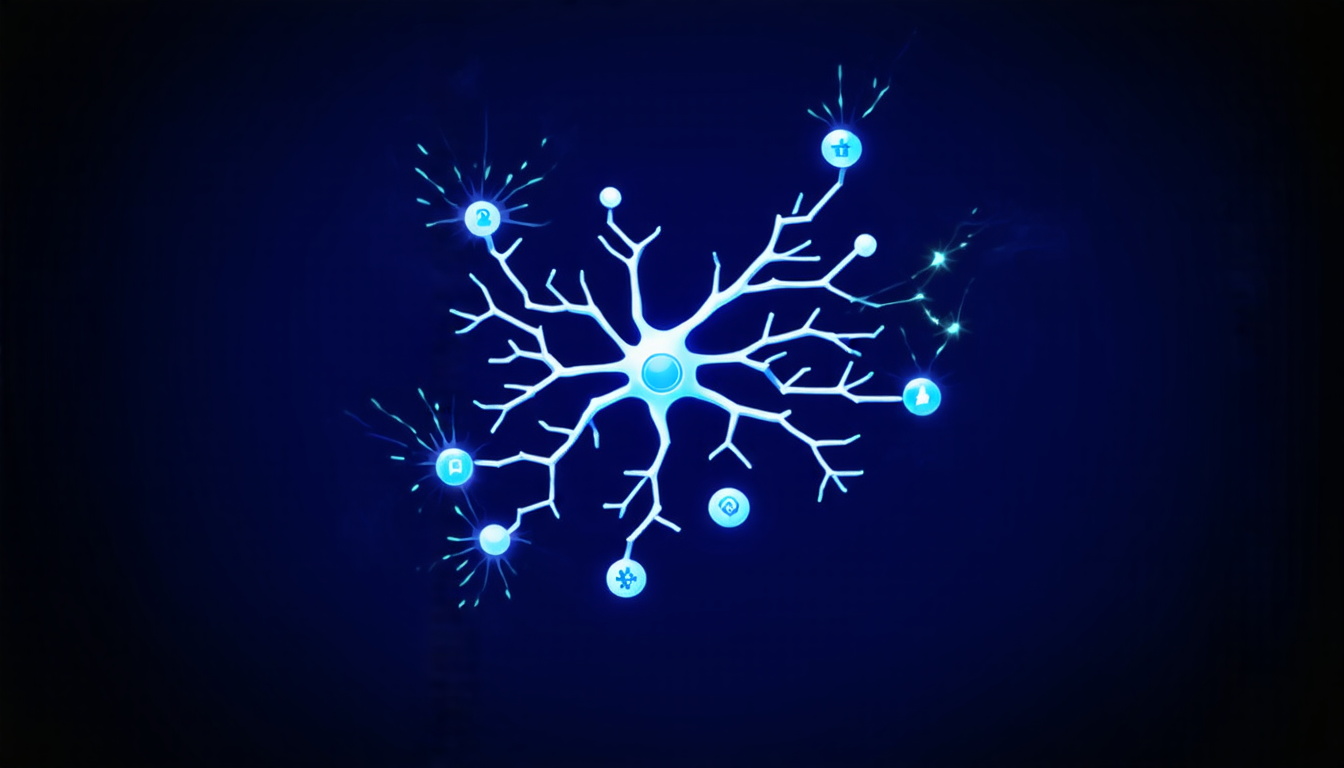
The researchers, led by Polymathic AI, have developed an algorithm that can take in vast amounts of text data from scientific papers and generate a comprehensive knowledge graph. This graph is essentially a web of interconnected nodes, each representing a specific concept or topic within a field. The model uses natural language processing techniques to identify relationships between these concepts, allowing it to identify patterns and trends that might be difficult for humans to discern on their own.
The team tested their algorithm on a dataset of over 30,000 papers from arXiv, a popular online repository for physics, mathematics, and computer science research. The results were impressive: the model was able to accurately predict the topics and subtopics of new papers based on just a few sentences of text. But more importantly, it was also able to identify key concepts that linked seemingly disparate areas of research together.
One example given by the researchers is the connection between astrophysics and fluid dynamics. The two fields may seem unrelated at first glance, but the model showed that certain mathematical techniques developed in one field have been applied to the other with surprising success. This kind of insight could be a game-changer for researchers looking to make new discoveries or identify potential applications of their work.
The implications of this technology are far-reaching. For one, it could revolutionize the way scientists approach interdisciplinary research. No longer would they need to spend months pouring over literature reviews and conference proceedings; instead, they could simply plug in a few keywords and get instant access to the most relevant papers and concepts.
But the benefits don’t stop there. The knowledge graph could also be used to identify areas where more research is needed, or to predict which topics are likely to become hot new areas of study. It could even help policymakers and funding agencies make more informed decisions about which projects to support.
Of course, there are also potential downsides to consider. For one, the algorithm’s reliance on text data means that it may struggle with papers that are heavily reliant on images or other visual content.
Cite this article: “Unlocking the Secrets of Scientific Discovery with Large Language Models”, The Science Archive, 2025.
Scientific Research, Language Models, Knowledge Graph, Natural Language Processing, Physics, Mathematics, Computer Science, Astrophysics, Fluid Dynamics, Interdisciplinary Research, Literature Reviews, Conference Proceedings, Policymaking, Funding Agencies





