

Thursday 10 April 2025
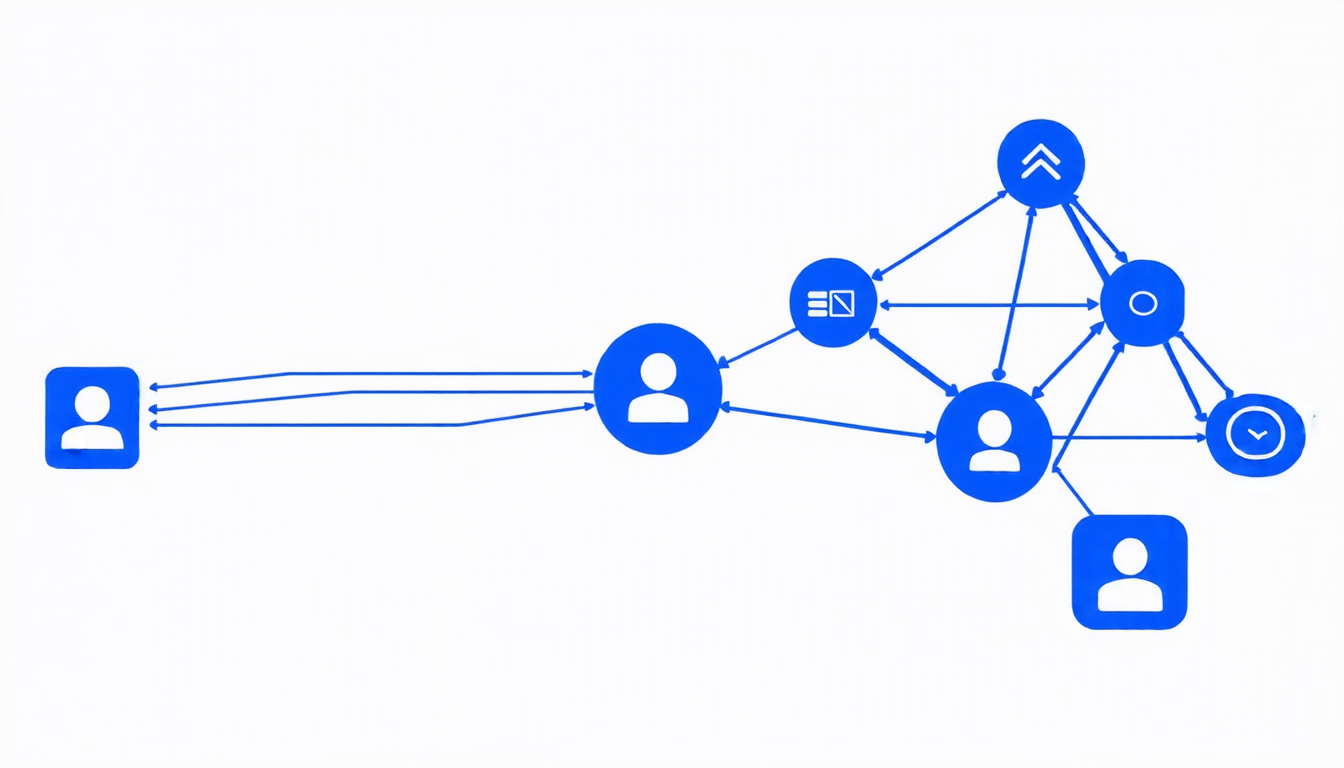
As we continue to rely on artificial intelligence and machine learning to make sense of the vast amounts of data we generate, one of the biggest challenges is ensuring that this information is accurate and reliable. Knowledge graphs, which are essentially massive databases of interconnected facts, are a crucial tool in this endeavour. However, these graphs can be noisy, with incorrect or irrelevant information scattered throughout.
A team of researchers has developed a novel approach to tackling this problem, known as type information-assisted self-supervised knowledge graph denoising. In essence, their method uses the structure of the knowledge graph itself to identify and remove noise. This is achieved by incorporating additional information about the relationships between entities in the graph, such as which entities are agents or patients in a particular situation.
The researchers tested their approach on three large-scale datasets, each containing millions of triples (or statements) about entities and their relationships. By comparing their method to existing techniques, they found that it was able to detect noise with high accuracy and precision.
One of the key benefits of this approach is its ability to adapt to different types of noise in a knowledge graph. For instance, if a particular entity is incorrectly linked to multiple other entities, the method can identify this as anomalous behavior and remove the incorrect links. Similarly, if an entity is missing from the graph altogether, the method can infer its presence based on patterns in the data.
The researchers also explored the robustness of their approach by varying certain parameters, such as the depth of the neural network used to process the graph. They found that even with these changes, the method remained effective at detecting noise and improving the overall quality of the knowledge graph.
This breakthrough has significant implications for a wide range of applications, from natural language processing and expert systems to data mining and information retrieval. By ensuring that our knowledge graphs are accurate and reliable, we can build more trustworthy AI models that make better decisions and provide more valuable insights.
The team’s approach is also notable for its ability to be self-supervised, meaning it doesn’t require any additional human supervision or labeling of the data. This makes it a highly efficient and scalable solution, well-suited for large-scale knowledge graphs that are constantly growing and evolving.
As we continue to rely on AI and machine learning to drive innovation and progress, ensuring the quality and reliability of our knowledge graphs will be critical. With this new approach, we have a powerful tool at our disposal to tackle this challenge head-on.
Cite this article: “Revolutionizing Knowledge Graph Denoising with Type Information- Assisted Self-Supervised Learning”, The Science Archive, 2025.
Artificial Intelligence, Machine Learning, Knowledge Graphs, Noise Removal, Self-Supervised, Denoising, Neural Networks, Data Quality, Reliability, Accuracy





