

Thursday 10 April 2025
The quest for more realistic virtual environments has been a longstanding challenge in the field of computer vision and robotics. For years, researchers have struggled to create synthetic scenes that can fool even the most discerning human eye into believing they’re real. But what if we told you there’s a new approach that’s making rapid strides towards achieving this goal? Enter PanoGen++, a novel framework for generating panoramic environments that are eerily lifelike.
The problem with current virtual environment generation techniques is that they often rely on simplistic, geometric shapes and lack the rich textures and details found in real-world scenes. This can make them look awkwardly artificial and fail to engage our attention. PanoGen++, on the other hand, takes a different tack by combining pre-trained diffusion models with domain-specific fine-tuning to create environments that are both diverse and realistic.
The key innovation behind PanoGen++ is its ability to generate panoramic scenes that incorporate varied room layouts, structures, and objects. This is achieved through a combination of masked image inpainting and recursive image outpainting, which allows the model to fill in missing regions and add depth to the scene. The result is an environment that’s not only visually stunning but also surprisingly immersive.
But what about the limitations of current virtual environments? For one, they often lack the spatial awareness and object recognition capabilities that humans take for granted. PanoGen++ addresses this by incorporating domain-specific knowledge into its training process, allowing it to better understand the relationships between objects and their surroundings.
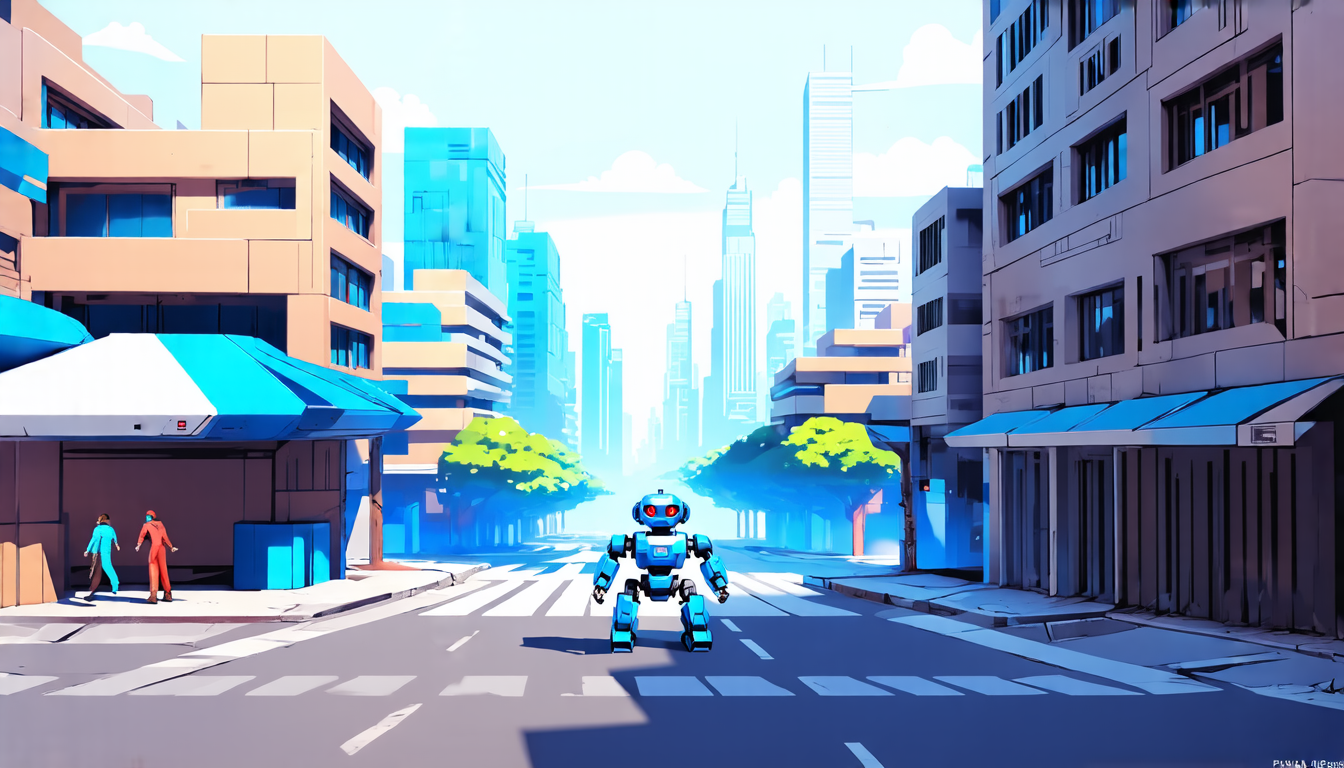
The implications of PanoGen++ are far-reaching, with potential applications in a variety of fields such as robotics, gaming, and virtual reality. Imagine being able to navigate through a lifelike environment that’s tailored specifically to your needs, whether that’s exploring a futuristic cityscape or conducting a simulated surgical procedure. The possibilities are endless.
Of course, there are still challenges to be overcome before PanoGen++ can achieve widespread adoption. For instance, the model’s ability to generalize to unseen environments and objects remains limited. But with continued research and development, it’s likely that we’ll see significant improvements in the coming years.
In short, PanoGen++ represents a major leap forward in virtual environment generation, offering a glimpse into a future where immersive experiences become indistinguishable from reality itself. As researchers continue to push the boundaries of what’s possible, one thing is clear: the future of computer vision and robotics has never looked more promising.
Cite this article: “Panoramic Environments: A Novel Framework for Vision-And-Language Navigation”, The Science Archive, 2025.
Computer Vision, Robotics, Virtual Environments, Panoramic Scenes, Image Inpainting, Outpainting, Diffusion Models, Domain-Specific Fine-Tuning, Immersive Experiences, Realistic Scenes





