

Thursday 10 April 2025
As we continue to push the boundaries of computer vision and deep learning, a new approach has emerged that’s poised to revolutionize the field of object tracking. A team of researchers has developed a novel bidirectional fusion transformer, dubbed BFTrans, which leverages the power of attention mechanisms to track objects in aerial environments with unprecedented accuracy.
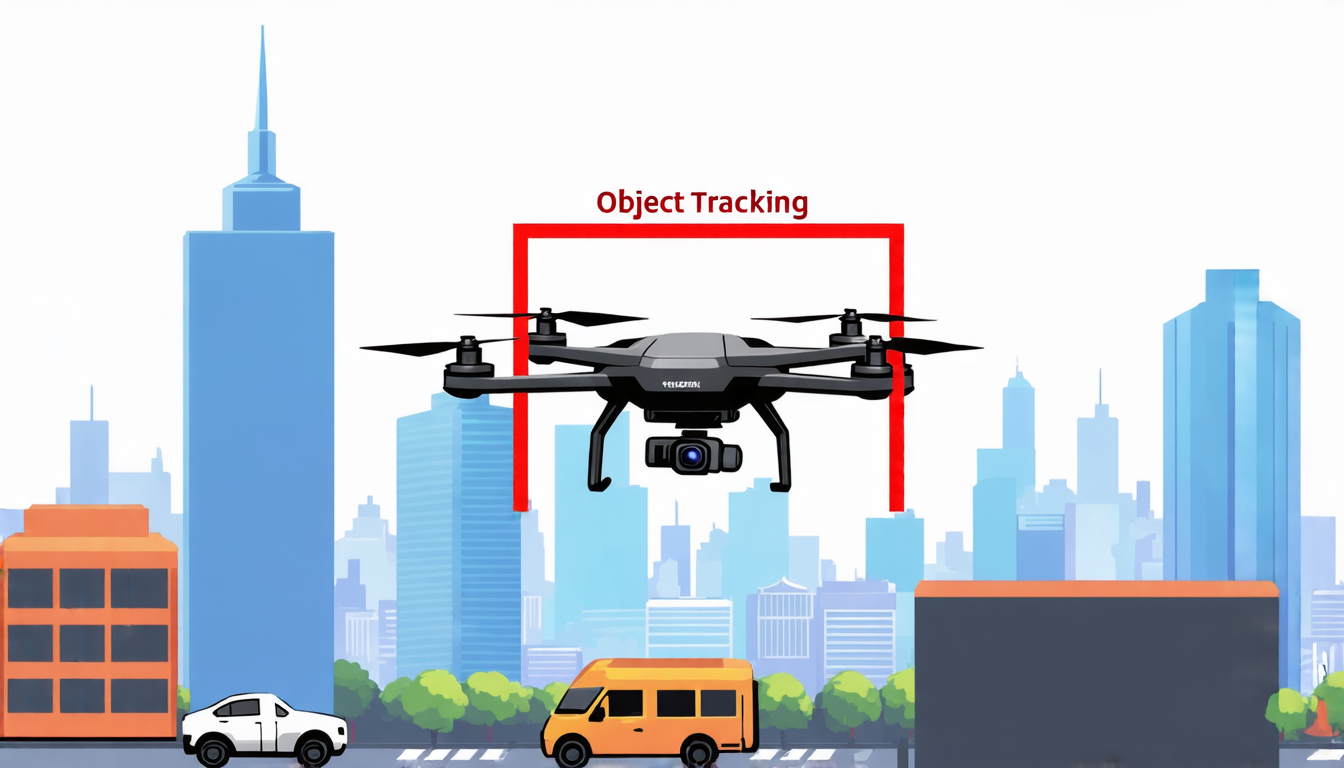
The BFTrans tracker is designed specifically for real-world UAV (unmanned aerial vehicle) applications, where complex scenarios like fast motion, occlusion, and background clutter are common. By combining shallow and deep features from both forward and backward streams, the model can extract a richer set of attributes that enable it to better adapt to changing environments.
The key innovation behind BFTrans is its ability to encode object appearance attributes through a target-aware positional encoding scheme. This approach allows the model to learn more effective feature representations by incorporating spatial and channel-wise information from the input data. The result is a tracker that’s both robust and efficient, capable of handling challenging scenarios with ease.
To evaluate the effectiveness of BFTrans, the researchers tested it on three popular UAV tracking benchmarks: UAV123, UAV20L, and UAVTrack112. The results were impressive, with BFTrans outperforming state-of-the-art trackers in terms of success rate and precision. In fact, it achieved a remarkable 64.7% success rate on UAV123, surpassing the next best tracker by over 2 percentage points.
But what makes BFTrans truly remarkable is its ability to scale to real-world scenarios. The model’s lightweight architecture and efficient processing make it suitable for deployment on embedded platforms like NVIDIA Jetson AGX Xavier. This means that BFTrans can be used in a variety of applications, from surveillance and monitoring to search and rescue operations.
The implications of BFTrans are far-reaching, with potential applications extending beyond UAV tracking to other areas of computer vision, such as autonomous driving and robotics. As the field continues to evolve, we can expect to see more innovative approaches like BFTrans that push the boundaries of what’s possible.
In recent years, we’ve seen significant advancements in object tracking, driven by advances in deep learning and computer vision. But even as these technologies continue to improve, real-world applications often require specialized solutions that can adapt to complex scenarios. The development of BFTrans is a testament to the power of innovation and collaboration, and it’s an exciting reminder of what’s possible when experts come together to tackle some of the toughest challenges in AI research.
Cite this article: “Revolutionizing Aerial Object Tracking: Bidirectional Fusion Transformer with Target-Aware Positional Encoding”, The Science Archive, 2025.
Computer Vision, Deep Learning, Object Tracking, Aerial Environments, Unmanned Aerial Vehicles, Bidirectional Fusion Transformer, Attention Mechanisms, Real-World Applications, Surveillance, Robotics





