

Thursday 10 April 2025
The rapid advancement of artificial intelligence, robotics, and extended reality is redefining human augmentation, enhancing cognition, physical abilities, and perception. However, as these technologies become more autonomous and integrated into daily life, they introduce ethical dilemmas, security risks, and concerns over loss of control. A recent workshop at the Augmented Humans conference explored both the transformative potential and unintended consequences of augmentation technologies.
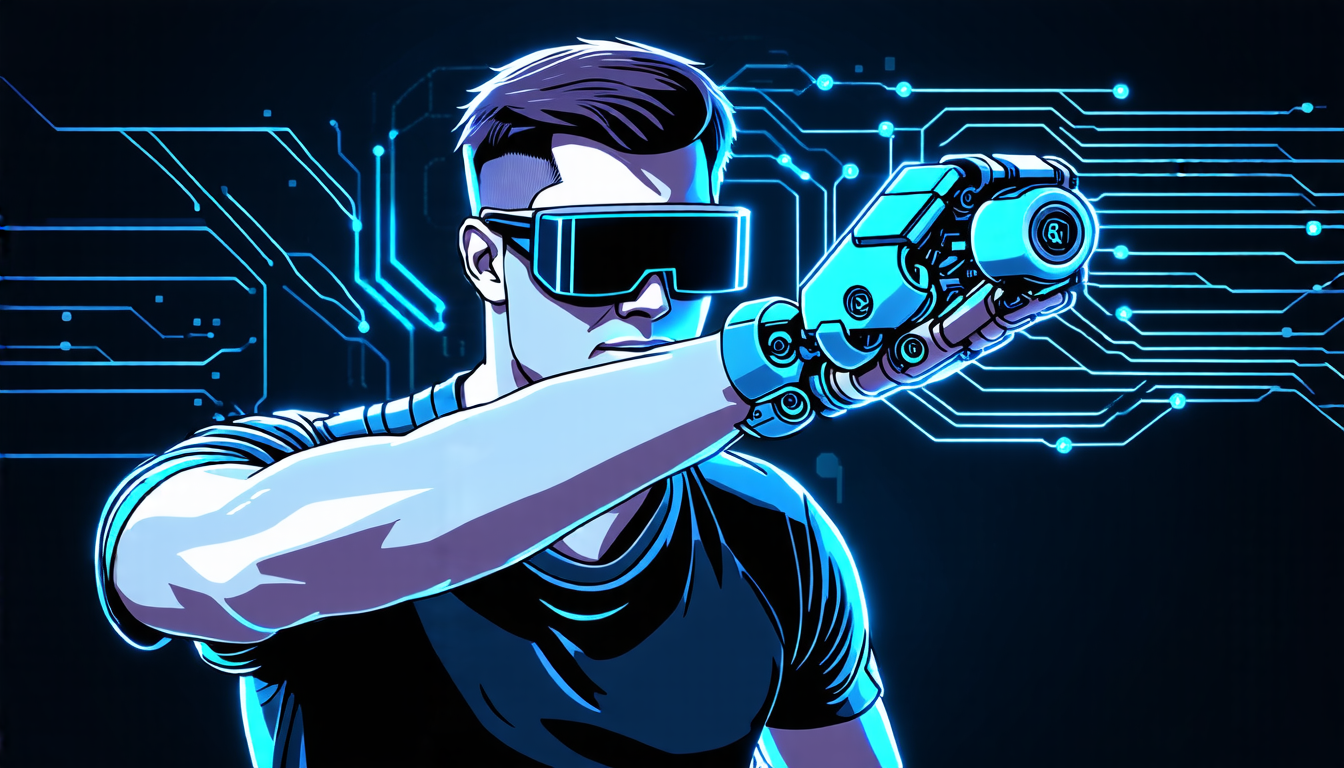
One of the key areas of focus was the development of assistive technologies that can amplify human abilities. Researchers are working on designing devices that can be tailored to individual needs, using techniques such as co-designing with users and integrating bodily adaptation and ability constraints. For example, one project is creating personalized wearable robotic limbs that can be designed using personal fabrication.
Another area of exploration was the integration of artificial intelligence into human augmentation. AI-powered tools are being developed to enhance cognitive abilities, such as Generative AI, which can produce creative outputs. However, these tools also raise concerns about authorship and transparency. For instance, what happens when an AI-generated piece of art or music is presented as if it was created by a human?
The workshop also delved into the concept of digital embodiment, where technology is used to create immersive experiences that blur the lines between the physical and virtual worlds. Researchers are exploring new ways for people with disabilities to interact with technology, such as using haptic feedback in 3D printed interfaces.
One of the most interesting aspects of this workshop was the discussion around the ethics of human augmentation. As these technologies become more prevalent, there is a growing concern about who owns the final product when AI contributes to design or writing. Who should have control over an additional robotic limb or avatar? How do we ensure that these technologies are designed with fairness and accessibility in mind?
The workshop also touched on the topic of public perception and trust in AI. As AI becomes more integrated into our daily lives, it is essential that we address concerns about bias, accountability, and transparency. The development of ethical guidelines for responsible augmentation is crucial to ensuring that these technologies align with human values.
Overall, the workshop highlighted the need for a multidisciplinary approach to addressing the challenges and opportunities presented by human augmentation. By bringing together experts from AI, robotics, neuroscience, and HCI, we can develop solutions that balance technological power with human values. As we move forward in this field, it is essential that we prioritize ethics, accessibility, and transparency to ensure that human augmentation benefits society rather than exacerbating existing divides.
Cite this article: “Unlocking Human Potential: The Future of Augmentation Through AI, Robotics, and XR”, The Science Archive, 2025.
Artificial Intelligence, Robotics, Extended Reality, Human Augmentation, Ethics, Ai-Powered Tools, Digital Embodiment, Haptic Feedback, 3D Printed Interfaces, Fairness And Accessibility.





