

Thursday 10 April 2025
A team of researchers has made a significant breakthrough in the field of materials science, developing a novel method for detecting and predicting fatigue failure in ferromagnetic metals. This advancement has far-reaching implications for industries that rely on these metals, such as aerospace, automotive, and construction.
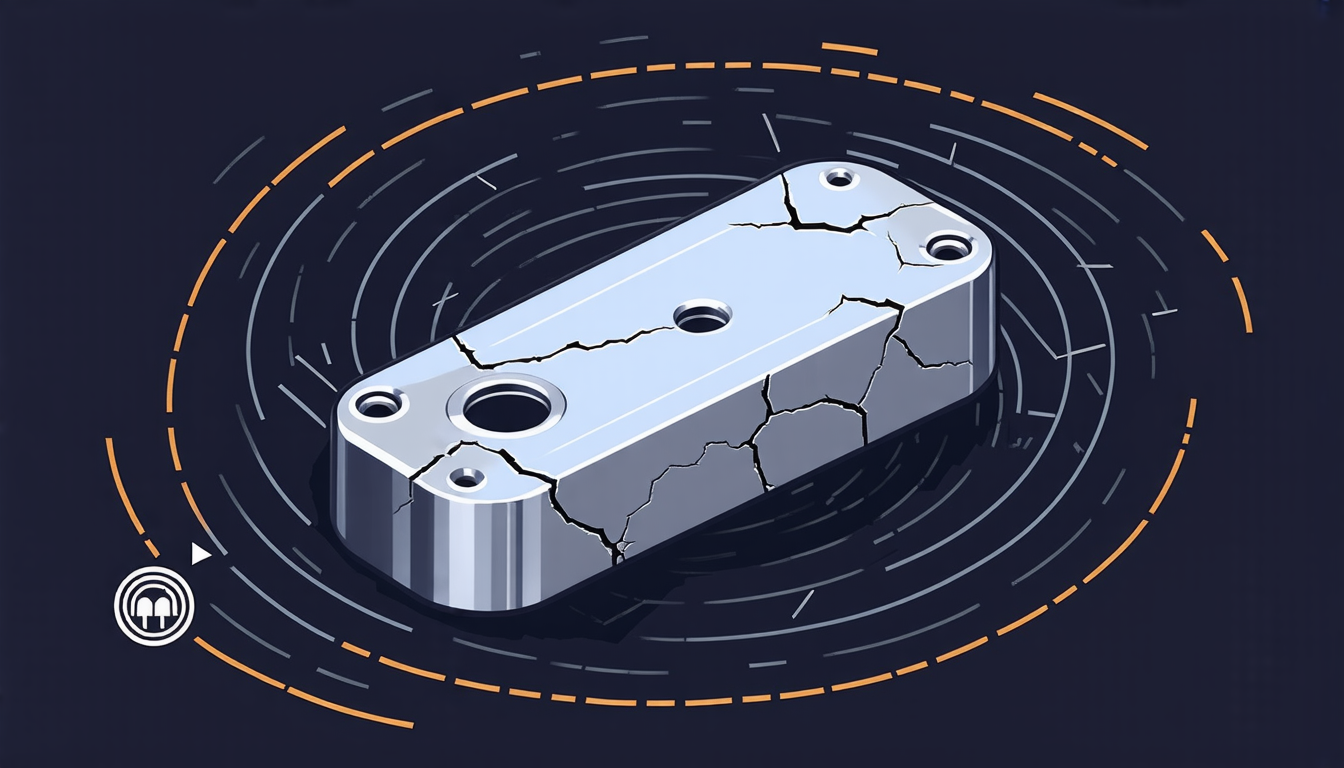
Fatigue failure occurs when a material is subjected to repeated stress cycles, causing microscopic cracks to form and eventually leading to catastrophic failure. Currently, predicting when this will happen is a challenge, as it’s difficult to accurately monitor the internal state of the material. The new technique, developed by a team led by Benniu Zhang, uses magnetic signals to detect changes in the material’s internal structure, allowing for early warning signs of impending fatigue failure.
The method relies on quantum spin correlation, which is a phenomenon where the magnetic properties of adjacent atoms become linked and affected by each other’s behavior. By analyzing these correlations, researchers can infer the presence of defects or changes in the material’s crystal structure, both of which are indicative of fatigue failure.
To demonstrate the effectiveness of their technique, the team conducted a series of experiments on ferromagnetic metals, including soft magnetic iron and steel alloys. They used a combination of theoretical modeling and experimental testing to validate their method, showing that it can accurately predict fatigue failure with high precision.
One of the key advantages of this approach is its non-invasive nature. Unlike traditional methods that require physical probing or destructive testing, the quantum spin correlation technique can be applied externally, without damaging the material. This makes it a more practical and cost-effective solution for industries where maintenance and inspection are critical.
The potential applications of this technology are vast. In aerospace, for example, early detection of fatigue failure could prevent catastrophic failures that result in loss of life or significant economic disruption. In the automotive industry, this technique could be used to monitor the integrity of critical components, such as engine mounts and suspension systems.
While there is still much work to be done before this technology can be widely adopted, the results are promising. By developing a more accurate and non-invasive method for detecting fatigue failure, researchers have opened up new possibilities for improving the safety and reliability of ferromagnetic materials. As the team continues to refine their technique, we can expect to see significant advancements in industries that rely on these metals.
Cite this article: “Unlocking the Secrets of Metal Fatigue: A Quantum Leap in Materials Science”, The Science Archive, 2025.
Materials Science, Fatigue Failure, Ferromagnetic Metals, Magnetic Signals, Quantum Spin Correlation, Internal Structure, Defects, Crystal Structure, Non-Invasive Method, Predictive Maintenance.





