

Thursday 10 April 2025
Scientists have made a significant breakthrough in robotics, enabling robots to seamlessly transition from simulated environments to real-world scenarios. This achievement has far-reaching implications for various industries, including manufacturing, healthcare, and logistics.
The research team developed an innovative framework called Real-Sim-Real (RSR), which leverages differentiable simulation to refine the parameters of a robotic system. By iteratively fine-tuning these parameters, RSR enables robots to adapt to real-world conditions with remarkable precision.
In the past, simulating complex robotic systems has been a challenging task. Traditional methods often relied on simplistic simulations or physical prototypes, both of which have limitations. Differentiable simulation, on the other hand, allows for precise modeling of robotic systems, making it an attractive solution for researchers and engineers.
The RSR framework consists of three primary components: environment parameter tuning, policy training, and deployment. The process begins with environment parameter tuning, where the system adjusts its parameters to better match real-world conditions. Next, policy training is performed using reinforcement learning, which optimizes the robot’s behavior based on feedback from the simulated environment.
Once the policy is trained, it is deployed in the real world, where it refines its performance by collecting data and adjusting its parameters accordingly. This iterative process allows the robot to adapt to real-world conditions, improving its overall performance over time.
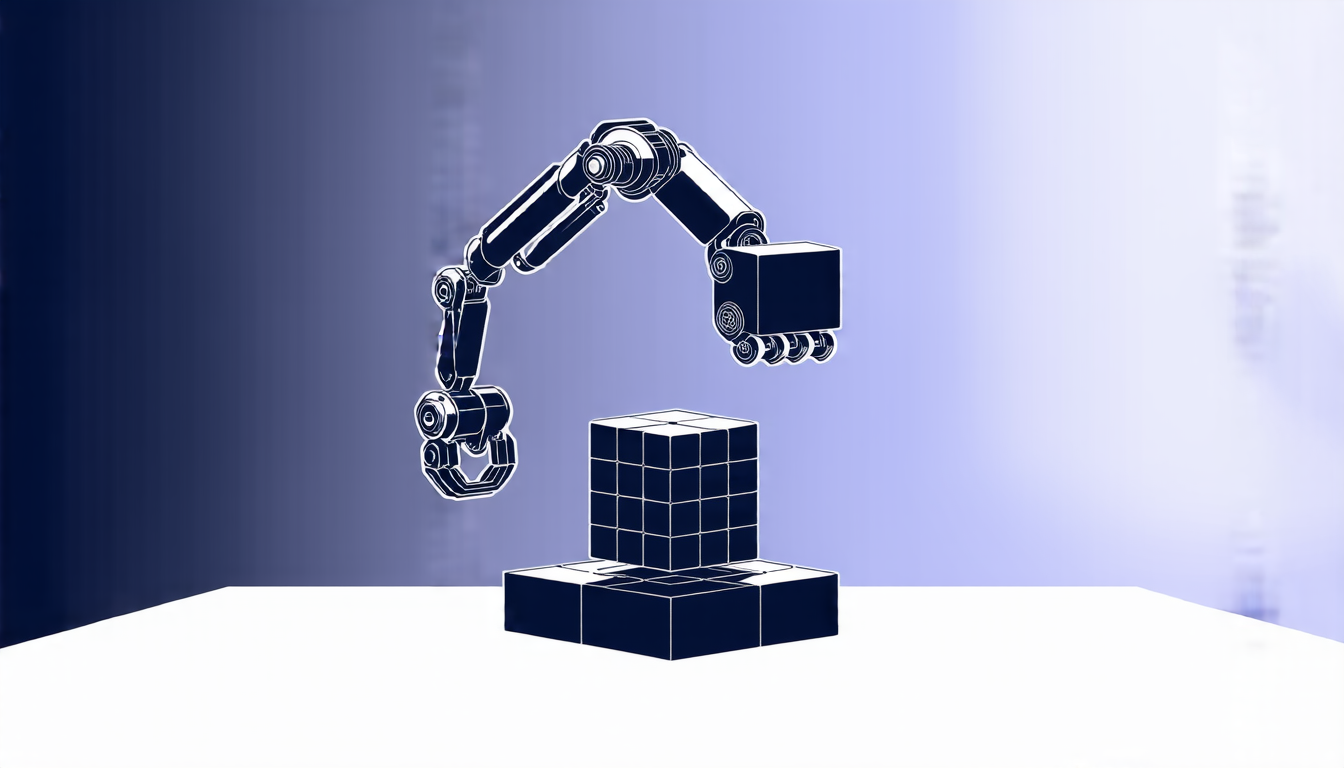
The researchers demonstrated the effectiveness of RSR through experiments involving a 6-DOF robotic arm. In one experiment, the robot was tasked with pushing a cube block into a target position. The results showed that the robot’s performance improved significantly after iterating through the RSR process, achieving a remarkable reduction in trajectory divergence.
In another experiment, the researchers tested the RSR framework on a more challenging task: manipulating a T-shaped block to reach a specific target position and orientation. Again, the results were impressive, with the robot’s ability to adapt to real-world conditions enabling it to successfully complete the task.
The implications of this research are far-reaching. For instance, robots could be used in manufacturing settings to perform complex assembly tasks with greater precision and accuracy. In healthcare, robots could assist surgeons during operations, allowing for more precise and delicate procedures.
Moreover, the RSR framework has the potential to revolutionize logistics by enabling robots to adapt to changing environmental conditions, such as varying terrain or unexpected obstacles.
Cite this article: “Closing the Sim-to-Real Gap: A Novel Framework for Policy Transfer in Robotics”, The Science Archive, 2025.
Robotics, Simulation, Real-World, Differentiable Simulation, Robotic Systems, Reinforcement Learning, Policy Training, Deployment, Environment Parameter Tuning, Iterative Process





