

Thursday 10 April 2025
The creative process, long believed to be the exclusive domain of human imagination, has taken a surprising turn. Researchers have developed a system that can generate innovative concepts and designs by combining visual and textual inputs in a way that mimics the creative thinking of humans.
The technology, known as Piece it Together (PiT), is based on a sophisticated neural network that learns to recognize patterns and relationships between different elements. This allows it to generate new ideas and designs by combining existing components in novel ways.
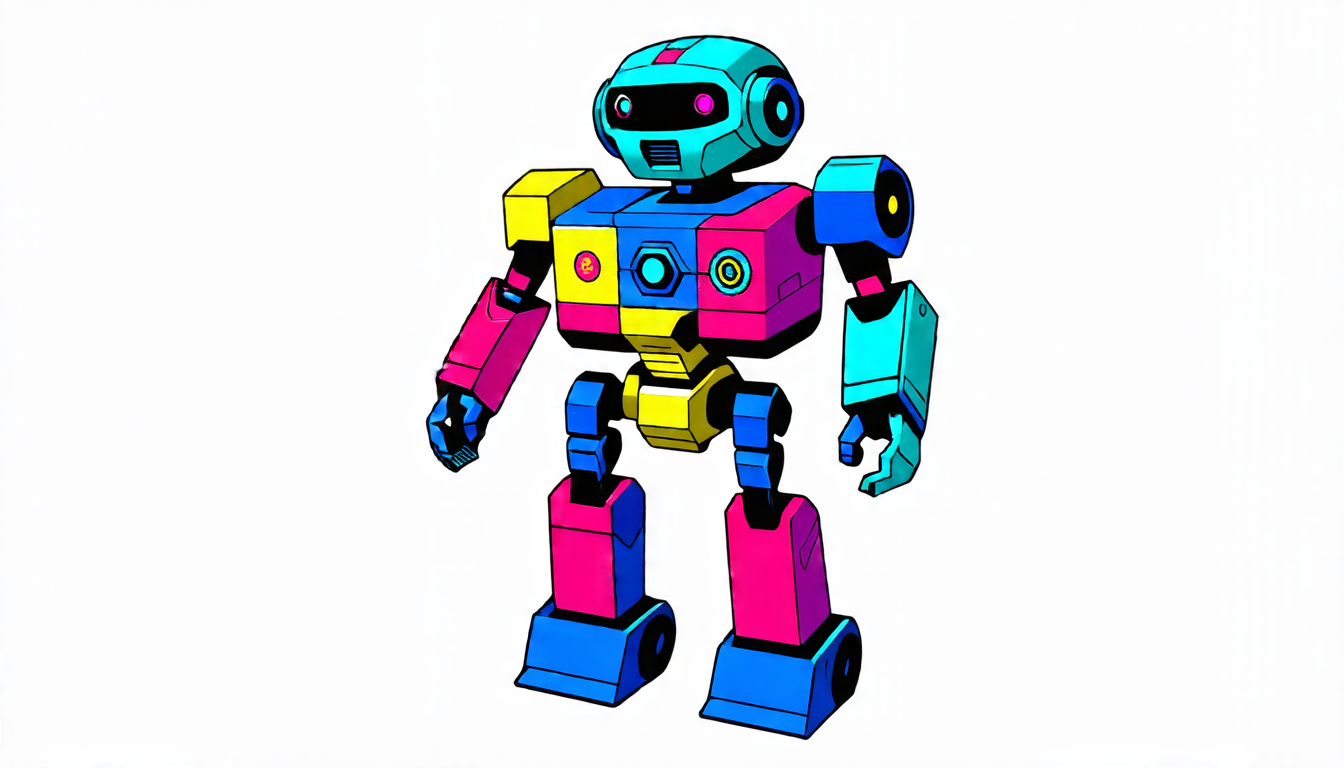
In tests, PiT was asked to come up with concepts for character ideation, product design, and toy concepting. The results were impressive: the system generated a wide range of creative and coherent designs that were both visually appealing and functionally sound.
One of the key innovations behind PiT is its ability to learn from large datasets of images and text. This allows it to develop an understanding of how different elements relate to each other, and how they can be combined in new and interesting ways.
The system is also capable of generating multiple concepts based on a single input, which makes it ideal for use in design and creative problem-solving applications.
PiT has significant implications for industries such as product design, toy manufacturing, and animation. It could revolutionize the way that companies approach innovation, allowing them to generate new ideas and designs quickly and efficiently.
The technology is also likely to have a major impact on our understanding of creativity and imagination. For centuries, these abilities were seen as unique to humans, but PiT shows that they can be replicated using artificial intelligence.
In addition to its practical applications, PiT raises important questions about the nature of creativity and whether it can truly be replicated using machines.
While some may see the development of PiT as a threat to human creative jobs, others will view it as an opportunity to augment our own abilities and work in partnership with machines.
As we continue to develop this technology and explore its potential, one thing is clear: the boundaries between human and machine creativity are blurring faster than ever before.
Cite this article: “Creative Conceptualization: A Novel Framework for Generative Image Synthesis using Text-Conditioned Diffusion Models”, The Science Archive, 2025.
Artificial Intelligence, Creativity, Innovation, Design, Product Development, Machine Learning, Neural Network, Imagination, Problem-Solving, Automation





