

Thursday 10 April 2025
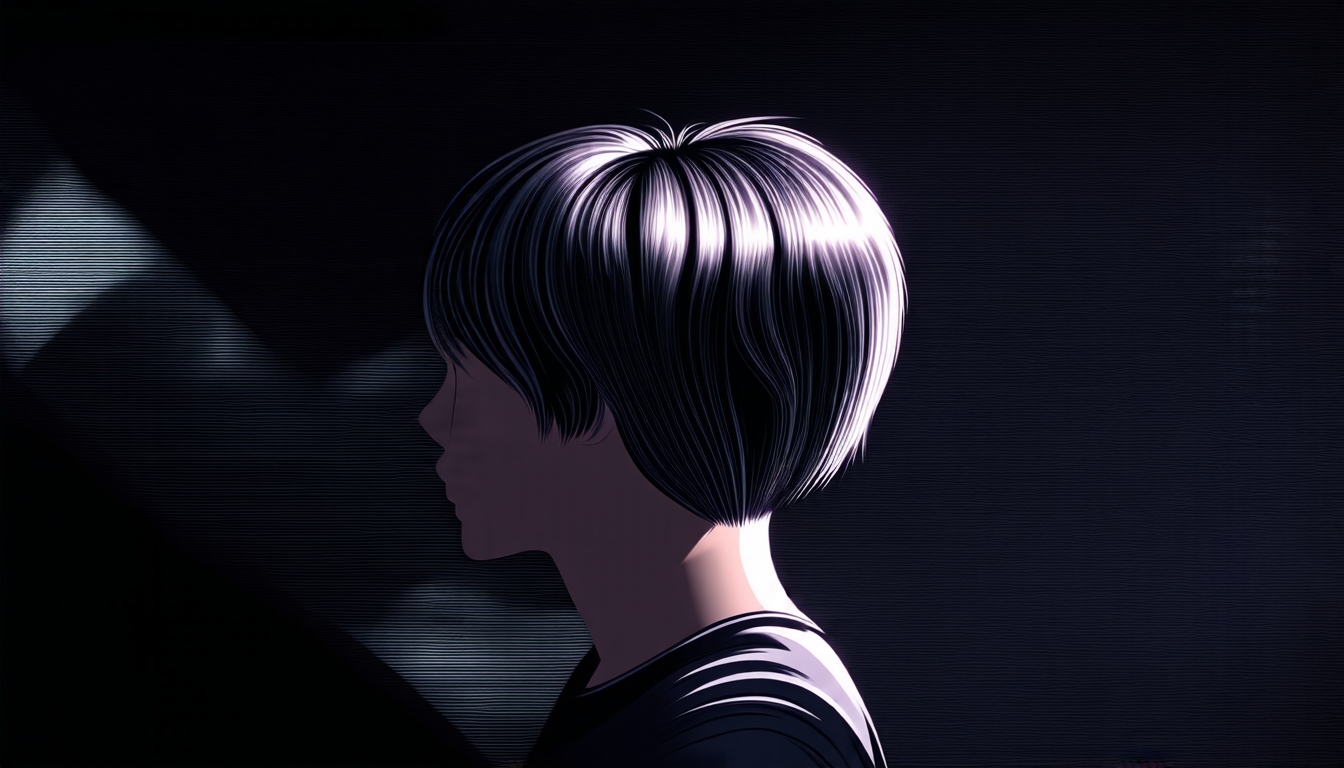
Scientists have long struggled to accurately capture the intricate details of human hair, a challenge that has stumped even the most advanced computer graphics systems. But now, researchers have made a breakthrough in creating photorealistic digital models of human hair, capable of rendering realistic textures and colors under varying lighting conditions.
The key innovation lies in the development of an extended Bidirectional Scattering Distribution Function (BSDF) model, which simulates the way light interacts with individual strands of hair. This model takes into account not only the color and texture of each strand but also its shape, orientation, and movement.
To create these digital models, researchers used a combination of computer vision techniques and machine learning algorithms to analyze thousands of high-resolution images of real-world hairstyles. They then trained a neural network to learn the patterns and relationships between hair strands, lighting conditions, and camera angles.
The result is a system capable of generating photorealistic digital models of human hair that can be used in a variety of applications, from virtual try-on and avatar creation to film and video game production. The model’s ability to accurately capture the subtle details of human hair has significant implications for industries such as fashion, entertainment, and advertising.
One of the most impressive aspects of this technology is its ability to render realistic textures and colors under varying lighting conditions. Unlike previous attempts at digital hair modeling, which often resulted in unrealistic or cartoonish representations, this system can accurately capture the subtle changes in light and shadow that occur when a person’s hairstyle is viewed from different angles.
The researchers also demonstrated their model’s ability to generate dynamic hair simulations, allowing for realistic movements and interactions between individual strands of hair. This capability opens up new possibilities for creating immersive virtual experiences, such as interactive fashion shows or character animations in video games.
While the technology is still in its early stages, it has already shown great promise in terms of accuracy and versatility. As researchers continue to refine their model and explore new applications, we can expect to see even more impressive advancements in digital hair modeling in the years to come.
The implications of this technology are far-reaching, with potential applications in fields such as virtual try-on, avatar creation, film and video game production, and fashion photography. By creating photorealistic digital models of human hair, researchers have taken a significant step towards creating more realistic and immersive digital experiences that can captivate audiences and revolutionize industries.
Cite this article: “Revolutionizing Hair Rendering: A Comprehensive Approach to Inverse Illumination and Appearance Modeling”, The Science Archive, 2025.
Computer Graphics, Human Hair, Photorealistic Modeling, Bidirectional Scattering Distribution Function, Bsdf, Machine Learning Algorithms, Computer Vision Techniques, Neural Networks, Virtual Try-On, Avatar Creation





