

Wednesday 16 April 2025
Recent advancements in language models have led to significant breakthroughs in artificial intelligence, revolutionizing the way we interact with machines. One such achievement is the development of Hybrid Edge-Cloud Resource Allocation (HERA), a novel approach that optimizes the processing power of large language models.
Traditionally, large language models like GPT-4 have been confined to cloud-based servers, where they consume vast amounts of computational resources and energy. However, this setup has several limitations. Firstly, it can be prohibitively expensive for individuals or organizations to access these powerful machines. Secondly, the reliance on centralized infrastructure makes it vulnerable to outages and disruptions.
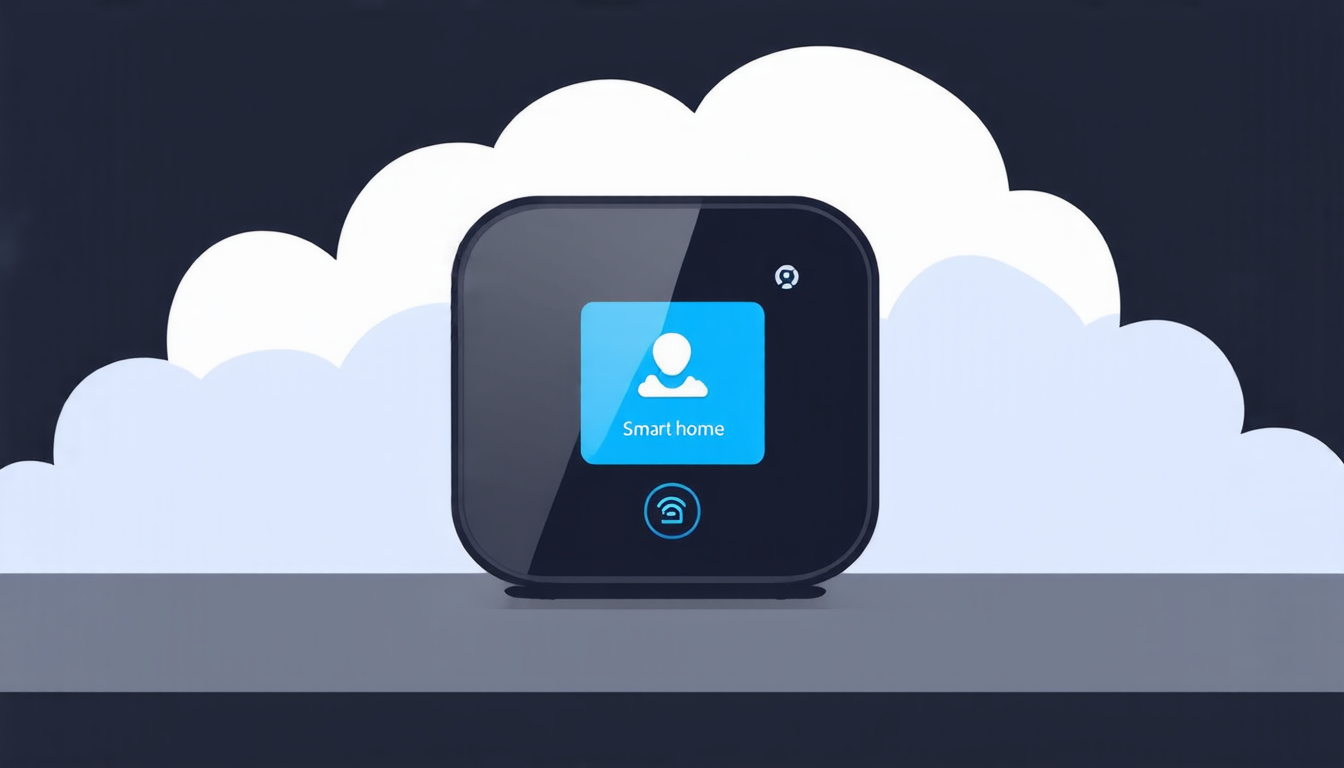
HERA seeks to address these challenges by introducing a hybrid architecture that combines the strengths of both edge computing and cloud services. Edge devices, such as smartphones or smart home devices, are equipped with smaller language models that can process local data and perform simple tasks. Meanwhile, cloud-based servers host more powerful models that handle complex tasks and provide additional processing power when needed.
The key innovation lies in HERA’s ability to dynamically allocate tasks between the edge device and the cloud server, ensuring optimal resource utilization and minimizing latency. When a task requires minimal processing power, it is executed locally on the edge device, reducing the need for expensive cloud computing resources. Conversely, when more advanced processing is required, HERA seamlessly shifts the task to the cloud server, leveraging its vast computational capabilities.
This approach has numerous benefits. For instance, it enables real-time processing and response times, making it ideal for applications such as language translation, text summarization, or even autonomous vehicles. Additionally, the reduced reliance on cloud infrastructure reduces costs and energy consumption, making AI more accessible to a broader range of users.
HERA’s potential applications are vast and diverse. In healthcare, it could enable real-time medical diagnosis and treatment planning. In education, it could facilitate personalized learning experiences with adaptive language support. In finance, it could streamline transactions and improve risk assessment through advanced natural language processing.
While HERA is still a developing technology, its implications for the future of AI are significant. By harnessing the power of both edge computing and cloud services, we can create more efficient, cost-effective, and accessible artificial intelligence systems that transform the way we live and work.
Cite this article: “Balancing Accuracy and Cost in AI Agent Deployment: A Hybrid Cloud-Edge Framework”, The Science Archive, 2025.
Language Models, Hybrid Edge-Cloud Resource Allocation, Hera, Artificial Intelligence, Ai, Edge Computing, Cloud Services, Resource Allocation, Natural Language Processing, Machine Learning





