

Wednesday 16 April 2025
The Hubble Space Telescope has been a cornerstone of astronomy for decades, providing breathtaking images and groundbreaking discoveries that have rewritten our understanding of the universe. But what about those who can’t see these wonders firsthand? A team of researchers has developed a innovative solution to bring the beauty of astronomy to people with visual impairments.
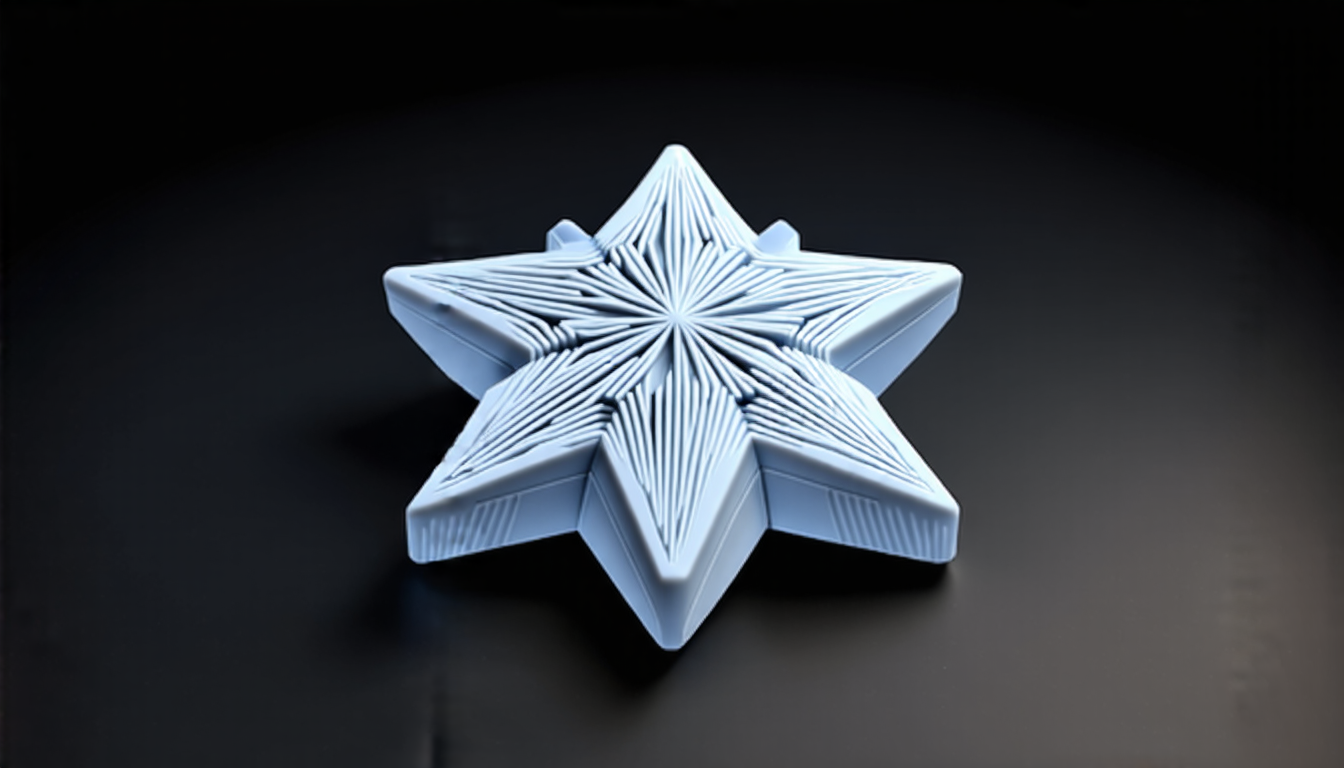
Using 3D printing technology, they’ve created tactile models of astronomical data, allowing those with blindness or low vision to explore and interact with celestial bodies in ways previously unimaginable. The project’s goal is to make astronomy more inclusive, providing a new avenue for people with visual impairments to engage with the wonders of the universe.
The process begins by converting scientific data from Hubble into tactile formats, such as raised lines and textures that can be felt through touch. This data is then used to create 3D printed models of stars, galaxies, and other celestial bodies. The resulting prints are incredibly detailed, featuring intricate patterns and shapes that allow users to explore the universe in a way that’s both intuitive and accessible.
One of the most impressive aspects of this project is its ability to convey complex scientific concepts in a way that’s easy to understand. By using tactile models, researchers can help people with visual impairments develop a deeper understanding of astronomical phenomena, from the structure of galaxies to the life cycles of stars.
The impact of this technology extends beyond just astronomy enthusiasts. It has the potential to inspire new generations of scientists and engineers, providing a pathway for people with visual impairments to pursue careers in STEM fields.
The project’s success is not limited to its technical achievements. The tactile models have also sparked a sense of community among users, who are able to share their experiences and learn from one another through online forums and meetups.
As the Hubble Space Telescope continues to explore the universe, this innovative technology has the potential to expand our understanding of the cosmos while breaking down barriers for people with visual impairments. By making astronomy more inclusive, we can ensure that everyone has the opportunity to gaze up at the stars and wonder at their beauty.
Cite this article: “Touching the Cosmos: Revolutionizing Astronomy Education with Tactile 3D Printing”, The Science Archive, 2025.
Astronomy, Hubble Space Telescope, 3D Printing, Tactile Models, Visual Impairments, Blindness, Low Vision, Inclusive, Stem Fields, Community.





