

Wednesday 23 April 2025
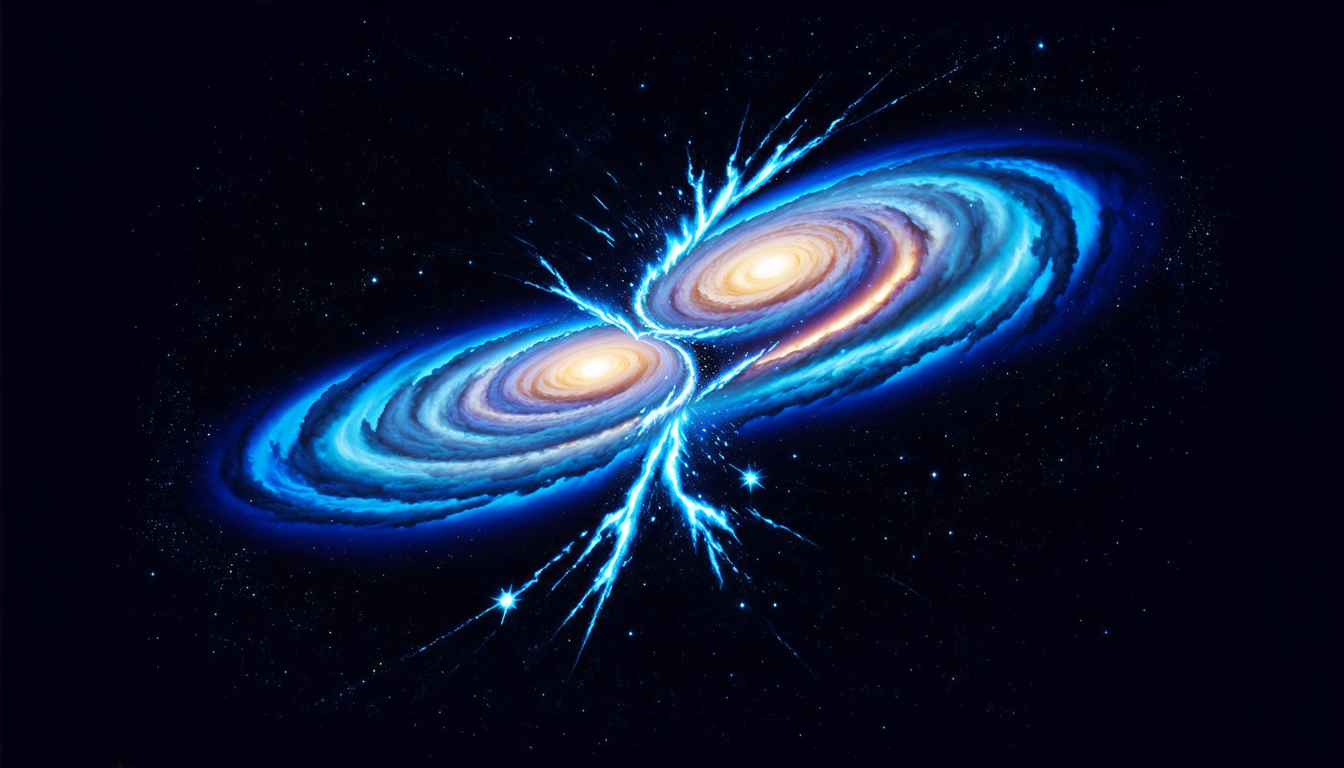
The universe is a vast and mysterious place, full of secrets waiting to be uncovered. One of the most intriguing phenomena that has long fascinated astronomers is the process of galaxy mergers. It’s a cosmic dance where two galaxies collide and combine their mass, resulting in the formation of a new, more massive galaxy.
In a recent study, scientists have made significant progress in understanding this complex process by studying a vast number of galaxies over a period of 8 billion years. Using data from the Deep Extragalactic VIsible Legacy Survey (DEVILS), researchers were able to track the merger rates of galaxies at intermediate redshifts – that’s roughly 6-9 billion years ago.
The study found that major close-pair fractions, which measure the likelihood of two galaxies merging, remained relatively constant over this period. This suggests that galaxy mergers are not a recent phenomenon, but have been occurring throughout the universe’s history. The researchers also discovered that the merger rates were higher in the distant past, with more galaxies colliding and combining their mass.
One of the key findings was that the frequency of major close-pairs decreased as redshift increased, meaning that fewer galaxies are merging at later times. This is likely due to the fact that galaxies have had more time to evolve and separate from each other over billions of years.
The study’s results also shed light on the role of galaxy mergers in shaping the universe we see today. By understanding how these events occur and how they affect the formation of new galaxies, scientists can gain valuable insights into the evolution of the cosmos.
To achieve this, the researchers used a sophisticated method to correct for the photometric confusion effect, which occurs when two nearby galaxies are blended together by the camera’s resolution. This correction allowed them to accurately identify close-pairs and estimate the merger rates with greater precision.
The study’s findings have significant implications for our understanding of galaxy evolution and the formation of structures within the universe. By studying the past and present-day behavior of galaxies, scientists can better understand how they will change in the future.
In a nutshell, this research provides a fascinating glimpse into the cosmic history of galaxy mergers, revealing that these events are not unique to the present day but have been occurring throughout the universe’s lifetime. As we continue to explore the mysteries of the cosmos, studies like this one remind us of the awe-inspiring complexity and beauty of the universe around us.
Cite this article: “Galactic Collisions: New Insights into the Ancient Dance of the Universes Largest Structures”, The Science Archive, 2025.
Galaxy Mergers, Cosmic Dance, Galaxy Evolution, Universe History, Devils Survey, Redshift, Close-Pair Fractions, Merger Rates, Photometric Confusion Effect, Galaxy Formation





